01How a Transformer Buyer in San Francisco Reviews Equipment
If you need a transformer buyer in San Francisco, the first step is to identify what you own and whether you have authority to sell it. California Transformer Buyer considers used, removed, surplus, new-surplus, spare and project-leftover units, from a single transformer to a mixed lot. Utility-owned equipment located on private property cannot be sold by the property owner.
San Francisco’s production, distribution and repair businesses, food and beverage manufacturers, and advanced or specialized manufacturers may have transformers from facility upgrades, production changes or surplus inventory. The city’s policy support for industrial PDR businesses helps preserve manufacturing space, but each unit’s specifications, condition and access determine whether it fits a buyer’s needs.
- Used or decommissioned transformers
- New-surplus units that were never energized
- Spare units and project leftovers
- Multiple units or mixed equipment lots
02Transformer Types Found in San Francisco Facilities
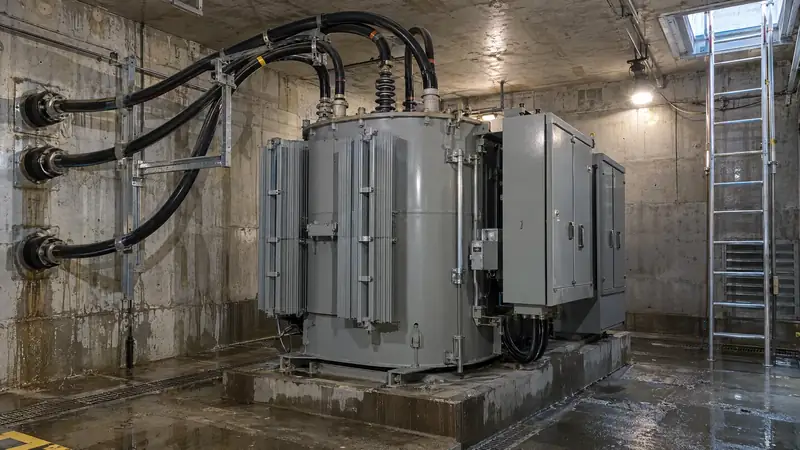
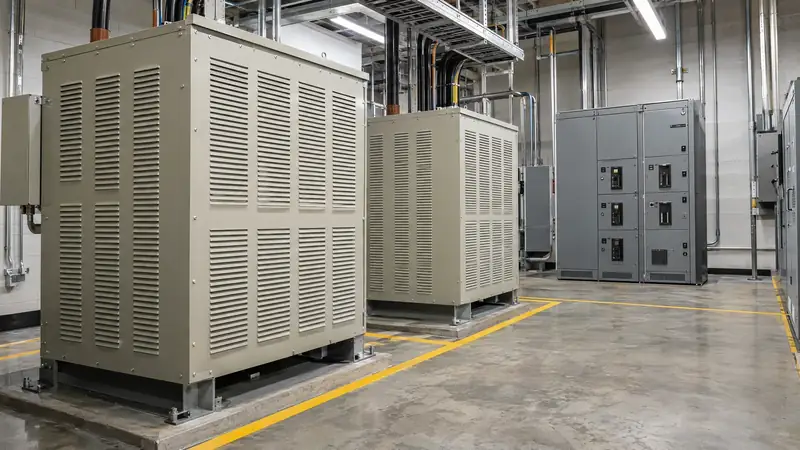
Industrial buildings, food-production sites and distribution facilities may have pad-mounted transformers serving building loads, dry-type units near indoor switchgear, or unit substations close-coupled to switchgear. Larger facilities may also have station-class equipment. A unit’s location and configuration matter as much as its general category, especially when access is constrained.
Dense urban properties can also have network transformers in vault or building service arrangements. These are distinct from ordinary pad-mount units; include clear overall photos so the configuration can be identified. For background on this equipment, see the guide to network transformers.
Solar, Storage and Specialty Units
A site with on-site generation or energy storage may have a solar inverter step-up transformer or another specialty unit. Do not assume a unit is a standard distribution transformer based only on its enclosure. The nameplate and any available drawings or test records help identify its application and ratings.
03PG&E Service, Public Power and Nameplate Voltages
Pacific Gas and Electric (PG&E) serves most San Francisco customers. SFPUC/Hetch Hetchy public power serves particular municipal and development customers rather than most city accounts. CleanPowerSF is a generation supplier, not the distribution utility. Check the service arrangement and equipment ownership before representing a transformer for sale; California Transformer Buyer is not affiliated with or approved by any utility.
For PG&E service, documented distribution configurations include 12 kV and nominal 21 kV classes, with specific primary configurations varying by system. Common secondary ratings include 208Y/120 V and 480Y/277 V three-phase. These are reference points, not a substitute for the actual nameplate: record the exact primary and secondary voltages, connection and tap information.
- Confirm the owner and authority to sell
- Record primary and secondary voltage
- Include phase, kVA and connection details
Municipal and Public-Power Equipment
If an asset is associated with a municipal or public-power service, establish whether it belongs to your organization or to the serving entity. Sellers with public-system equipment can also review guidance for utilities and municipal utilities.
04Photos and Transformer Details to Send for Review
Call or text Rocky at (951) 403-5738, or use the contact form to request an offer. You may also text photos to that number. Take photos only from a safe position and only of equipment you are authorized to access; do not open compartments or approach equipment that requires utility or contractor access.
A readable nameplate photo and overall views help identify the unit and its condition. Include the quantity, San Francisco location, whether the transformer is installed or already removed, and what you know about its operating history. If the plate is damaged or unreadable, send the clearest available photos and describe what is missing.
- Manufacturer, serial number and year
- kVA or MVA, phase and voltage
- Cooling class, fluid type and gallons
- Impedance, taps and connection
- Overall condition and visible damage
- Available test reports and PCB records
05Condition, Test Records and PCB Documentation
Value depends on more than age or brand. Rating, voltage, phase, winding material, condition, accessories, test results and demand for the configuration all matter. Note leaks, rust, damaged bushings or missing parts, and share available factory test reports, oil test or DGA results, insulation-resistance tests and turns-ratio tests.
For oil-filled equipment, provide existing fluid and PCB documentation rather than trying to collect a sample. PCB status should be evaluated from testing and records with qualified environmental professionals. Federal PCB classifications and California rules for PCB-containing oil differ; the correct handling pathway depends on the equipment, test results and documentation. This information is not legal advice.
Unknown or Failed Equipment
If PCB status is unknown, say so rather than labeling the unit non-PCB without support. Leaking, failed or drained equipment may need a different environmental and waste determination than a working transformer offered for reuse. Rely on qualified environmental professionals and applicable records.
06San Francisco Pickup Planning: Access, Rigging and Routes
Pickup planning starts with the site, not just the transformer’s weight. Share the equipment location on the property, available loading access, overhead or doorway restrictions, stairs or vault access, and any known site rules or scheduling limits. Dense blocks and restricted service areas can affect the approach, loading plan and coordination needed for removal.
US-101, I-80 and I-280 are major routes serving the city, but the practical route and transport requirements depend on the unit, origin, destination and road restrictions. Larger or unusually wide, tall or heavy transformers may require special transport planning and permits. See transformer removal and pickup details for the information that helps scope a move.
- Do not move, disconnect or prepare equipment yourself
- The owner’s qualified electrical contractor or serving utility handles isolation and disconnection
- The written offer states who handles loading, rigging and freight
07Requesting an Offer for a San Francisco Transformer
Send the nameplate and overall photos, quantity, location and condition. Rocky may ask follow-up questions about test reports, fluid or PCB records, ownership, and site access before preparing a written offer. Reviewing the transformer costs nothing and does not obligate you to sell.
Read the written terms before pickup. They state the offer, what is included, who handles loading, rigging and freight, and payment terms and timing. If you are comparing options for a wider Bay Area inventory, see the San Francisco Bay Area service area or review the steps for selling your transformer.
- Call or text (951) 403-5738
- Send photos and basic equipment details
- Confirm ownership and site access
- Review written terms before scheduling pickup
FAQSelling a Transformer in San Francisco: FAQ
Can I sell a transformer that PG&E owns but installed on my property?
No. A property owner cannot sell utility-owned equipment merely because it is on the property. Confirm ownership and your authority to sell before sending an offer request. If the transformer belongs to PG&E, SFPUC/Hetch Hetchy or another serving entity, contact that owner about its equipment. California Transformer Buyer purchases equipment from authorized sellers and is not affiliated with utilities.
Does California Transformer Buyer buy new-surplus transformers?
Yes. New-surplus generally means a transformer that was never energized and is available as excess inventory, often crated or on skids. Include photos of the unit and packaging, the nameplate, quantity and storage condition. Existing factory test reports and purchase or inventory records can help verify its status, but do not assume a unit is new-surplus if it has been energized.
What if the nameplate is missing or unreadable?
Send clear overall photos, any legible plate fragments, and the details you do know, such as approximate rating, manufacturer, voltage, phase and location. Available drawings, prior test reports or maintenance records may help identify the transformer. Do not open the unit or attempt to uncover hidden markings; a qualified contractor can address equipment access when needed.
Will you consider a transformer that leaks or has failed?
You can submit information about a leaking, damaged or failed transformer, but condition and environmental documentation affect whether it is suitable for purchase. Describe visible issues and share existing test and fluid records. Do not drain, sample or move it. Qualified electrical and environmental professionals should determine safe handling and the applicable waste or reuse pathway.
Do I need to disconnect the transformer before requesting an offer?
No. You can request a review while the transformer is still installed. De-energizing, isolation, testing for voltage, grounding and disconnection are work for qualified personnel, coordinated with the serving utility when required. Tell Rocky whether the equipment remains installed or has already been removed, and the written offer will clarify who is responsible for loading, rigging and freight.
Can you review several San Francisco units or a mixed lot?
Yes. California Transformer Buyer considers multiple units and mixed lots as well as individual transformers. Send a separate nameplate or identification photo for each unit when possible, along with quantities, conditions and the site location. For a large inventory, a simple list matching each unit to its photos can make the initial review more useful.