01What a Transformer Buyer in Santa Rosa Can Review
California Transformer Buyer considers electrical transformers owned by businesses, contractors, property owners and other authorized sellers in Santa Rosa. Equipment may be used and previously energized, pulled from service, surplus, new-surplus, decommissioned, spare stock or left over from a project. Single units and mixed lots can be submitted for review.
Santa Rosa’s documented manufacturing base includes precision machining, packaging and fabrication, electronics, and food processing. Those operations can have distribution, motor-load or process equipment such as pad-mounted transformers, dry-type units and unit substations. The actual equipment depends on each facility; share the nameplate and condition rather than assuming a unit’s resale category from its location.
- Pad-mounted distribution transformers
- Medium-voltage dry-type transformers
- Unit substations connected to switchgear
- Spare or project-surplus equipment
02PG&E Service and Nameplate Voltages in Santa Rosa
Pacific Gas and Electric (PG&E) serves Santa Rosa. Sonoma Clean Power generation does not replace PG&E’s role in local distribution, so sellers should identify the transformer’s actual primary and secondary voltages from its nameplate instead of inferring them from a power supplier or a nearby facility.
PG&E configurations include 12 kV and nominal 21 kV distribution. Documented primary configurations include 4,160 V, 12,000 V, 17,200 V and 20,780 V; 115 kV is used for transmission or subtransmission. These are system context, not a substitute for the individual unit’s nameplate. For broader regional context, see the [San Francisco Bay Area transformer market](San Francisco Bay Area transformer market).
03Match the Equipment to Santa Rosa Facility Uses
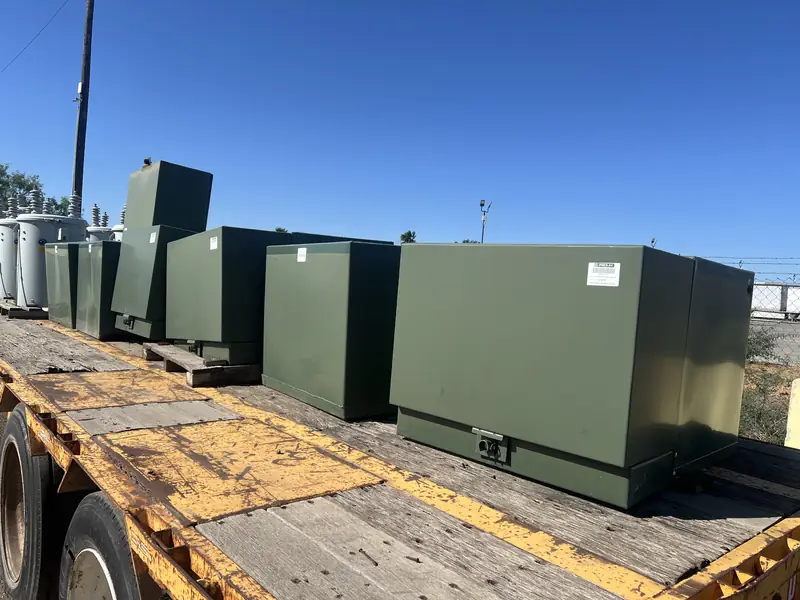
A manufacturing site may use a three-phase pad-mount transformer for building or process distribution, a dry-type transformer indoors, or a unit substation coupled to switchgear. Food-processing and packaging facilities can also have separate transformers for different buildings or loads. These are useful categories to report, not a claim that every Santa Rosa plant has the same configuration.
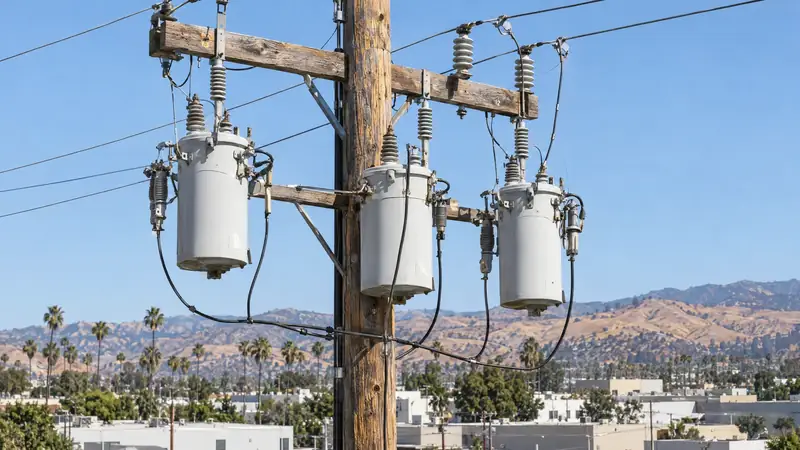
Solar or battery projects may use step-up transformers between inverters and a collection or utility system. Include these units if they are part of equipment you own and are authorized to sell; identify the ratings and voltage stages clearly. Pole-mounted equipment can also be submitted, but first confirm ownership because utility equipment on private property is not automatically the property owner’s to sell. See details on [pad-mount transformers](pad-mount transformer evaluations) and [pole-mount transformers](pole-mount transformer types) if you need help identifying the equipment family.
04Nameplate Details That Help Evaluate Used Transformers
A clear nameplate photo is the best starting point for a Santa Rosa transformer buyer. Capture the manufacturer, serial number, year, kVA or MVA rating, phase, primary and secondary voltages, taps, impedance, BIL and cooling class if visible. For liquid-filled equipment, include fluid type and gallons when listed; for dry-type units, show the insulation and temperature-rise information.
Also send overall photos from a safe position, along with the unit’s condition and any available factory test reports, oil test or DGA results, insulation-resistance readings, turns-ratio results and PCB records. Mention missing or damaged bushings, leaks, rust, removed accessories, storage history and whether the transformer is new-surplus or previously energized. Never open equipment or approach it for a photo unless qualified and authorized.
- Quantity and location of each unit
- Winding material, if shown
- Switches, fuses, fans or LTC
- Ownership or sale authority
05Plan Santa Rosa Pickup Around Access and Equipment Size
Pickup planning starts with the unit’s dimensions, total weight, loading arrangement and the route from its installed or stored position to the transport vehicle. Tell Rocky about gates, low clearances, narrow driveways, loading docks, restricted work hours, uneven ground and any site rules that could affect access. Mention whether the transformer is indoors, in a vault, on a concrete pad or stored on skids.
US-101 and SR-12 are important Santa Rosa routes, but the appropriate transport plan depends on the unit, its dimensions and the actual origin and destination. Oversize or overweight loads can require permits and local-road coordination. Before pickup, the written offer states what is included and who handles loading, rigging and freight. Read more about [transformer removal and pickup planning](transformer removal and pickup planning).
06Ownership, PCB Records and Equipment Condition
Only an owner or someone authorized to sell the equipment can submit it for purchase. If a transformer on your property may belong to PG&E or another utility, confirm ownership before proceeding; location alone does not establish title.
For liquid-filled units, share available PCB labels, test results and environmental records. “Non-PCB” does not mean zero PCBs, and unknown status may require further determination. California has specific rules for PCB-containing oil, and the proper handling path depends on testing and documentation. Sellers should rely on their records, testing and qualified environmental professionals; this information is not legal advice. Leaking, drained or failed equipment may need a different evaluation from a working transformer offered for reuse.
07How to Start a Santa Rosa Transformer Sale
Call or text Rocky at (951) 403-5738, or use the website contact form. Send the nameplate and overall photos, quantity, Santa Rosa location, condition and any relevant test or PCB documentation. Photos should be taken only from a safe position and of equipment you are authorized to access.
Rocky reviews the information and may ask about records, ownership, site access or removal requirements. If the unit is a fit, you receive a written offer that identifies the price, what is included, who handles rigging and freight, and payment terms and timing. Reviewing a transformer costs nothing and creates no obligation. Learn about the [transformer sale process](how the transformer sale process works) or [contact California Transformer Buyer](contact California Transformer Buyer for an offer).
FAQSelling a Transformer in Santa Rosa: FAQ
Does California Transformer Buyer purchase one transformer, or only lots?
Both single units and larger mixed lots can be submitted for review. Share the quantity, type, condition and location for each transformer, especially if a lot includes different ratings or configurations. The buyer’s review determines whether the equipment is a fit; sending details does not guarantee a purchase.
Can I sell a transformer that is still installed at my Santa Rosa facility?
You can submit details about an installed unit, but do not disconnect, open, drain or move it yourself. The owner’s qualified electrical contractor or the serving utility must handle isolation and disconnection as applicable. Include access constraints and explain whether your contractor or the buyer is expected to coordinate rigging and freight; those responsibilities are stated in the written offer.
What if my transformer has no readable nameplate?
Send clear overall photos and any partial label images you can safely obtain, then provide the manufacturer, approximate rating, voltage, age or model information from records if available. Test reports, drawings and maintenance files may help identify the unit. Do not open compartments or approach energized equipment to find another label; note which information is missing.
Will you review a transformer with leaks, damage or missing parts?
You may submit it for review, but condition affects whether the equipment can be considered and what additional information is needed. Describe leaks, corrosion, damaged bushings, missing switches or other known issues accurately, and include available test and environmental records. Do not drain fluid or attempt repairs to prepare a unit for evaluation.
Does a “non-PCB” label settle the environmental status?
A label is useful documentation, but “non-PCB” does not mean that a transformer contains zero PCBs. Share labels, test results and records with the buyer, and consult qualified environmental professionals about testing and applicable handling requirements. Unknown or incomplete records may affect evaluation and pickup planning; the buyer’s review is not legal advice.
How do I know who pays for rigging and freight?
The written offer identifies what is included and who handles loading, rigging and freight before pickup is scheduled. For an accurate plan, provide the unit’s dimensions and weight if known, its location on site, access details and any loading restrictions. Do not assume removal is free or that a particular party will handle it until the written terms specify responsibility.