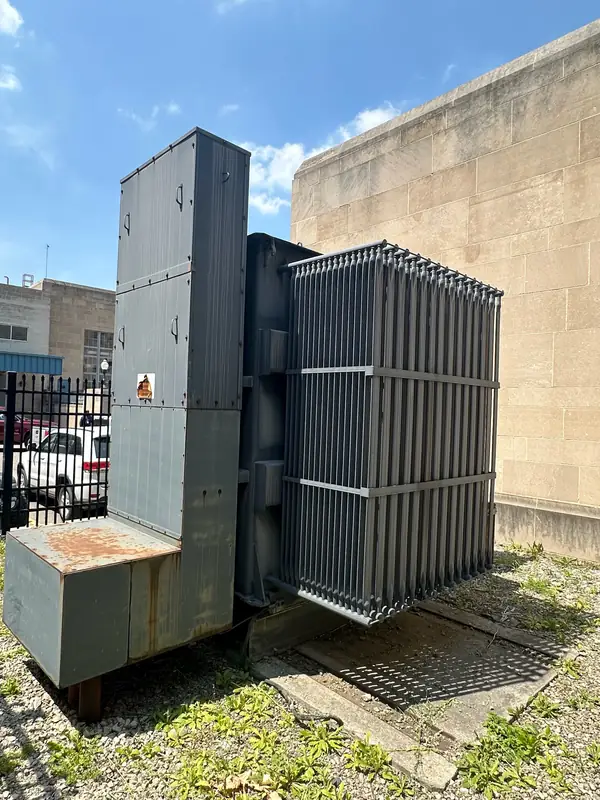
01When Hospitals, Schools & Campuses Surplus Transformers Become Available
Campus electrical upgrades can leave serviceable equipment behind. A hospital central plant replacement, a school building demolition or a university distribution-system renovation may release transformers that no longer fit the facility’s voltage, capacity or layout.
Other units never enter service. Revised construction plans, canceled additions and duplicate purchases can leave crated equipment or spare transformers in storage. Separate previously energized equipment from never-energized inventory when preparing a list; their condition and documentation are different.
California Transformer Buyer considers single units and mixed lots. The surplus transformer buying page explains the broader equipment categories, while this page focuses on institutional approvals, campus records and restricted-access removal.
- Central plant and mechanical-system replacements
- Medium-voltage feeder or service upgrades
- Building closures and phased demolition
- Unused project purchases and replacement spares
02Campus Transformer Types, Ratings and Voltage Configurations
Hospitals and campuses can have several transformer families on one property. Building-level dry types serve lighting and general loads, while pad mount transformers and unit substations supply larger buildings, mechanical plants or groups of facilities. Large campuses may also have station-class equipment rated in MVA.
The ratings below are illustrative engineering examples, not a purchasing cutoff or a claim about every campus. Use the exact nameplate voltage: a campus’s internal medium-voltage system may differ from the serving utility’s distribution voltage.
| Equipment family | Illustrative rating | Configuration to identify |
|---|---|---|
| Low-voltage dry-type | 45, 75, 112.5 or 225 kVA | For example, 480 V to 208Y/120 V |
| Three-phase pad-mounted | 500, 1000 or 2500 kVA | Actual primary voltage; secondary connection |
| Medium-voltage dry-type | 750, 1500 or 2500 kVA | VPI/VPE or cast resin; cooling ratings |
| Unit substation transformer | 1000, 2000 or 3750 kVA | Close-coupled switchgear arrangement |
| Power or station class | Multi-MVA ratings | Cooling stages, taps and accessories |
Identify the Transformer Separately From Attached Switchgear
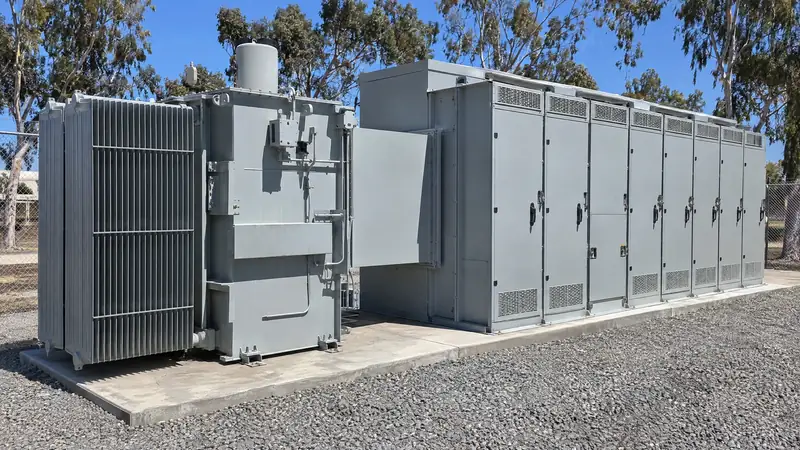
For unit substation transformers, identify which sections belong to the proposed sale. Primary switches, secondary switchgear, transition sections and enclosures should not be assumed included. Existing drawings and safely obtainable overall photos help establish the package boundaries.
03Use Facilities Records to Build a Useful Equipment Package
Start with a readable nameplate photo and an overall exterior photo taken from a safe, authorized position. Include manufacturer, serial number, year, all kVA ratings, phase, primary and secondary voltages, impedance, cooling class and total weight where shown.
Facilities departments and project engineers may already hold one-line diagrams, purchase records, factory test reports and maintenance files. These can establish configuration and history without requiring anyone to open energized equipment. For dry types, temperature rise and insulation construction matter; for liquid-filled units, fluid type and available fluid records matter.
Use the transformer offer submission guide to organize the basics. If records are incomplete, say what is missing rather than guessing winding material, test results or fluid status.
- Quantity and a unique equipment identifier
- Known operating history and reason for replacement
- Existing test reports and maintenance records
- Visible damage, leaks or missing accessories
- Campus location and earliest authorized release date
04Confirm Institutional Ownership and Authority to Sell
A transformer located on campus is not necessarily campus-owned. Utility-owned equipment cannot be sold by the hospital, district or property owner. Check asset records and service agreements, and resolve ownership with the serving utility when necessary.
Public school districts and public universities may have surplus-property approval or disposal requirements. Private institutions may also require purchasing, finance or facilities authorization. Confirm your institution’s applicable process before committing equipment to a sale.
If a contractor is handling the project, identify who owns the removed equipment and who can approve the transaction. A demolition scope does not by itself establish sale authority. Keep the equipment description consistent across project documents, asset records and the written offer.
05Schedule Pickup Around Patient Care, Classes and Plant Operations
A hospital replacement can depend on commissioning the new system before releasing the old transformer. Schools may restrict vehicle access during arrival and dismissal, while universities may limit work near laboratories, residences or occupied classrooms. Provide those constraints during the initial review.
Only the owner’s qualified electrical contractor or serving utility should handle de-energizing and disconnecting. Generators, solar and battery systems can create backfeed concerns. Sellers should not open compartments, isolate circuits or move equipment to prepare it for an offer.
Describe loading access separately from electrical readiness: gates, loading docks, overhead clearances, basement locations and restricted routes can affect the plan. The transformer removal and pickup guide covers access considerations. Loading, rigging and freight responsibilities must be stated in writing before pickup.
- Replacement commissioning and release dependencies
- Approved work windows and campus escort rules
- Truck staging and pedestrian restrictions
- Known weight and available access drawings
06Review Older Liquid-Filled Campus Equipment Before Sale
Older liquid-filled transformers need documented fluid and PCB status. A “non-PCB” label does not mean zero PCBs; the federal non-PCB category is below 50 ppm. Unknown status requires review rather than an assumption based on appearance or continued operation.
California has stricter rules for PCB-containing oil, and the correct management pathway depends on testing and documentation. A working transformer sold for reuse is equipment, but leaking units, drained oil and failed units need proper determination.
Rely on existing reports, appropriate testing and qualified environmental professionals—not seller-performed sampling. This is not legal advice. If a unit has failed or has significant damage, disclose that when requesting a review of scrap or failed transformers rather than presenting it as a serviceable spare.
07Request a Written Offer With Campus Constraints Included
Call or text Rocky at (951) 403-5738, or use the transformer offer request form. Send the equipment package, location, ownership information and anticipated release schedule. Reviewing your transformer costs nothing and there is no obligation.
Rocky reviews the specifications and may ask for test reports, fluid records or access details. Rating, configuration, condition, documentation and removal complexity all affect whether equipment fits a purchase; there is no guaranteed offer.
A written offer states the purchase terms, what equipment is included, who handles loading or rigging and freight, and payment terms and timing. The transformer selling process follows that review through scheduled pickup and payment as agreed.
FAQHospitals, Schools & Campuses FAQ
Can we request an offer while the transformer is still operating?
Yes. Provide existing records and photos that can be obtained safely without opening equipment or entering restricted areas. Explain that the unit remains in service and give the expected release date. An initial review does not authorize removal or replace your institution’s electrical planning. Qualified personnel must handle isolation and disconnection before pickup.
Should we sell an emergency replacement spare?
That decision belongs to your facilities and engineering staff. Before declaring a spare surplus, consider whether it supports critical loads, matches other campus equipment or remains part of your contingency plan. California Transformer Buyer can review a unit once you identify it as available, but an offer is not a recommendation to reduce your operational reserves.
Can one request include transformers from several school sites?
Yes. California Transformer Buyer reviews mixed lots as well as individual units. Organize the list by campus address and equipment identifier, with separate nameplate photos, condition notes and release dates. Identify whether approvals and access arrangements differ between sites. This helps keep the proposed sale scope and pickup responsibilities clear.
What if a stored transformer has no recent test report?
Send the records you do have and describe the storage conditions and any known exposure or damage. Do not call a unit tested or ready for service without supporting documentation. Rocky may request additional information during review. Any new inspection or testing should be arranged through qualified professionals, not performed by an unqualified seller.
Does an older efficiency rating prevent us from selling?
Existing used or surplus transformers are not made illegal to resell by newer DOE manufacturing efficiency standards. Those standards apply to manufacture, although a prospective reuse project may have its own specifications and acceptance requirements. Provide the manufacture date and available factory documentation so the equipment can be evaluated accurately.
Can a contractor coordinate the sale for our hospital or district?
Yes, if the contractor has authority to act for the owner. Identify the legal owner, the authorized decision-maker and the person managing site access. Clarify whether the contractor’s work includes disconnection, loading or other removal tasks. Those responsibilities and the equipment included in the sale should match the written purchase terms.