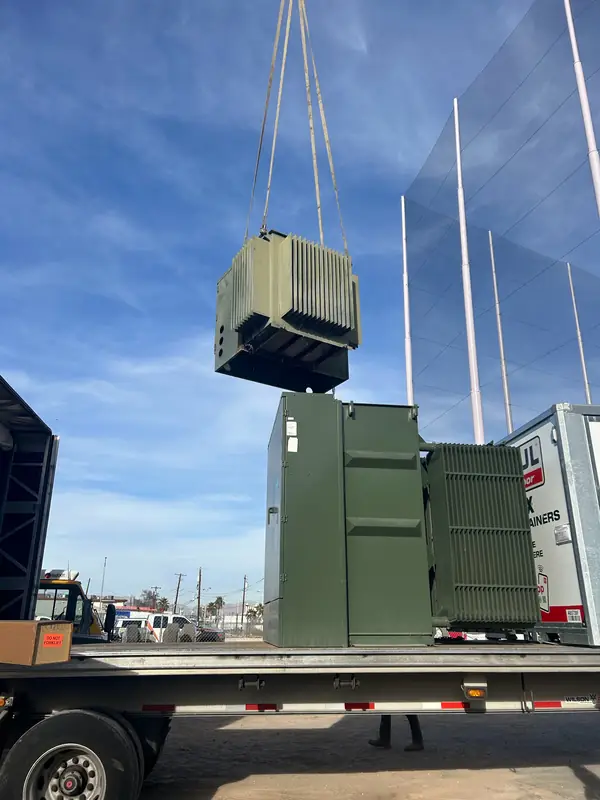
01Why demolition and decommissioning contractors end up with surplus transformers
A building demolition, industrial plant shutdown or utility-area redevelopment can leave a transformer outside the project’s future scope. The equipment may have been removed for the work, retained as a spare, or included in salvage rights. Contractors may also encounter transformers that remain in place while the owner decides what to do with them.
A unit’s location in a demolition area does not establish who owns it or has authority to sell it. Confirm ownership and sale authority with the property owner or other responsible party first. Utility-owned equipment on private property cannot be sold by the property owner. For an overview of the buying process, see our surplus transformer buyer information.
- Transformers removed during building or plant work
- Spare units no longer needed after shutdown
- Project leftovers or mixed equipment lots
- New-surplus units still crated or on skids
02Transformer types and ratings contractors may have to sell
Demolition and decommissioning work can produce anything from a small dry-type unit serving building loads to a large liquid-filled power transformer. Common possibilities include pad-mounted distribution transformers, pole-mounted units, vault or submersible equipment, dry-type transformers and unit substations close-coupled to switchgear. Larger plants and substations may have station-class equipment rated in MVA.
Three-phase pad-mounted units span standard ratings from 15 kVA through 10,000 kVA and higher equipment may be rated in MVA. Single-phase pad-mount standard scope reaches 250 kVA. These ranges describe standard types, not a prediction of what a particular demolition site contains. Explore our guide to electrical transformer types or details about a buyer for pad-mount transformers.
- Dry-type units in electrical rooms
- Pad-mounted distribution units outdoors
- Unit substations paired with switchgear
- Large station-class or power transformers
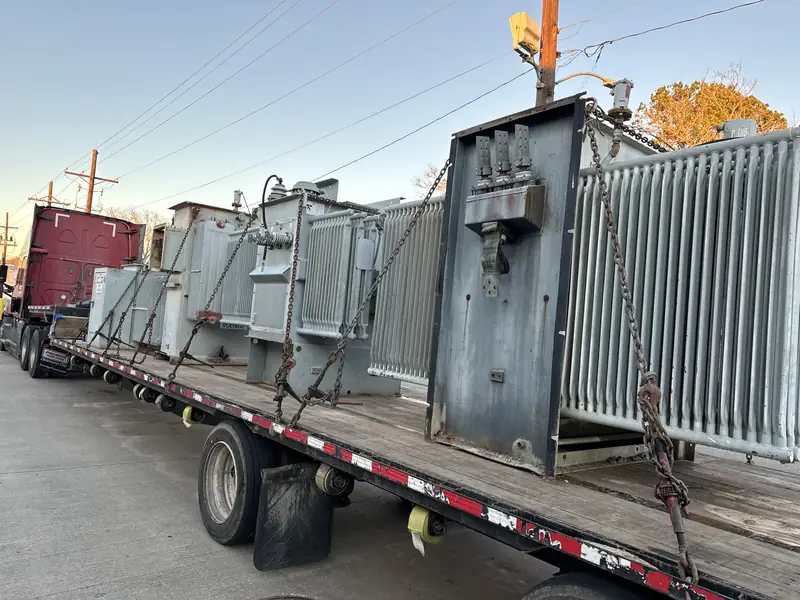
03Nameplate details and records that help identify a unit
Send clear photos of the nameplate and the complete transformer from a safe position, provided you are authorized to access the area. The rating, voltage, configuration and condition help determine whether a unit fits a buyer’s needs. Do not open equipment compartments to get a photo; use records or photographs already available if the plate cannot be seen safely.
Useful records vary by equipment and project. A factory test report, field test results, oil analysis, maintenance file or PCB documentation can help clarify condition and history. If the unit is a large substation transformer, details such as cooling class, tap changer, accessories and shipping configuration can also matter. For a larger station-class unit, see our substation transformer buyer page.
- Manufacturer, serial number and year
- kVA or MVA rating and phase
- High- and low-voltage ratings and connections
- Taps, impedance, BIL and cooling class
- Fluid type, gallons and PCB records
- Test reports and known condition issues
04Ownership, condition and environmental records matter
A working transformer intended for reuse is different from a failed or leaking unit, drained oil or equipment with unknown condition. Disclose visible damage, missing parts, leaks, rust and any known test results. Do not assume that a transformer is suitable for resale or scrap based on appearance alone.
PCB status should be supported by testing and documentation, not a guess based only on age or a label. Federal categories distinguish non-PCB equipment below 50 ppm, PCB-contaminated equipment from 50 to below 500 ppm, and PCB Transformers at 500 ppm or more. California has stricter rules for PCB-containing oil; the proper management pathway depends on test results and records. Sellers should rely on qualified environmental professionals for determinations. This is general information, not legal advice.
- Share available PCB labels and test records
- Identify known leaks or failed components
- Keep equipment ownership records available
- Consult qualified environmental professionals as needed
05Plan around demolition schedules, access and heavy transport
A transformer sale has to fit the site’s project sequence. Demolition contractors may be coordinating building access, utility work, hazardous-material controls, crane or rigging windows, and the release of areas to other trades. Share the location, access limits, site rules, desired schedule and any known lifting or transport constraints early so they can be considered before pickup is arranged.
Large units can require specialized rigging and freight planning. Oversize or overweight loads on California state highways may require Caltrans permits, while local roads can have separate approval requirements. The written offer states what is included and who handles loading, rigging and freight. Review our transformer removal and pickup information and removal checklist for facility managers when coordinating responsibilities.
- Confirm the authorized site contact
- Describe gate, roadway and staging limits
- Share project access windows and site rules
- Clarify who coordinates rigging and freight
06How to sell transformers from demolition and decommissioning work
California Transformer Buyer buys used, removed, decommissioned, spare and new-surplus transformers from sellers located in California. Rocky reviews single units, mixed lots and larger groups of equipment. Reviewing a transformer costs nothing and carries no obligation.
Start by calling or texting (951) 403-5738, or use the website contact form. Send the transformer’s quantity, location and condition along with nameplate and overall photos. Rocky may ask follow-up questions about ownership, records, site access, testing or fluid and PCB documentation. If the unit is a fit, the written offer sets out the price, included items, pickup responsibilities and payment terms and timing before pickup.
- Share photos from a safe, authorized position
- Provide quantity, location and condition
- Answer follow-up questions about records and access
- Review written terms before pickup is scheduled
07Keep the sale separate from electrical isolation and removal work
The buyer review and the electrical work are separate responsibilities. Do not de-energize, disconnect, open, drain, sample or move a transformer yourself. The owner’s qualified electrical contractor or serving utility handles isolation and disconnection; qualified personnel must address possible backfeed from solar, batteries or generators.
Before committing to a pickup date, align the sale plan with the responsible owner, electrical contractor, demolition lead and site contact. Make sure there is a clear understanding of access and which party is arranging qualified electrical work, rigging and freight. To begin a review, use the transformer selling information or contact Rocky at (951) 403-5738.
FAQDemolition & Decommissioning Contractors FAQ
Can a demolition contractor sell a transformer found on a property?
Only if the contractor owns the transformer or has clear authority from its owner to sell it. A transformer’s presence at a demolition site does not by itself transfer ownership, and utility-owned equipment cannot be sold by the property owner. Confirm salvage rights and ownership with the responsible party before requesting an offer.
Will California Transformer Buyer review a transformer that is still installed?
You can ask Rocky to review it, but do not arrange removal or electrical work yourself. Provide available nameplate information, overall photos taken from a safe and authorized position, the site location and the project’s access constraints. Qualified electrical personnel or the serving utility are responsible for isolation and disconnection.
What if the transformer has no nameplate or the plate is unreadable?
Send any legible details you have and explain what is missing. Existing project files, test reports, maintenance records or prior photographs may help identify the equipment. Do not open a compartment or approach equipment unsafely to search for a plate. Rocky may ask follow-up questions, but identification and condition remain subject to the information available.
Can I include several transformers from one demolition project?
Yes. California Transformer Buyer reviews single units and mixed lots, so include a quantity and basic description for each transformer when possible. Photos and separate nameplate details help distinguish ratings and condition. Mention whether the units are in different buildings or locations and note any access limits that could affect pickup planning.
Does California Transformer Buyer buy leaking or failed transformers?
A review is possible, but purchase is not guaranteed and condition affects whether a unit is suitable. Disclose leaks, failure history, damage, missing parts and available environmental or test records. Do not drain, sample or move the equipment. For environmental status and appropriate handling, rely on documentation, testing and qualified environmental professionals.
What happens after I send photos and project details?
Rocky reviews the information and may ask about test reports, fluid or PCB records, ownership, condition and site access. If an offer is made, it is in writing and states the price, what is included, responsibility for loading or rigging and freight, and payment terms and timing. Removal is scheduled under the agreed written terms.