01Why Battery Storage (BESS) Projects Have Surplus Transformers
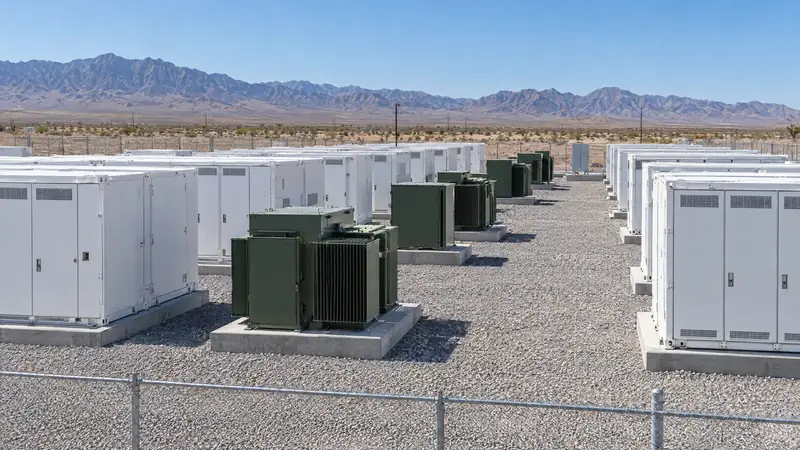
Battery storage (BESS) projects surplus transformers can come from several points in a project’s life—not just a completed facility. A developer or EPC may keep a spare medium-voltage (MV) step-up transformer for contingency, then find it is no longer needed after commissioning or a change in maintenance plans.
A redesign can also leave equipment unmatched to the final inverter arrangement, collector voltage, or site capacity. Augmentation work may replace or resize equipment, leaving a serviceable transformer in storage. Project cancellations, scope changes, and new-surplus units ordered for a phase that was postponed can create other saleable leftovers.
California Transformer Buyer reviews individual units and mixed lots from projects located in California. If your project also has solar equipment, see our page for transformer sellers at solar development and EPC projects.
02Transformer Types and Ratings Found at BESS Sites
Battery projects can include inverter step-up transformers, MV collector or interconnection equipment, station-service transformers, and larger substation or generator step-up (GSU) units. The exact arrangement depends on project design; there is no single transformer size that fits every battery site. Review the actual nameplate rather than relying on a project description or a remembered design rating.
Three-phase distribution ratings include 500, 750, 1,000, 1,500, 2,000, 2,500, 3,750, 5,000, and 10,000 kVA, with larger power transformers rated in MVA. Those are examples of standard ratings, not a claim that every BESS project uses them. Details about configurations are available in our guide to battery energy storage transformers.
| Equipment group | What to record |
|---|---|
| Inverter step-up | kVA/MVA, voltage, phase |
| MV collector | Primary and secondary voltage |
| Station service | Rating and dry or liquid type |
| Substation or GSU | MVA, cooling, tap changer |
03Project Changes That Leave Equipment Behind
For a spare transformer, the key question is whether its electrical specifications still match a current need. A planned spare may have been selected for a particular inverter block or voltage configuration. It can still be worth reviewing even if it no longer matches the project’s final design, but the nameplate and condition determine what can be evaluated.
Redesign leftovers can include a single transformer or several units with different ratings and conditions. Augmentation can also produce equipment that is removed from the project plan but remains intact. Tell us whether each unit is unused, previously energized, removed, or still installed; those distinctions help Rocky understand what is being offered.
If equipment is surplus after construction or a scope change, our guide to selling transformers left over after a project explains the information buyers typically need.
- A contingency spare is no longer required.
- The final design uses a different rating or configuration.
- Augmentation or replacement leaves an older unit unused.
- New-surplus equipment remains crated or on skids.
04Records That Help a Buyer Review a BESS Transformer
A project file may contain manufacturer submittals, a factory test report, field test results, oil test or dissolved gas analysis (DGA) reports, and installation or maintenance records. Availability varies by unit. Send the records you have; do not assume every project document is required before starting a review.
A clear nameplate photo is especially useful. It should show, where listed, the manufacturer, serial number, year, kVA or MVA rating, phase, primary and secondary voltage, taps, impedance, BIL, cooling class, and fluid type. If the unit is liquid-filled, fluid quantity and PCB documentation also help. For dry-type equipment, identify the insulation and cooling details shown on its plate.
Photos should be taken only from a safe position and only of equipment you are authorized to access. Do not open compartments or approach energized equipment to obtain a better image. For more detail on what to send, use the surplus transformer buyer information checklist.
- Nameplate and overall equipment photos
- Quantity, location, and condition
- Available test and maintenance records
- PCB or fluid documentation, if available
05What Affects the Review and Resale Potential
A buyer needs to establish what the transformer is, what condition it is in, and whether its configuration may fit another application. Rating matters, but so do voltage, phase, winding connection, impedance, cooling, age, and whether the unit is new-surplus or used. Manufacturer information can help verify specifications, though brand alone does not establish condition or value.
For BESS equipment, include any known connection between a transformer and its inverter block or collector system. State whether accessories such as fans, gauges, switches, or a load tap changer are present, missing, or stored separately. Disclose known leaks, corrosion, damaged bushings, missing parts, or test concerns rather than relying on a general description like “good condition.”
PCB status should be supported by labels, test results, or other documentation where available. Unknown status should not be represented as confirmed non-PCB. Sellers should rely on testing, records, and qualified environmental professionals for environmental determinations; this information is not legal advice.
06Plan Around Site Access, Electrical Work, and Heavy Haul
BESS sites may have restricted access, scheduled work windows, active construction, or equipment tied into a facility with battery, solar, or generator backfeed. Removal planning must account for site rules and qualified electrical work. Only the owner’s qualified electrical contractor or serving utility should isolate and disconnect equipment; sellers should not attempt to de-energize, disconnect, or move a transformer.
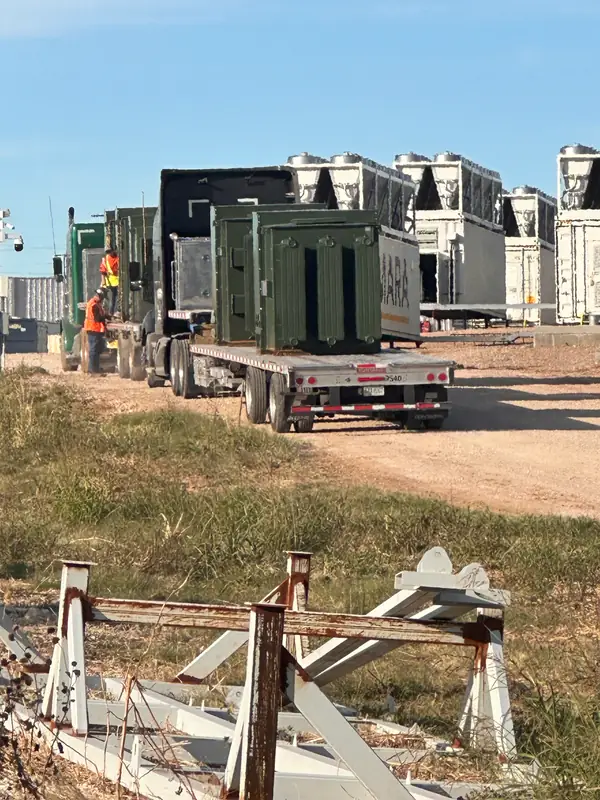
Tell us whether the transformer is indoors or outdoors, whether it is accessible to lifting equipment, and whether there are known gate, road, overhead-clearance, or work-hour limits. For large substation units, transport can require specialized planning, and oversize or overweight loads may need permits. State-highway permits do not replace any local road approvals that may apply.
Before pickup, the written offer will state what is included and who handles rigging and freight. See transformer removal and pickup planning for additional logistics details.
07How to Sell a Transformer from a California BESS Project
Start by calling or texting Rocky at (951) 403-5738, or submit the website contact form. Send nameplate and overall photos, the number of units, the California location, and a straightforward condition description. You can also send available test reports, PCB or fluid records, and details about ownership and site access.
Rocky reviews the information and may ask follow-up questions to confirm specifications, records, or pickup requirements. If the equipment is a fit, you receive a written offer stating the price, what is included, who handles loading or rigging and freight, and payment terms and timing. Review those terms before any pickup is scheduled.
The seller must own the equipment or have authority to sell it. Utility-owned equipment located at a project site cannot be sold by the property owner. Learn more about the steps on how to sell your transformer in California. Reviewing a transformer costs nothing and creates no obligation.
08Keep Project Leftovers Separate and Identified
If a project has multiple units or mixed electrical equipment, list each transformer separately by quantity, rating, and condition. Pairing each nameplate image with an overall photo reduces confusion between similar-looking units and helps prevent records from being matched to the wrong serial number.
Keep any loose accessories or documents associated with the correct transformer, and note what is stored separately. If a unit has been removed already, say where it is located and describe current access. California Transformer Buyer considers used, surplus, new-surplus, pulled, decommissioned, spare units, and project leftovers from sellers across California; a review is not a promise to purchase every unit.
FAQBattery Storage (BESS) Projects FAQ
Can I sell a BESS transformer that was never energized?
Yes, new-surplus transformers that have never been energized may be reviewed, including equipment still crated or stored on skids. Send photos showing the unit and its nameplate, plus the quantity, location, and storage condition. Include available factory test reports and purchase or project records if you have them. The review does not guarantee a purchase; any offer and its terms are provided in writing.
Will you consider one spare transformer, or only a complete project lot?
California Transformer Buyer reviews single transformers as well as multiple units and mixed lots from California sellers. A lone spare MV step-up transformer can be submitted with its nameplate details, condition, and location. If you have several units, identify each one separately so ratings, condition, and documentation can be evaluated without treating unlike equipment as identical.
What if my transformer is still installed at the battery site?
You can ask for a review while equipment is still installed, but the owner’s qualified electrical contractor or the serving utility must handle isolation and disconnection. Do not open, disconnect, or move it yourself. Provide photos only from a safe position and describe access restrictions. The written offer will clarify responsibilities for loading, rigging, freight, and pickup before removal is scheduled.
Can I sell a transformer when its PCB status is unknown?
You can provide the available records and ask for a review, but do not label unknown equipment as non-PCB without supporting documentation. Share any existing PCB labels, test results, fluid records, and manufacturing information. PCB rules can depend on concentration, equipment history, and applicable requirements. Sellers should rely on qualified environmental professionals and appropriate testing or documentation for determinations; this is not legal advice.
What should I include when requesting an offer?
Send a readable nameplate photo, an overall photo, unit quantity, California location, and condition. Add available test reports, fluid and PCB records, details about whether the transformer was energized, and any known missing accessories or damage. Note whether you own the unit or have authority to sell it, and describe site access or removal constraints. Texting photos to (951) 403-5738 is an option.
Do you buy utility-owned transformers at a BESS property?
A property owner cannot sell utility-owned equipment simply because it is located on the property. The seller must own the transformer or have authority to sell it. If ownership is unclear, confirm it through project, purchase, or utility records before representing the equipment for sale. California Transformer Buyer is not affiliated with utilities and does not claim utility approval or endorsement.