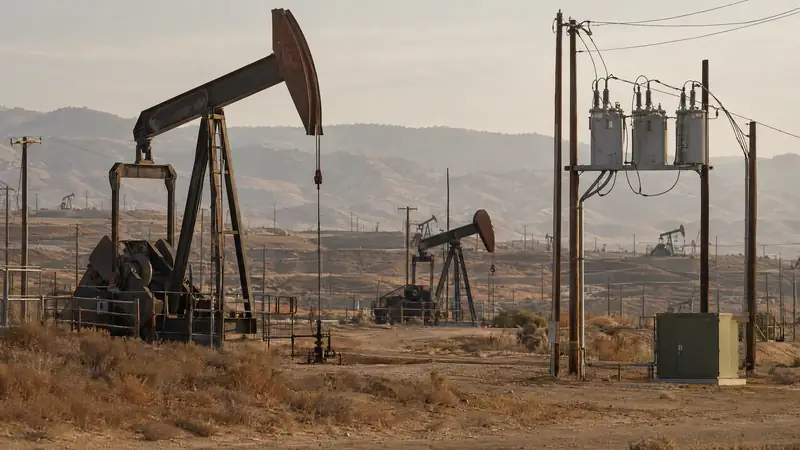
01Why Oil & Gas Operations Surplus Transformers Become Available
Oil & gas operations surplus transformers often result from field electrification changes, idle wells, equipment consolidation or revised pumping requirements. A transformer that served an earlier motor or drive arrangement may no longer match the replacement equipment, even when it remains serviceable.
Canceled projects can also leave never-energized equipment on skids, while maintenance programs may hold spare units beyond their expected need. Separate active reserves from equipment released for sale before requesting a review. Our surplus transformer buying page covers unused inventory and project leftovers.
- Pole-mount banks no longer assigned to producing wells
- Drive isolation units replaced during motor-control upgrades
- Pad-mounted equipment left after load consolidation
- Station-class transformers released during facility retirement
- Unused spares purchased for canceled electrical projects
02Transformer Types Used Around Wells and Processing Facilities
The right equipment depends on motor load, distribution voltage and the facility’s electrical design—not simply whether the site produces oil or gas. The ratings below are examples of standard sizes to look for, not a claim that every operation uses the same range.
Keep pole-mount transformer banks identified by individual serial number and bank assignment. For drive isolation transformers, include the drive application and connection diagram; specialty winding arrangements may affect reuse options.
| Equipment | Standard rating examples | Details to provide |
|---|---|---|
| Single-phase pole-mount units | 25, 50, 75, 100, 167 kVA | Each unit’s rating, voltages and bank connection |
| Three-phase pad-mount units | 300, 500, 750, 1000, 2500 kVA | Primary connection, secondary voltage and switching |
| Dry-type and drive isolation units | 75, 150, 225, 500 kVA | Exact rating, connection and enclosure condition |
| Substation or station-class equipment | 5, 7.5, 10 MVA and higher | All cooling-stage ratings, accessories and weight |
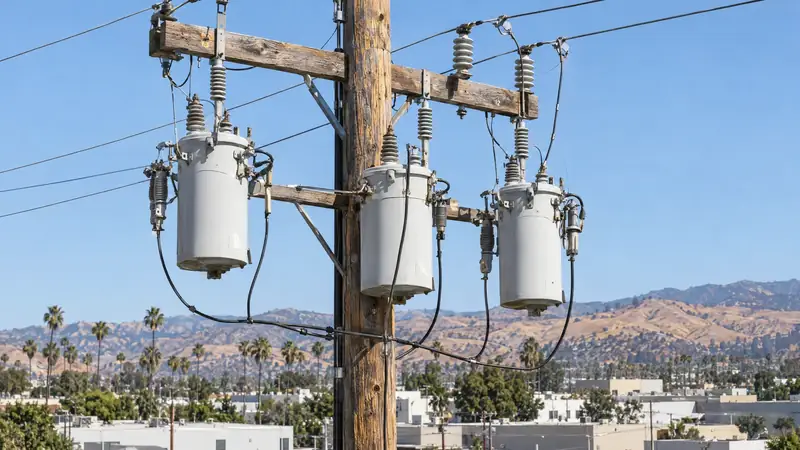
03Nameplate and Maintenance Records That Support an Offer
Start with readable nameplate photographs taken from a safe position on equipment you are authorized to access. Include overall views showing the enclosure or tank, accessible exterior accessories and visible damage. Do not open compartments to obtain information.
Oilfield records may be spread across maintenance files, procurement records and project closeout packages. Match reports to serial numbers rather than relying only on a well number or yard tag. Existing records help a used transformer buyer in California distinguish documented serviceable equipment from units with unresolved condition questions.
- Manufacturer, serial number, year and kVA or MVA
- Phase, frequency, primary and secondary voltages
- Delta/wye connections, taps, impedance and BIL
- Cooling class, temperature rise and fluid type
- Fluid quantity, listed weights and winding material
- Factory reports, turns-ratio tests and insulation-resistance results
- Existing oil tests, DGA and PCB documentation
- Service history, storage history and reason for retirement
04Voltage Changes, Drive Upgrades and Bank Compatibility
A field’s utility service voltage does not establish every transformer’s rating. Customer-owned distribution can include additional transformation, and a motor’s voltage alone does not identify its upstream equipment. Record the actual HV and LV nameplate values and connection diagram.
California configurations include 12 kV-class primaries and three-phase 480Y/277 V secondaries, but older and specialty installations can differ. PG&E documents 12 kV and nominal 21 kV distribution; SCE documents 4 kV, 12 kV and 16 kV distribution, among other levels. These utility facts are not a substitute for the equipment plate.
For a bank of single-phase units, list each transformer separately and describe the known bank connection. Equal kVA ratings do not establish compatibility: voltages, polarity, impedance and connection also matter. Likewise, a drive isolation transformer should not be represented as interchangeable with a general-purpose unit merely because the kVA matches.
05Ownership, Shutdown Timing and Oilfield Pickup Access
Confirm who owns each unit before offering it. A transformer inside a lease or facility boundary may belong to the serving utility, a lessor or another operator. Property access alone does not establish authority to sell it.
Distinguish equipment already removed from units still serving a well, water-handling system or processing load. De-energizing and disconnecting belong to the owner’s qualified electrical contractor or serving utility. Qualified personnel must account for possible generator, solar or battery backfeed.
For remote leases, describe access roads, gates, escort requirements, staging restrictions and loading arrangements. Heavy station-class equipment may require route review and permits. Our transformer removal and pickup guide explains the information needed to define responsibilities before scheduling.
- Site contact and required entry authorization
- Operating equipment nearby and access restrictions
- Known dimensions, shipping weight and available records
- Planned outage or contractor release date
- Which party is responsible for rigging and loading
06Fluid and PCB Records for Older Oilfield Equipment
Provide existing fluid tests and PCB records, particularly for older liquid-filled units. Under federal TSCA classifications, non-PCB means below 50 ppm—not zero PCBs. Unknown-status equipment may require regulatory assumptions until testing or qualifying documentation establishes concentration.
California has stricter rules for PCB-containing oil. Oil containing 5 ppm or more PCBs is excluded from California’s used-oil category; that does not mean every transformer at 5 ppm is automatically hazardous waste. The correct pathway depends on testing, documentation and the equipment’s condition.
A working transformer sold for reuse is equipment, but leaking units, drained oil and failed equipment need proper determination. Rely on qualified environmental professionals for testing and management decisions. This is not legal advice, and sellers should not drain or sample equipment themselves.
07Request a Written Offer for Your California Inventory
Call or text Rocky at (951) 403-5738, or use the transformer offer request form. Send the photos and records available, along with quantity, California location and condition. Reviewing your transformer costs nothing and there is no obligation.
Rocky reviews the information and asks follow-up questions about ownership, tests, fluid records and access. Any written offer states what is included, who handles rigging and freight, and payment terms and timing. Pickup is scheduled according to the agreed terms.
For multiple leases or a yard cleanout, use one inventory sheet with a row per serial number. Keep energized, removed and never-energized units clearly separated. See transformer liquidation guidance for organizing a larger equipment lot.
FAQOil & Gas Operations FAQ
Can I offer a transformer from an idle well that might return to production?
Yes, if you own it or have authority to sell it, but first confirm that operations has released it from reserve duty. An idle well does not necessarily make its electrical equipment surplus. Tell Rocky whether the unit is still connected, reserved for restart or formally available, and identify any release date that would affect pickup.
Are unused transformers purchased for a canceled field project eligible?
California Transformer Buyer reviews new-surplus equipment as well as previously energized units. Provide purchase records, factory test reports and storage information if available. Never energized does not necessarily mean undamaged: missing accessories, outdoor exposure and storage condition still matter. Photograph packaging and visible equipment safely without opening electrical compartments.
What if some transformers in a bank are missing or damaged?
Submit the remaining units individually, with their serial numbers, ratings and known condition. Explain whether the original bank is incomplete and identify any known bushing damage, leaks or missing parts. Individual transformers may warrant review independently, but an incomplete bank should not be described as a ready-to-use three-phase assembly. Purchase suitability is evaluated unit by unit.
Do I need new test reports before asking for an offer?
Start with the records you already have; do not commission testing solely on the assumption that it is required for every sale. Rocky can identify documentation questions during review. Additional testing may be relevant to condition or fluid status, but any electrical or environmental testing should be arranged through appropriately qualified professionals, not performed by the seller.
Can several California operating sites be included in one request?
Yes. Identify each California location separately and connect every inventory entry to its site and serial number. Different access rules, ownership arrangements and release schedules can affect the terms for each location. A consolidated request makes the inventory easier to review, but it does not imply that every unit will be purchased or collected together.