01How to Sell a Transformer Without Missing Critical Details
A transformer sale starts with identifying what you have, not arranging a truck. The buyer needs to establish the electrical configuration, condition, ownership and practical cost of getting the equipment off site. A clear first submission reduces uncertainty and makes follow-up questions more useful.
California Transformer Buyer reviews single units, project leftovers, spare equipment and mixed lots across California. That includes previously energized equipment, pulled units and new-surplus transformers that have never been energized. Reviewing your transformer costs nothing and there is no obligation.
Use this transformer guide in order: establish sale authority, collect safe photographs, document specifications and history, address fluid records, clarify access, then review the written transaction terms. You can also review the transformer buying process before preparing your submission.
02Step 1: Confirm Ownership, Location and Electrical Status
Confirm that you own the transformer or have written authority to sell it. A transformer serving your property may belong to the utility rather than the property owner. Utility-owned equipment cannot be sold by the property owner; provide a utility release where applicable.
Identify the exact California location, quantity and contact responsible for access. For a multi-unit lot, assign each unit a simple identifier and keep its photos, serial number and records together. Note whether the equipment is installed, stored outdoors, indoors, crated or on skids.
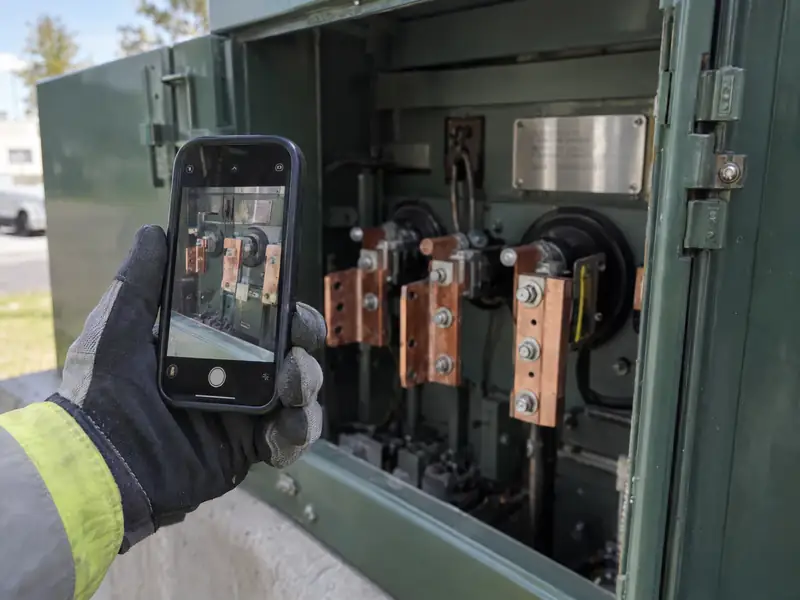
Report its known energized or de-energized status and whether it has been disconnected. Do not infer that a unit is electrically safe because the building is vacant or its gauges appear inactive. Solar, batteries and generators can create backfeed sources.
Only the owner’s qualified electrical contractor or serving utility should handle de-energizing and disconnection. Qualified personnel are responsible for appropriate clearance, isolation, lockout, voltage verification and grounding as applicable. Your role is to report known status and provide authorized access—not perform electrical work.
- Owner or authorized seller’s name.
- Quantity and exact site location.
- Utility release, if applicable.
- Known electrical and disconnected status.
- Site contact and access restrictions.
03Step 2: Take Safe Exterior Photos and Readable Nameplate Images
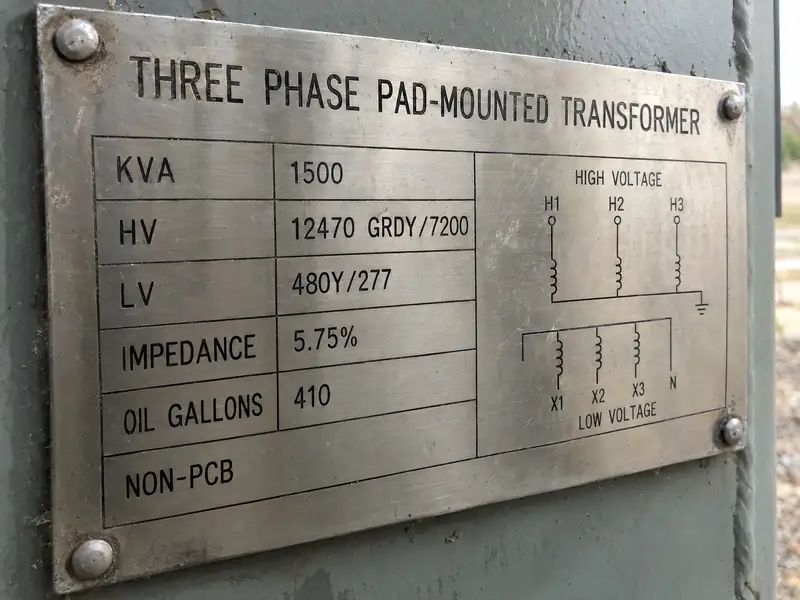
Take photographs only from a safe position at equipment you are authorized to access. A useful starting set includes an overall view, accessible exterior sides and a straight-on nameplate close-up. Keep the text readable and avoid glare where practical.
Photograph visible radiators, bushings, valves, cabinet exteriors, accessory plates and control plates without opening compartments or approaching exposed electrical parts. Include ground-level clearances and nearby obstructions so the buyer can understand the setting.
If a nameplate is inside a locked electrical compartment or cannot be photographed safely, say so. Do not open the compartment for a sales photo. Only qualified personnel may open electrical compartments after the required safety steps.
The transformer nameplate reading guide explains the fields buyers use to identify equipment. Send the complete plate rather than a cropped image showing only the kVA rating; voltages, connections and cooling details can change the evaluation.
- Overall equipment and installation view.
- Readable full nameplate and serial number.
- Accessible exterior sides and cabinet condition.
- Visible accessories, damage or leaks.
- Surrounding space and removal access.
04Step 3: Record Ratings, Accessories and Operating History
Copy specifications directly from the nameplate rather than estimating them from cabinet size. A 1000 kVA three-phase pad-mounted transformer with a 480Y/277 V secondary is not interchangeable with one having a 208Y/120 V secondary. Likewise, a general description such as “12 kV primary” does not replace the exact listed voltage and connection.
For substation or station-class equipment, include every cooling-stage rating. A plate marked 12/16/20 MVA ONAN/ONAF/ONAF identifies different capacities under different cooling arrangements. Record impedance, BIL, taps, temperature rise and fluid type when shown.
Describe condition candidly: storage environment, corrosion, oil leaks, damaged bushings, missing parts, repairs and the date last operated. Disclose known overload, fault or flood exposure. New-surplus status means never energized; it does not by itself establish that storage caused no deterioration.
Include the factory report and available recent service tests, such as turns ratio, winding resistance, insulation and appropriate dielectric tests. Liquid dielectric reports and dissolved gas analysis may also apply. This is a records checklist, not a testing procedure; qualified personnel should determine any additional testing needed.
| Field | What to provide | Why it matters |
|---|---|---|
| Capacity | kVA or all MVA cooling stages | Establishes rated capacity |
| Electrical configuration | Phase, HV/LV voltages, connections, taps | Identifies potential applications |
| Insulation and cooling | BIL, rise, cooling class, fluid | Clarifies design requirements |
| Accessories | Fans, gauges, switches, fuses, LTC | Shows included and missing equipment |
| Identification | Manufacturer, serial number, year | Connects equipment to its records |
05Step 4: Gather Fluid and PCB Documentation Before Making Assumptions
For liquid-filled equipment, provide existing fluid test reports, PCB documentation and visible labels. A “non-PCB” label does not mean zero PCBs. Federal TSCA categories are non-PCB below 50 ppm, PCB-contaminated from 50 to below 500 ppm, and PCB Transformer at 500 ppm or more.
Unknown status requires care. Some older mineral-oil equipment with unknown concentration may have to be assumed PCB-contaminated, while equipment with unknown fluid and date may have to be assumed a PCB Transformer until testing or qualifying documentation establishes its status. Rely on records and qualified environmental professionals, not appearance or age alone.
California excludes oil containing 5 ppm or more PCBs from its “used oil” category. That does not mean every transformer at 5 ppm is automatically hazardous waste. The correct management pathway depends on testing, documentation and the equipment’s circumstances.
A working transformer sold for reuse is equipment, but leaking units, failed units and drained oil need proper determination. Consult California PCB guidance for transformer sellers for the regulatory distinctions and the guide to transformer oil testing and DGA for the role of existing reports. This information is not legal advice; do not drain or sample equipment yourself.
06Step 5: Document Loading Access and Removal Responsibilities
Removal conditions belong in the evaluation, not in a last-minute conversation after acceptance. Provide available dimensions, operating and shipping weights, identified lift or rigging points and access information for a forklift or crane. Do not estimate lifting suitability or move equipment to improve access yourself.
Describe gates, loading areas, overhead restrictions, pavement conditions and obstacles visible from safe ground-level positions. Identify removal obligations, including whether associated switchgear, conduit or other equipment must remain. State which accessories are included and which are missing.
Large substation transformers may require transport preparation, such as removal of radiators or bushings by qualified specialists. Oversize or overweight loads may require Caltrans permits on state highways and separate local approvals. Shipping weight and transport dimensions therefore matter as much as installed dimensions.
Review transformer removal and pickup considerations when gathering site details. Do not assume rigging, freight, disconnection or site restoration is included; those responsibilities need to be addressed in writing.
07Step 6: Request an Offer and Review Its Scope
Call or text Rocky at (951) 403-5738, or use the transformer seller submission form. Send the nameplate and overall photos with quantity, California location and condition. Explain any missing information rather than delaying the initial inquiry indefinitely.
Rocky reviews the submission and may ask for test reports, fluid or PCB records, ownership information and site access details. Rating, voltage configuration, condition, completeness, documentation and removal complexity all affect the evaluation. The guide to used transformer value explains these factors in more detail.
The written offer should identify the equipment, what is included, who handles loading or rigging and freight, and payment terms and timing. Match serial numbers and quantities to your records, particularly when some units in a lot are being retained.
- Verify equipment identification and quantity.
- Confirm included accessories and exclusions.
- Confirm loading, rigging and freight responsibilities.
- Clarify contractor work and removal obligations.
- Read payment terms and timing before accepting.
08Step 7: Coordinate Pickup and Payment Under the Written Terms
After the terms are agreed, removal is scheduled. Coordinate the site contact, authorized access and any required contractor or utility work with the responsible parties. If condition, included accessories or access changes, communicate that before pickup.
Keep the accepted offer and equipment records available during the handoff. For multiple units, reconcile identifiers against the agreed list so an adjacent spare or utility-owned unit is not confused with the equipment being sold.
The unit is picked up and paid for as stated in the written terms. Do not assume payment occurs at a particular moment unless the agreement says so. Confirm any required transaction paperwork and retain the offer, handoff records and payment confirmation.
For an installed unit, a stored spare or a full yard of equipment, the same rule applies: clear identification and written responsibilities come before removal. Use the contact form to request an offer or call Rocky when your initial photos and location details are ready.
FAQHow to Sell a Transformer: Step-by-Step FAQ
Can I request an offer if the transformer is still energized?
Yes. You can submit safely obtained exterior photographs, existing records and the known electrical status for review. An inquiry does not require you to disconnect equipment first. Tell Rocky that it is still energized and identify any planned shutdown. The owner’s qualified electrical contractor or serving utility must handle de-energizing and disconnection, with responsibilities and scheduling clarified before removal.
What if the nameplate is missing or unreadable?
Send whatever safe exterior photographs and existing records you have, and clearly state that the plate is missing or unreadable. Factory reports, purchase records and equipment drawings may help identify the unit when they can be reliably tied to it. Do not guess the voltage or capacity. Missing identification can limit evaluation and may require additional verification before an offer can be made.
Do I need new electrical or oil tests before contacting a buyer?
You can start with available records rather than commissioning tests immediately. Send factory reports, service tests and fluid documentation you already have, along with condition history. Rocky may request more information after reviewing the equipment. Whether additional testing is appropriate depends on the unit and its history; qualified electrical or environmental professionals should determine the scope and perform the work.
Can a failed or leaking used transformer still be considered?
Disclose the failure, leakage and any known fault exposure when submitting the equipment. These issues change the evaluation and may affect environmental handling and removal requirements. A purchase is not guaranteed. Do not drain the tank or attempt repairs to prepare it for sale; rely on qualified professionals to determine its condition and the appropriate management pathway.
Do newer efficiency standards prevent older transformers from being resold?
DOE distribution transformer efficiency standards apply to manufacture. They do not make existing used or surplus units illegal to resell simply because newer standards exist. That does not establish suitability for a particular installation: the buyer still needs to verify ratings, condition and applicable project requirements. Provide the actual manufacture year and specifications rather than assuming an older unit has no resale use.
Should I send one inquiry for a mixed lot or contact you separately for each unit?
A single inquiry can cover a mixed lot in California, from a few spare units to a full yard. Provide a list with one identifier per transformer, its location, electrical rating and condition, then match photographs and reports to that identifier. Highlight differences in ownership or removal access. This lets the review distinguish individual units without losing track of the overall lot.