01How to Identify a Furnace Transformer Before You Sell
A furnace transformer buyer looks for equipment designed for an unusually demanding load, not simply a large transformer near an industrial furnace. Furnace duty commonly combines low secondary voltage, very high current, frequent operating changes, and significant cyclic or fault stresses. The nameplate and supporting records are more reliable than appearance alone.
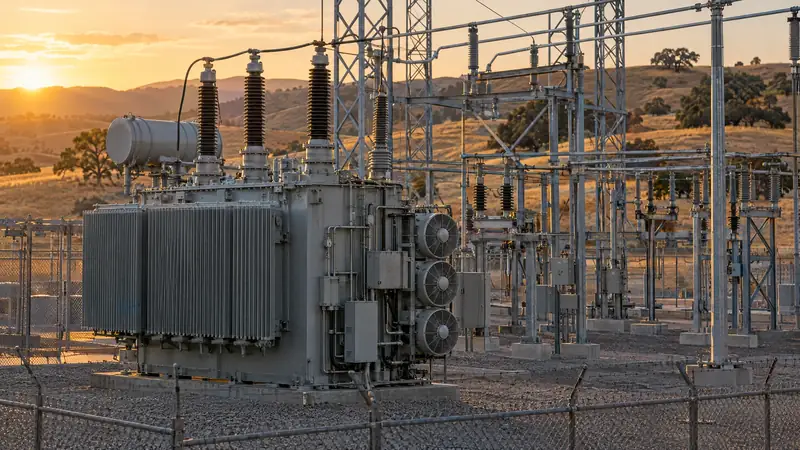
From a safe position, note visible features such as heavy bus connections, large conductors, prominent cooling equipment, and a wide tap range or load tap changer (LTC). Some installations pair the transformer with a reactor. Photograph the complete assembly and any separate components, but do not open compartments or approach equipment unless authorized and safe to do so.
The nameplate may identify furnace or arc-furnace duty and show multiple ratings, voltage stages, tap positions, impedance, cooling, or special duty information. If the plate is difficult to read, send a clear photo of it along with an overall view. A general guide to [transformer types](transformer types and common configurations) can help distinguish specialty equipment from ordinary distribution units.
- Look for low-voltage, high-current secondary connections.
- Record all rating stages and tap positions.
- Include reactor or auxiliary equipment in photos.
- Do not rely on cabinet appearance to establish duty.
02How Furnace Transformers Work in Arc and Induction Service
A furnace transformer changes plant medium- or high-voltage supply to the voltage and current needed by a furnace process. In electric arc service, the secondary supplies high current to the electrode and furnace circuit. The transformer must withstand changing operating conditions and the electrical stresses associated with the furnace duty.
Induction furnace systems use transformer arrangements suited to their process and may include converter equipment. Their secondary voltage can therefore be application-specific rather than the very-low-voltage pattern commonly associated with arc duty. In both cases, exact ratings, connections, impedance, cooling, and duty information matter when evaluating whether a unit suits a future project.
These transformers are used in steel and metal melting and other metal-processing operations. California sellers may have equipment at operating plants, project sites, or facilities being upgraded or decommissioned; we do not assume a particular location or use from the equipment alone. A [rectifier transformer](rectifier transformer for converter service) is a related specialty type, but it is not automatically interchangeable with a furnace transformer.
| Equipment type | Typical service | Details to document |
|---|---|---|
| Arc-furnace transformer | Electrode and melting duty | Secondary current, taps, reactor |
| Induction-furnace transformer | Induction process system | Voltage, converter arrangement, duty |
| Transformer/reactor package | Coordinated furnace circuit | Each unit’s ratings and connections |
03Furnace Transformer Sizes, Voltages, and Construction Variations
Furnace transformer sizes vary widely. Industrial units are commonly multi-MVA; arc-furnace units can reach tens or hundreds of MVA, while small induction systems may be lower-rated. These are broad equipment categories, not a substitute for the actual nameplate rating. Include every listed capacity stage, rather than selecting only the first or largest figure.
The primary is typically at plant medium or high voltage. An arc-furnace secondary may be in the tens to hundreds of volts while carrying very high current; induction equipment may require a converter-specific voltage. Send the exact primary and secondary values, tap positions, phase, connection diagram, and frequency if shown. Our [kVA and MVA guide](transformer kVA and MVA size guide) and [voltage guide](transformer voltage identification guide) explain common rating fields.
Large units are often oil- or ester-filled. Suitable smaller units may be dry-type or use another engineered cooling arrangement. Design may also vary in tap-changing equipment, impedance or reactance, cooling configuration, and whether a reactor is supplied as part of the package. For oil-filled equipment, record the fluid type and gallons if the nameplate provides them. Cooling labels are useful; see [transformer cooling classes](transformer cooling classes and nameplate terms) for general definitions.
04What Affects the Resale Value of a Used Furnace Transformer
Furnace transformers are specialist assets, not substitutes for standard pad-mount or general-purpose power transformers. Their resale potential depends on whether a buyer can verify the duty and match the unit to a suitable application. Capacity alone does not establish value, and an unusually large rating does not guarantee a market for a specific configuration.
Condition and documentation are important. A complete unit with readable ratings, known fluid status, relevant test reports, and a clear repair record is easier to assess than equipment with missing data or unresolved damage. Tap-changer condition, short-circuit history, electrode-duty history, leaks, corrosion, damaged bushings, missing parts, and evidence of repairs all affect review.
Configuration also matters: primary and secondary voltages, tap range, connection, impedance, cooling, winding material when identified, and reactor-package details help determine potential reuse. Age, quantity, new-surplus versus used status, and site access can also affect an offer. For oil-filled units, provide existing PCB labels or test documentation; rely on records, testing, and qualified environmental professionals to determine handling requirements. This information is not legal advice.
- Nameplate completeness and legibility
- Tap-changer, short-circuit, and duty history
- Test reports and repair documentation
- Fluid, PCB, and environmental records
- Completeness of transformer and reactor package
- Access and removal complexity
05What to Send a Furnace Transformer Buyer for an Offer
To request an offer, send nameplate photos, overall equipment photos, the number of units, the California location, and a short description of condition. Share photos only from a safe position and only where you are authorized to access the equipment. A photo of any separate reactor, control equipment, or included accessories helps clarify what is being offered.
Useful nameplate details include manufacturer, serial number, year, all kVA or MVA stages, phase, primary and secondary voltage, connection, taps, impedance, BIL, cooling class, temperature rise, fluid type and gallons, and total weight. Also send available test reports, repair history, tap-changer records, PCB documentation, and information about missing or damaged components.
California Transformer Buyer reviews the details and may ask follow-up questions about ownership, testing, environmental records, or site access. The seller must own the equipment or have authority to sell it; equipment owned by a utility cannot be sold by a property owner. Learn what to expect when you [sell your transformer](prepare transformer details for an offer), or [contact Rocky](request a written transformer offer) with your information.
- Nameplate and overall photos
- Unit count and exact location
- Condition, included accessories, and package scope
- Available test, repair, tap, and fluid records
- Ownership or authority-to-sell confirmation
06Plan Safe Removal, Rigging, and Freight Before Pickup
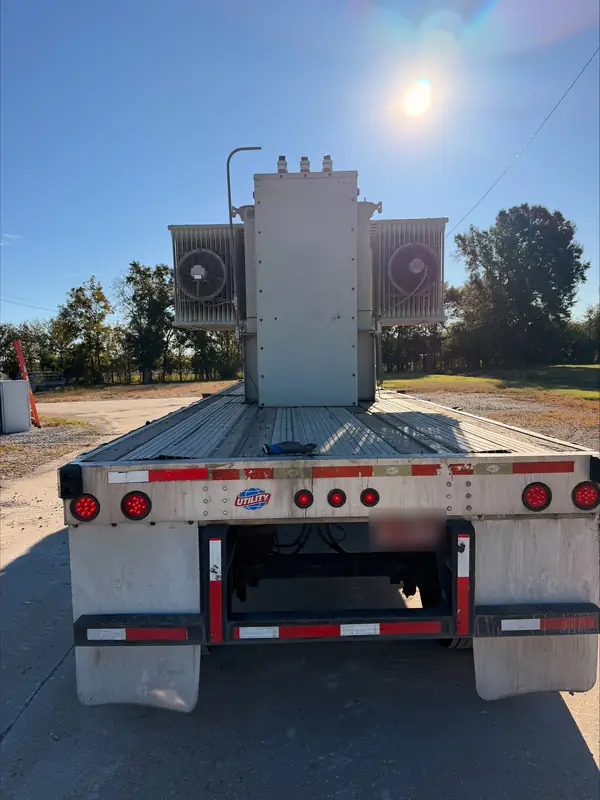
Large furnace transformers can require specialized rigging and freight planning. Weight, dimensions, access routes, lifting points, nearby structures, and whether the reactor or other components ship with the transformer all affect removal planning. Oversize or overweight transport may require permits on state highways, and local roads can have separate requirements.
Do not disconnect, de-energize, drain, open, or move the equipment yourself. The owner’s qualified electrical contractor or serving utility must handle electrical isolation and disconnection. Their safety planning must account for possible backfeed from solar, batteries, or generators. For removal and pickup, [review the removal process](transformer rigging and pickup considerations) and confirm access details before scheduling.
The written offer states the price, what equipment is included, who handles loading or rigging and freight, and the payment terms and timing. Review those terms before pickup so the scope is clear. Any fluid, PCB, or waste questions should be resolved through available documentation and qualified environmental professionals rather than assumptions based on equipment age or appearance.
07Why California Sellers Bring Furnace Transformers to Us
Furnace equipment can be difficult to assess through general transformer specifications alone. We review the actual duty, secondary ratings, tap and reactor information, condition, and available records, then consider what is included and the practical removal scope. This gives California sellers a channel to present a specialist unit without treating it as a standard distribution transformer.
California Transformer Buyer buys used, surplus, new-surplus, pulled, spare, and decommissioned transformers from sellers across California. Reviewing your transformer costs nothing and creates no obligation. Rocky can review a single unit or multiple units, subject to the equipment details and written terms.
Call or text (951) 403-5738, or use the contact form to send your information. Share photos and records you already have; do not access unsafe areas or perform electrical work to gather them. If the equipment is not furnace duty, you can compare other [transformer types](specialty and power transformer categories) before submitting details.
FAQFurnace Transformer FAQ
Can I sell a furnace transformer if it is still installed?
Yes, you can ask California Transformer Buyer to review an installed unit, but do not disconnect or move it yourself. Send safe-position photos, the nameplate, location, condition, and any records you have. If the unit is utility-owned, the property owner cannot sell it; the seller must own the transformer or have authority to sell it. Electrical isolation and disconnection are handled by qualified personnel.
Do you buy a furnace transformer that is untested or has no readable nameplate?
You can still submit it for review. Provide overall photos, any partial nameplate image, known operating history, unit count, location, and details about repairs or damage. Existing test reports are helpful but should not be created by opening or working on the transformer yourself. A lack of verifiable ratings or condition information may limit how confidently the unit can be evaluated.
Will you consider a transformer with its reactor or accessories separated?
Yes, describe exactly what is included and photograph each component from a safe location. Furnace installations may be offered as a transformer-and-reactor package, and separate components can affect how the equipment is assessed. Include available nameplates for the reactor and auxiliary equipment, plus any drawings or records that identify how the components were configured.
Can you make an offer on a failed or repaired furnace transformer?
Send the unit details even if it has failed or undergone repairs. Include the known failure symptoms, repair scope, test results after repair if available, and any missing or damaged parts. Do not assume a failed unit has no resale possibility, or that a repaired unit is ready for service. The condition and documentation determine whether it is suitable for consideration.
What if the transformer has oil but no PCB test records?
Share any labels, fluid records, historical test results, and known equipment dates. Do not drain or sample the oil yourself. PCB status and the correct management pathway depend on testing and qualifying documentation, and California has specific rules for PCB-containing oil. Rely on records, testing, and qualified environmental professionals for environmental determinations; this information is not legal advice.
How does an offer explain removal and payment?
The written offer identifies the price and equipment included, states who handles loading or rigging and freight, and sets out payment terms and timing. Review those terms before pickup and raise questions about site access or package scope in advance. Removal timing is coordinated based on the agreed terms and site conditions; no specific pickup or payment time should be assumed before it is stated in writing.