01What a Control Transformer Does—and What It Is Not
A control transformer, also called a machine-tool transformer or CPT, is a small isolation transformer that supplies power to control circuits. It is designed to maintain adequate secondary voltage when loads such as contactors and solenoids draw higher inrush current as they operate.
Industrial control transformers are commonly installed inside machine enclosures and electrical control panels. They are not utility distribution transformers simply because the nameplate says “transformer.” A control unit is typically rated in volt-amperes (VA), rather than the much larger kVA or MVA ratings common on distribution and substation equipment.
- Often supplies a machine’s control circuit rather than its main power load
- May be specified for control or inrush performance
- Can be offered individually or as part of a surplus lot
02How to Recognize a Control Transformer and Read Its Nameplate
Look for a compact dry-type unit with screw terminals, lead wires, finger guards or primary fuse-block options. Some models have multiple primary connection links so a qualified installer can configure the unit for different supply voltages. Visual appearance is only a clue: confirm the transformer type and ratings from the nameplate or manufacturer documentation.
For a used control transformer, the catalog number is especially useful because it can help verify voltage, VA rating, inrush or regulation specification, and available fuse accessories. Take photos only from a safe position and only of equipment you are authorized to access; do not open an energized enclosure to get a picture.
- Manufacturer and catalog or model number
- Primary voltage and connection links
- Secondary voltage and rated VA
- Frequency, commonly 50/60 Hz
- Control, inrush or regulation specification
- Fuse-block configuration, terminals and visible condition
kVACommon Control & Industrial Control Sizes We Buy
03Where Control Transformers Are Used in California
These transformers supply low-voltage AC control power in motor starters, machine tools, automation panels, HVAC equipment and auxiliary control circuits. California businesses may have them in manufacturing equipment, building systems, production lines and other industrial or commercial installations. A panel can contain several small units, so identify whether the offer covers one transformer or a mixed group.
Control transformers differ from other specialty types. For example, a drive isolation transformer serves a different role in a motor-drive system; a control transformer’s purpose is to power control devices. If you are unsure what is installed, photos of the complete equipment and its nameplate help distinguish it from other transformer types.
04Control Transformer Sizes, Voltages and Common Configurations
Typical control transformer capacity runs from about 25/50 VA through 5,000 VA (5 kVA). A smaller unit may be marked in VA, while larger units can be shown in kVA. Larger enclosed auxiliary or control supplies also exist, so do not assume a unit is a control transformer based on size alone.
Primary ratings commonly include 120, 208, 240, 480 or 600 V AC, or reconnectable combinations. Secondary ratings commonly include 24, 120 or 240 V AC. Confirm the actual nameplate values; the supply voltage and secondary voltage can vary even among units that look alike.
| Nameplate item | Common examples | Why it matters |
|---|---|---|
| Capacity | 25/50 VA to 5,000 VA | Defines rated control load |
| Primary | 120, 208, 240, 480, 600 V | Must match supply configuration |
| Secondary | 24, 120, 240 V AC | Identifies control-circuit output |
05Open-Coil, Encapsulated and Enclosed Construction
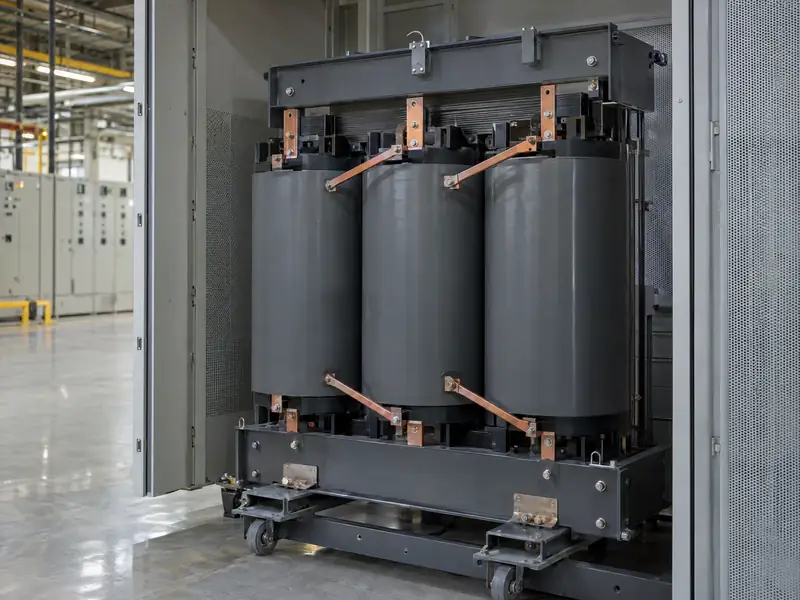
Control transformers are dry-type and may use an open core-and-coil construction or an encapsulated or enclosed design. Open units are often mounted inside a larger panel or machine enclosure; enclosed versions may have a protective housing. Terminal arrangements, guards and fuse options vary by model.
The enclosure or mounting style alone does not establish the transformer’s electrical suitability or resale value. A complete, identifiable unit with its original accessories is easier to evaluate than one with missing links, terminals or fuse components. For a broader comparison of dry and liquid-filled equipment, see this guide to dry-type and oil-filled transformers.
06What Affects the Resale Value of a Used Control Transformer
Value depends on whether the unit can be identified and reused, not simply on its weight or appearance. Exact catalog number, primary links, secondary voltage and VA rating help establish what applications it can serve. Inrush or regulation specifications may matter to buyers matching a transformer to a particular control load.
Condition and completeness also matter. Winding condition, visible damage, corrosion, missing terminals or accessories, and any available test or service records can affect evaluation. New-surplus equipment with clear documentation is different from a used unit that has been in service. When a surplus group includes other transformer types, identify them separately; a [3 kVA transformer] or [5 kVA transformer] may be a different product from a control unit despite a similar capacity label.
There is no automatic value based on a single nameplate number. California Transformer Buyer reviews each unit and lot based on its specifications, condition and reuse potential.
07What to Send a Control Transformer Buyer for an Offer
To start a review, send a clear nameplate photo, an overall photo of each unit or lot, the quantity, its California location and a brief description of its condition. Include catalog numbers and any available test records or purchase documentation. If the unit is new-surplus, note whether it is unused and how it is stored.
Rocky reviews the information and may ask follow-up questions, including about ownership, condition or site access. Sellers must own the equipment or be authorized to sell it; a property owner cannot sell utility-owned equipment. The process and contact options are explained on the sell your electrical transformers page. You can also review other surplus transformer sales or contact Rocky through the offer request page.
- Nameplate and overall photos
- Quantity and California location
- Used, removed or new-surplus status
- Known condition and included accessories
- Available testing or service records
08Removal Planning and Why California Sellers Contact Us
Control transformers may be mounted inside equipment or integrated into a panel, so removal depends on the installation and access conditions. De-energizing and disconnecting electrical equipment must be handled by the owner’s qualified electrical contractor or the serving utility, as applicable. Do not remove, open or move the transformer to prepare it for sale.
Before pickup, the written offer states what is included, who handles loading or rigging and freight, and the payment terms and timing. Removal is scheduled under those agreed terms. For equipment requiring pickup coordination, review the details about transformer removal and pickup.
California Transformer Buyer, run by Rocky and based in Riverside County, reviews equipment from sellers across California. Sellers bring control units and mixed surplus lots for review when they need a clear written offer and defined pickup responsibilities. Reviewing the transformer costs nothing and creates no obligation.
FAQControl & Industrial Control Transformer FAQ
Can I sell a control transformer that has already been used?
Yes, California Transformer Buyer reviews previously energized control transformers as well as surplus and new-surplus units from California sellers. Include the nameplate, visible condition and any available service or test records so the unit can be assessed for identification and reuse. An offer is not guaranteed; the review depends on the specific equipment and information provided.
Do you buy small control transformers, or only large kVA units?
Control transformers are commonly rated in VA, and the typical range extends from roughly 25/50 VA to 5,000 VA. California Transformer Buyer considers the unit’s exact catalog number, condition, accessories and resale potential. Small individual units may also be submitted as part of a larger surplus lot, with each transformer identified as clearly as possible.
What if the nameplate is missing or unreadable?
Send an overall photo and any readable markings, such as a manufacturer name, catalog number or terminal labels. Do not open an enclosure or disturb wiring to search for a hidden plate. Without reliable identification, it may be harder to confirm voltage, capacity and application, and the buyer may need more information before deciding whether to make an offer.
Can I sell control transformers installed inside a machine or panel?
You can ask for a review, but first confirm that you own the equipment or are authorized to sell it. A working transformer installed as part of a larger machine or panel may require coordination about what is included and how removal would be handled. A qualified electrical contractor or serving utility must manage electrical isolation and disconnection.
Should I test a control transformer before asking for an offer?
Testing can help document condition, but it is not required to send initial photos and request a review. Share any existing test results or maintenance records rather than attempting electrical work yourself. Testing or inspection should be performed by qualified personnel using appropriate procedures, and the buyer may ask follow-up questions based on the unit’s details.
How are payment and pickup arrangements confirmed?
If the unit fits, the seller receives a written offer with the price, included equipment, responsibility for loading or rigging and freight, and payment terms and timing. Pickup is scheduled under those written terms. Confirm the scope and responsibilities before pickup so both sides understand which transformers and accessories are part of the transaction.