01How a 120/240 V Transformer Supplies Power
A 120/240 V transformer is a single-phase unit with a center-tapped secondary winding. The two outside conductors provide 240 V line-to-line; each outside conductor measures 120 V to the neutral at the center tap. This arrangement is often written as 120/240 V or 240/120 V on equipment records.
This is a common California distribution voltage for residential services and some small commercial and agricultural loads. It can serve 120 V lighting and receptacle circuits alongside 240 V equipment, subject to the installation design and the transformer’s capacity. For other common secondary configurations, see our guide to transformer voltages and configurations.
02Distinguish Center-Tapped Service from Delta Voltages
Voltage notation can be confusing when a transformer has a 240 V secondary. A standard 120/240 V center-tapped winding is not the same as a 240 V delta secondary, and it is not the same as 208Y/120 V three-phase service. Check the connection diagram and the number of wires as well as the voltage label.
A 240/120 V high-leg delta is a separate, four-wire arrangement. Two phase-to-neutral readings are 120 V, while the high leg is about 208 V to neutral. That is different from a 120/240 V single-phase center tap.
| Nameplate or system | What it indicates | Key distinction |
|---|---|---|
| 120/240 V | Single-phase, center-tapped | 240 V line-to-line; 120 V each line to neutral |
| 240 V delta | Three-phase delta | Not a 120/240 V center tap |
| 240/120 V high-leg delta | Four-wire delta | High leg is about 208 V to neutral |
| 208Y/120 V | Three-phase grounded wye | 208 V line-to-line; 120 V line-to-neutral |
03Transformer Types and kVA Ratings That May Have 120/240 V
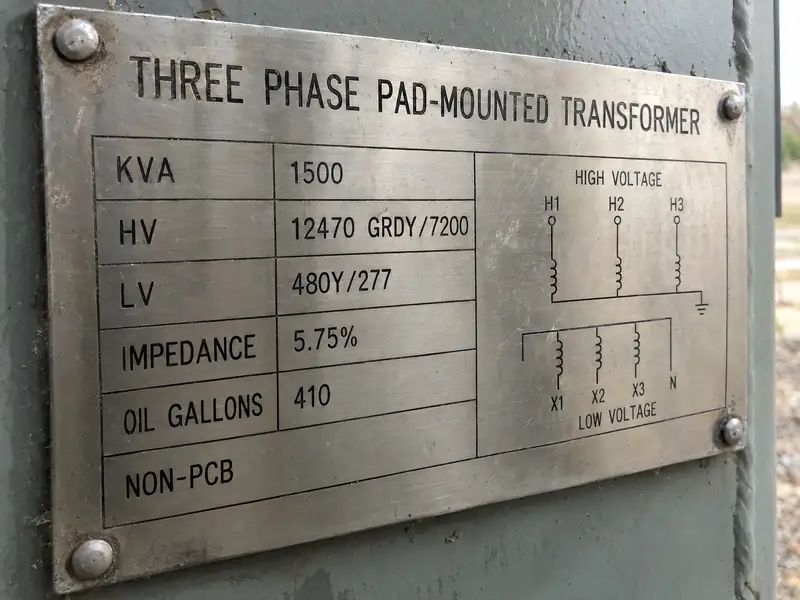
This secondary voltage is commonly found on single-phase pole-mount and pad-mount distribution transformers. Smaller dry-type units may also have a 120/240 V winding, depending on the design. Three-phase pad-mount units more commonly have secondary configurations such as 208Y/120 V or 480Y/277 V; verify the specific unit rather than assuming its voltage from the enclosure.
Standard single-phase distribution ratings include 3, 5, 10, 15, 25, 37.5, 50, 75, 100, 167 and 250 kVA, among others. Not every rating is available with every voltage, connection or construction. See the broader list of standard transformer kVA sizes and our descriptions of transformer types and configurations.
- Record the full kVA rating, not just a rounded estimate.
- Include phase, primary voltage, taps and secondary connection.
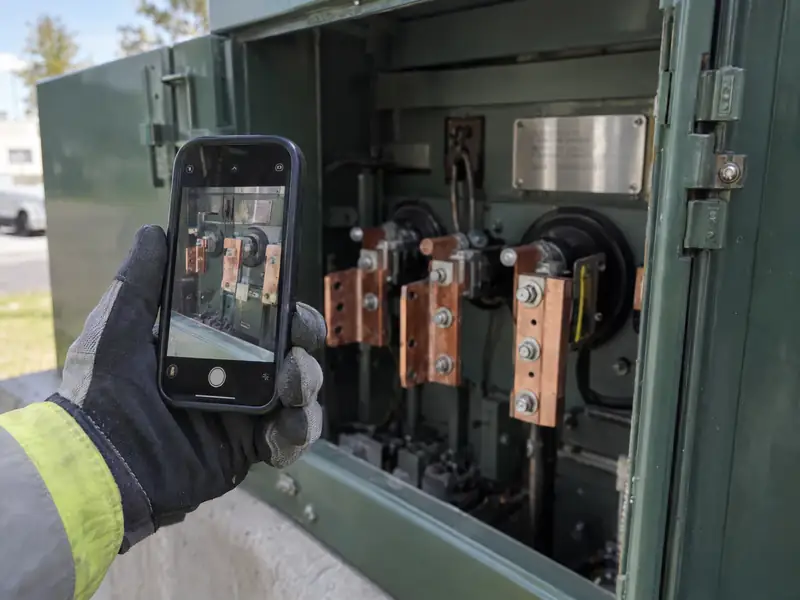
- Photograph the complete nameplate when safe and authorized.
04What to Verify on the Nameplate Before Reuse
Secondary voltage alone does not establish whether a transformer will suit a replacement project. A buyer or engineer will compare its primary voltage and tap range with the available supply, then check phase, frequency, connection, kVA capacity and the intended load. The unit’s physical configuration and accessories also need to match the installation.
Useful nameplate details include manufacturer, serial number, year, primary and secondary voltage, taps, impedance, BIL, temperature rise, cooling class and winding material if stated. For a liquid-filled unit, include fluid type and gallons; for any unit, note overall condition and available test records. Our transformer nameplate guide explains these fields.
05California Uses and Compatibility Considerations
In California, a 120/240 V secondary may be encountered at homes, small commercial properties, farms and other sites with single-phase loads. The exact service arrangement depends on the location and serving system. Do not infer a utility’s primary voltage from the 120/240 V secondary: California distribution voltage varies by utility and system, so confirm the primary rating from the actual nameplate and project documents.
For reuse, the receiving installation must be compatible with the transformer’s primary supply, secondary wiring, capacity, protection, grounding, physical layout and applicable requirements. A transformer that matches the secondary voltage can still be unsuitable because its primary voltage, phase, condition or configuration differs. Qualified electrical personnel should determine installation suitability.
06Information to Send When You Sell a 120/240 V Transformer
California Transformer Buyer reviews used, pulled, surplus and new-surplus transformers from sellers located in California. To have a 120/240 V transformer considered, send a clear nameplate photo, overall photos taken from a safe position, quantity, location and condition. Do not access equipment you are not authorized to photograph or approach in an unsafe area.
Helpful supporting information includes test reports, fluid or PCB records when available, known leaks or damage, missing components, ownership or authority to sell, and site access details. You can text photos to (951) 403-5738 or use the form to submit transformer details for review. Rocky may ask follow-up questions before providing a written offer.
- Nameplate and overall equipment photos
- Quantity, California location and condition
- Test reports and fluid records, if available
- Ownership or authority to sell
- Access or removal constraints
07Written Offer and Pickup Terms
If the equipment is a fit, the written offer states the price, what is included, who handles loading or rigging and freight, and payment terms and timing. Review the terms before pickup so responsibilities are clear. Reviewing your transformer costs nothing and carries no obligation; not every unit or condition will necessarily be purchased.
The seller must own the transformer or have authority to sell it. Utility-owned equipment located on private property cannot be sold by the property owner. De-energizing, disconnecting and moving equipment are not seller tasks; those activities must be handled by the owner’s qualified electrical contractor or serving utility. Learn more about the used transformer buying process or call or text (951) 403-5738.
FAQ120/240 V Transformer FAQ
Does 120/240 V mean the transformer has two separate 120 V windings?
The service is typically described by the voltage relationship of a single-phase, center-tapped secondary: 240 V across the two outside conductors and 120 V from either outside conductor to the center tap. Winding construction can vary by design, so use the nameplate and connection diagram rather than assuming an internal arrangement from the voltage marking alone.
Can I use a 120/240 V transformer where the existing service is 240 V delta?
Not based on voltage alone. A 120/240 V center-tapped secondary and a 240 V delta connection have different phase and conductor arrangements. The equipment, load, grounding, protection and service design must match. Have a qualified electrical professional confirm the required connection and compatibility using the actual nameplates and project requirements.
What size 120/240 V transformer do I need for a property?
There is no single kVA rating that is right for every home, business or agricultural site. The required capacity depends on the calculated load, demand, motor starting, future load and system design, among other factors. Ask the project’s qualified electrical professional to size the transformer. If you are selling an existing unit, report the nameplate kVA rather than estimating capacity from the building size.
Will California Transformer Buyer consider a damaged or incomplete unit?
You can send its details for review, including clear photos and a candid description of leaks, rust, bushing damage or missing parts. Condition affects whether a unit may fit a buyer’s needs, and a review does not guarantee purchase. Do not open, drain, disconnect or move a damaged transformer to prepare it for review; describe what is visible from a safe position.
Do I need to test the transformer before asking for an offer?
Testing is not required just to send the unit’s basic information. If you already have factory test reports, field test results or other records, include them because they help document the condition and specifications. Any testing should be arranged through qualified electrical personnel. Environmental or PCB questions should be addressed using available testing and documentation with qualified environmental professionals.
Can I sell a transformer that is still installed at my property?
You may submit its details for consideration, but do not disconnect, de-energize or move it yourself. The owner’s qualified electrical contractor or serving utility must handle electrical isolation and disconnection as applicable. Confirm that you own the equipment or have authority to sell it; equipment owned by a utility cannot be sold by the property owner.