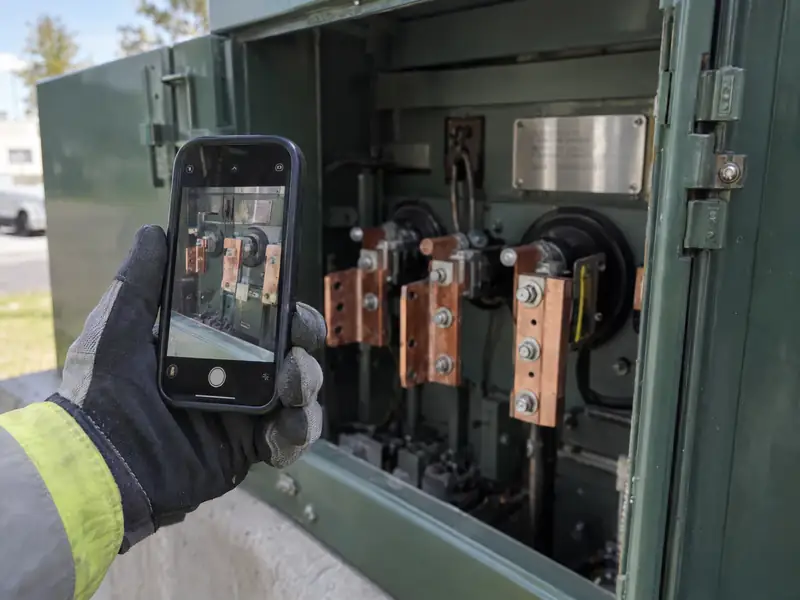
01What a 208Y/120 V Transformer Supplies
A 208Y/120 V transformer has a three-phase, grounded-wye secondary with a neutral. The voltage between any two phase conductors is 208 volts; between a phase conductor and neutral it is 120 volts. That combination lets a building serve compatible three-phase equipment as well as common 120-volt lighting and receptacle circuits.
This is a common commercial building secondary in California, including in offices, retail spaces and other properties with mixed electrical loads. The voltage describes the transformer’s secondary, not necessarily the utility’s primary distribution voltage. For other common secondary configurations, see the [120/240 V transformer overview](120/240 V transformer overview) and [480Y/277 V transformer guide](480Y/277 V transformer guide).
- 208 volts phase-to-phase
- 120 volts phase-to-neutral
- Three phases plus neutral
- Grounded-wye secondary configuration
02Where 208Y/120 V Appears in California Buildings
A 208Y/120 V secondary may serve a building’s lighting, general-purpose receptacles, small appliances and compatible three-phase loads. It can be used for tenant distribution or other downstream building circuits, depending on the electrical design. A property may also have multiple transformers or voltage systems, so don’t assume every panel or load is supplied at this voltage.
The primary side can vary with the site and the utility or facility distribution system. California’s documented distribution voltages differ by service territory, and the 208Y/120 V value here refers to a common building secondary—not a specific utility’s service promise. Confirm both primary and secondary ratings against the transformer nameplate and the project’s electrical documents.
03Dry-Type and Pad-Mount 208Y/120 V Transformer Types
A common arrangement inside a commercial building is a dry-type transformer stepping a 480-volt system down to 208Y/120 V. Dry-type units may be ventilated or enclosed, and their suitability depends on the installation environment and the design—not just the secondary voltage. See the [dry-type transformer types and configurations](dry-type transformer types and configurations) for more on these units.
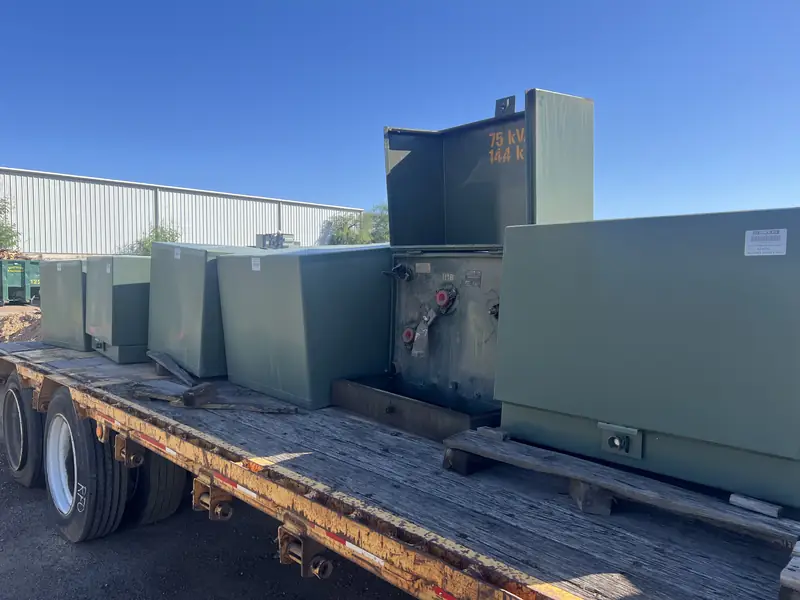
A pad-mounted transformer can also have a 208Y/120 V secondary, often where the equipment serves a site or building from an outdoor installation. Its primary voltage, phase, winding connection, enclosure and accessory configuration must match the intended application. A 208Y/120 V secondary alone does not establish whether a unit can replace another padmount. Learn about [three-phase pad-mount transformers](three-phase pad-mount transformers) and compare the actual nameplate details.
04Ratings and Nameplate Details to Check
Three-phase transformers are made in a range of kVA ratings. Common standard ratings in the three-phase family include 75, 112.5, 150, 225, 300, 500, 750 and 1,000 kVA, among others. These examples are not a guarantee that every rating is available with a 208Y/120 V secondary; the nameplate and connection diagram establish the unit’s actual configuration. Browse [common transformer kVA sizes](common transformer kVA sizes) for rating context.
Look for the primary and secondary voltages, phase, frequency, kVA rating, winding connection and any tap positions. Confirm whether the diagram shows a grounded-wye secondary and neutral. The [transformer nameplate reading guide](transformer nameplate reading guide) explains the fields buyers use to identify a unit. If a label is unclear, send a legible photo rather than trying to infer the connection.
- Manufacturer, serial number and year
- Primary and secondary voltage
- kVA rating and phase
- Frequency and tap positions
- Connection diagram and impedance
- Condition, accessories and test records
05How Buyers Assess Reuse Compatibility
Matching the 208Y/120 V secondary is only one part of determining whether a transformer suits a reuse project. A buyer or the project’s qualified electrical professionals also need to compare primary voltage, phase, frequency, connection and grounding, kVA capacity, taps and impedance. Enclosure type, cooling, mounting arrangement, available space and accessories matter too.
Condition and documentation help establish what is being evaluated. Useful records can include factory test reports, field electrical tests, service history and, for liquid-filled equipment, fluid and PCB documentation. For dry-type units, note visible condition and whether any parts or identification are missing. Suitability for a particular installation must be established by the responsible project professionals; a buyer’s evaluation is not an engineering approval.
06What to Send a 208Y/120 V Transformer Buyer
California Transformer Buyer reviews used, pulled, surplus and new-surplus transformers owned by California sellers or offered by someone authorized to sell them. To start, call or text Rocky at (951) 403-5738, or use the [transformer sale submission process](transformer sale submission process). Send photos taken from a safe position of equipment you are authorized to access; do not open compartments or handle electrical connections to get more information.
Include the quantity, location and condition, along with clear nameplate and overall photos. Mention whether the unit is dry-type or liquid-filled, how it is stored or installed, and whether test reports or other records are available. If there are multiple units, a simple list of ratings and locations can help identify the lot.
- Nameplate photo and overall views
- Quantity and California location
- Used, pulled or new-surplus status
- Known condition and missing parts
- Available test or fluid records
07Written Offer and Pickup Responsibilities
After reviewing the information, Rocky may ask follow-up questions about test reports, ownership, site access, fluid or PCB records, and removal requirements. If the unit is a fit, the written offer states what is included, who handles loading or rigging and freight, and payment terms and timing. Reviewing a transformer costs nothing and creates no obligation.
The seller should not de-energize, disconnect, open, drain or move the transformer. Those tasks belong to the owner’s qualified electrical contractor or serving utility, as applicable. Before pickup, the parties confirm the responsibilities and terms in writing. See [how transformer pickup and removal are arranged](transformer pickup and removal arrangements) for more information.
FAQ208Y/120 V Transformer FAQ
Does 208Y/120 V mean the transformer has a 120-volt primary?
No. The designation ordinarily identifies the secondary: 208 volts between phase conductors and 120 volts from phase to neutral on a three-phase, grounded-wye system. The primary can have a different voltage, such as 480 volts on a building dry-type transformer or a medium-voltage rating on a pad-mounted unit. Check the nameplate for both sides instead of relying on the secondary label alone.
Can a 208Y/120 V transformer replace any other 208Y/120 V unit?
Not automatically. The replacement must be evaluated for primary voltage, phase, kVA capacity, frequency, winding connection, neutral and grounding, taps, impedance, physical configuration and installation requirements. A transformer with the same secondary voltage can still be incompatible with the source system or the load. Have the project’s qualified electrical professionals verify the design and applicable requirements before reuse.
What kVA ratings are typical for a 208Y/120 V unit?
There is no single rating that defines this voltage. Three-phase transformer families include ratings such as 75, 112.5, 150, 225, 300, 500, 750 and 1,000 kVA, with other sizes available. The actual rating for a particular 208Y/120 V unit must come from its nameplate. Send the rating and photos when asking a buyer to evaluate it.
Will a transformer with an unclear or missing nameplate still be reviewed?
You can still send overall photos, any remaining labels or markings, approximate dimensions if safely observable, and what is known about the unit’s history and condition. Do not open or move equipment to search for a hidden plate. Without reliable identification or records, a buyer may need more information before assessing the transformer or may be unable to make an offer.
Can I sell a utility-owned transformer installed on my property?
A property owner cannot sell equipment owned by a utility. Before requesting an offer, confirm that you own the transformer or have authority to sell it. If ownership is uncertain, check the relevant property, project or utility records. California Transformer Buyer is not affiliated with utilities, and a transformer’s location on private property does not by itself establish ownership.
What if the transformer is liquid-filled or its PCB status is unknown?
Share existing fluid, PCB and environmental documentation with the buyer, including any test records or labels. Do not drain or sample the transformer yourself. PCB classifications and California oil-management requirements depend on testing, documentation and the equipment’s circumstances; unknown status should not be treated as proof that a unit is non-PCB. Rely on qualified environmental professionals for determinations and handling decisions.