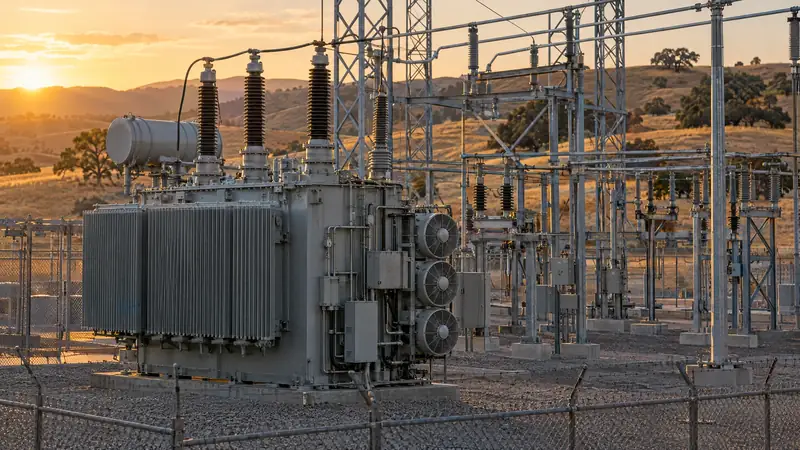
01How a 21 kV Class Transformer Appears on the Nameplate
A 21 kV Class transformer may not show “21,000 V” as its exact high-side rating. In PG&E service, an important nominal 21 kV designation appears as 20,780GrdY/12,000 V. The 20,780 V line-to-line rating and 12,000 V grounded-wye phase-to-neutral value describe the actual configuration; retain both exactly as printed.
For a sales review, photograph the full nameplate and include the manufacturer, serial number, year, kVA, phase, high- and low-voltage connections, tap positions, impedance, BIL, cooling class, and temperature rise when legible. The [transformer nameplate reading guide](How to Read a Transformer Nameplate) explains where to find these fields.
- Record voltage and connection together.
- Do not replace the plate ratio with a rounded voltage.
- Include tap details if shown.
0221 kV and 24.94 kV Are Different Primary Voltages
A 24.94 kV transformer belongs to the US 25 kV distribution family and is often marked 24,940GrdY/14,400 V. It is not interchangeable by name alone with a 21 kV unit, nor with 33 kV equipment. A utility or project must confirm that the transformer’s actual voltage, grounding arrangement, insulation and operating requirements match the intended system.
When reviewing a listing or old asset record, treat the utility’s nominal label and the transformer’s nameplate ratio as separate information. For comparison with other common California distribution ratings, see [12 kV and 12.47 kV transformer ratings](12 kV and 12.47 kV Transformers) and [34.5 kV transformer applications](34.5 kV Transformers).
| Description | Example nameplate notation | Important distinction |
|---|---|---|
| 21 kV nominal class | 20,780GrdY/12,000 V | Keep nominal alias separate from ratio |
| 24.94 kV primary | 24,940GrdY/14,400 V | 25 kV distribution family |
| 33 kV primary | Use exact nameplate | Not the same as 21 or 24.94 kV |
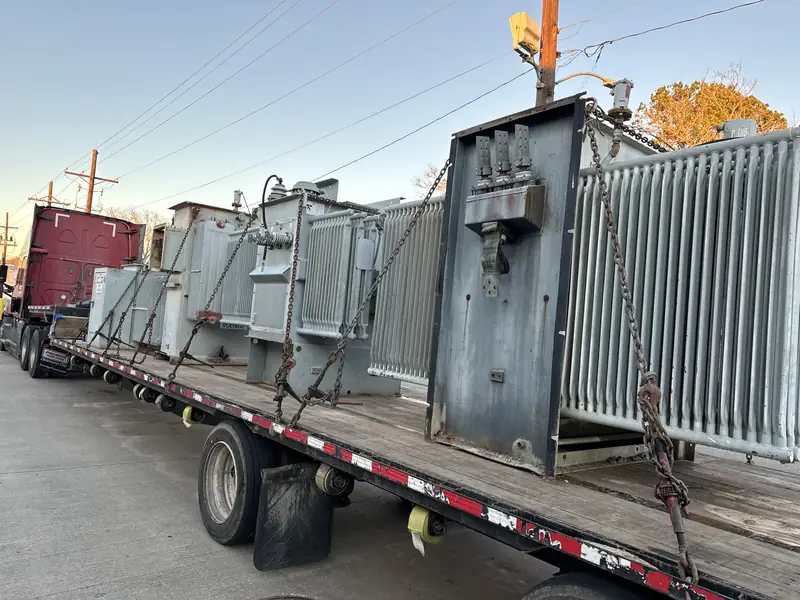
03Transformer Types and kVA Ratings You May Encounter
The 21 kV primary can appear on distribution equipment as well as larger project or station equipment. Three-phase pad-mounted units are one relevant configuration; single-phase pad-mount transformers and other distribution arrangements may also be encountered. A pad-mounted unit’s secondary could be a common service voltage such as 208Y/120 V or 480Y/277 V, but the actual low-side rating must be read from its plate.
Standard three-phase ratings include 225, 300, 500, 750, 1,000, 1,500, 2,000 and 2,500 kVA, with larger sizes extending into MVA ratings. Standard single-phase ratings include 25, 37.5, 50, 75, 100, 167 and 250 kVA, among others. These are common rating families, not confirmation that every voltage and configuration is available in each size. Review [three-phase pad-mount transformer configurations](Three-Phase Pad-Mount Transformers), [liquid-filled transformer types](Liquid-Filled Transformers) and [common transformer kVA sizes](Transformer kVA Sizes).
04Where 21 kV Distribution Is Used in California
The verified California utility references for nominal 21 kV distribution are PG&E and SMUD. PG&E’s primary configurations include 20,780 V and 17,200 V, along with other listed system voltages; SMUD uses 21 kV primary distribution. That does not mean every feeder, site, or transformer in either service territory uses 21 kV.
Utility service areas can contain more than one voltage and equipment configuration. A transformer being located in PG&E or SMUD territory is not by itself proof that it will suit a particular replacement or resale application. Confirm acceptance with the serving utility or project’s qualified electrical professionals. Larger station-class equipment is evaluated differently from distribution units; see [substation and power transformer information](Substation and Power Transformers).
05What Determines Reuse and Buyer Fit
A buyer considers the complete electrical specification, not just the nominal primary voltage. Phase, kVA or MVA, secondary voltage, delta or grounded-wye connection, taps, impedance, BIL, cooling, temperature rise and frequency all help establish whether a unit could serve a compatible application. Physical configuration, dimensions, accessories and the availability of test records also affect the review.
Condition and history matter as well. Leaks, corrosion, damaged bushings, missing components, age, winding material, fluid type and gallons, PCB documentation, and factory or field test reports can change what follow-up is needed. New-surplus equipment that has never been energized should be identified as such and supported with available records; used equipment should be described accurately.
- State whether it is used or new-surplus.
- Share test reports if available.
- Include photos of visible damage or missing parts.
- Identify accessories such as switches, gauges or fans.
06What to Send to Request an Offer
Start with a clear nameplate photo, overall equipment photos, the quantity, California location, and a brief condition description. Include any known test reports, fluid or PCB records, ownership details, and information about site access. If the nameplate is partly unreadable, send the clearest safe-position images available and explain what is uncertain rather than guessing.
Call or text Rocky at (951) 403-5738, or submit the details through the [transformer sale and offer page](Sell Your Transformer). California Transformer Buyer reviews equipment offered by California sellers, including used, pulled, surplus, new-surplus and mixed lots. Reviewing a transformer costs nothing and creates no obligation.
- Nameplate and overall photos
- Quantity and California location
- Condition and known defects
- Test, fluid and PCB records
- Ownership authority and site access
07Plan the Sale Without Handling Energized Equipment
Take photos only from a safe position and only of equipment you are authorized to access. Do not open compartments, disconnect, move, drain or sample the transformer. De-energizing and disconnecting must be handled by the owner’s qualified electrical contractor or serving utility, as applicable.
After reviewing the details, Rocky may ask follow-up questions about condition, records, ownership or access. Any offer is provided in writing, including the stated price, what is included, who handles loading or rigging and freight, and payment terms and timing. Removal is scheduled under the written terms. A property owner cannot sell utility-owned equipment without authority to do so.
FAQ21 kV Class Transformer FAQ
Is a 20,780 V nameplate the same thing as a 21 kV transformer?
It can be the actual transformer configuration associated with a utility’s nominal 21 kV designation, but the values should not be treated as identical plate data. For example, 20,780GrdY/12,000 V describes a specific grounded-wye arrangement. Keep the exact ratio and connection in your records and provide them to the buyer or project engineer rather than rewriting the plate as simply 21,000 V.
Can a 21 kV transformer replace a 24.94 kV unit?
Do not assume so. The primary voltage and grounding configuration differ, and matching the nominal voltage alone does not establish suitability. A replacement review also needs the secondary voltage, kVA, phase, taps, impedance, BIL and the system’s operating requirements. The serving utility or responsible electrical engineer should confirm compatibility before equipment is selected or installed.
Will a transformer in PG&E or SMUD territory necessarily be a 21 kV unit?
No. The verified utility information identifies nominal 21 kV distribution in both PG&E and SMUD areas, but service territories can include multiple system voltages and configurations. Confirm the equipment nameplate and the specific site’s electrical requirements. Location is useful context for a buyer, not a substitute for the transformer’s actual primary and secondary ratings.
What if the transformer’s PCB status or fluid history is unknown?
Tell the buyer what records are available and what is unknown; do not assume the unit is non-PCB from appearance or age alone. PCB classification and handling depend on testing and qualifying documentation, and California has specific rules for PCB-containing oil. Sellers should rely on records, testing and qualified environmental professionals for determinations. This information is general and is not legal advice.
Can I offer a transformer that is still connected or owned by a utility?
You must own the equipment or have authority to sell it. Utility-owned equipment located on private property cannot be sold by the property owner merely because it is on that site. If the transformer is still in service or connected, leave all electrical work to the serving utility or qualified electrical contractor. Share ownership and status details when requesting a review.
What if I cannot read the nameplate or do not have test reports?
Send the clearest photos you can safely take and describe which fields are unreadable. Include the equipment’s overall appearance, approximate dimensions if known, quantity, location and condition. A buyer may ask follow-up questions or request records that are available, but missing information can limit how confidently the specifications and resale options can be assessed.