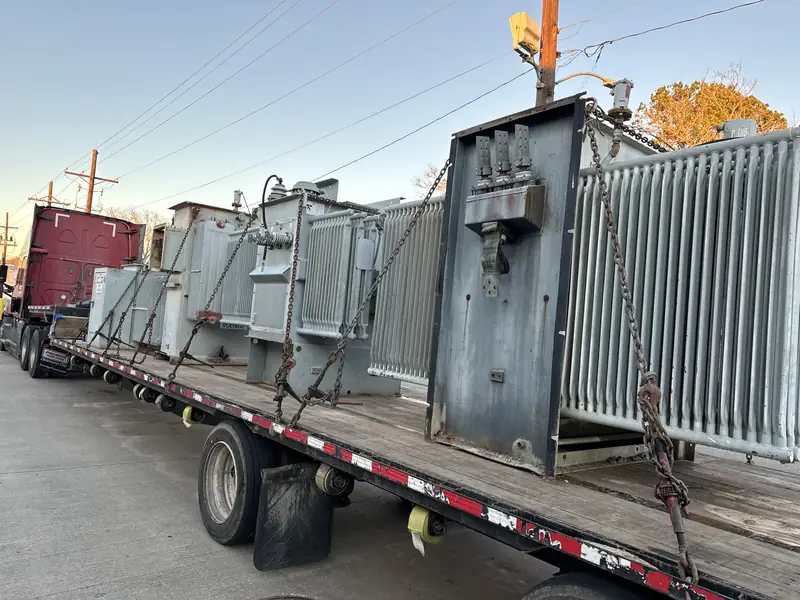
01Where a 34.5 kV Transformer Fits in California
A 34.5 kV transformer usually serves a primary-distribution, subtransmission or collector-system role. Solar and wind projects use this voltage in collector networks, while industrial facilities may use it as a primary supply. The voltage's classification depends on the serving system and application; do not assume that every 34.5 kV unit is a utility distribution transformer.
LADWP has documented 34.5 kV use in subtransmission in the City of Los Angeles. That is a specific local reference, not a claim that every California utility uses this voltage. The nameplate and the intended system specification determine what a particular unit can serve.
| Nameplate voltage | Context | What to verify |
|---|---|---|
| 33 kV | SCE feeder level | Winding, taps, BIL and connector class |
| 34.5 kV | Distribution or collector level; LADWP subtransmission use | Exact winding and system specification |
| 44 kV | Seller-reported legacy or special voltage | Actual plate and utility requirements |
02How 34.5 kV Appears on a Transformer Nameplate
The high-voltage side may be identified as 34,500 volts or 34.5 kV. A single-phase line-to-neutral unit can show a marking such as 34500GrdY/19920. That notation describes a grounded-wye system relationship; it is not interchangeable with every 34.5 kV connection. Check the full voltage and connection information rather than reading one number in isolation.
Record the primary and secondary voltages, phase, tap positions and connection diagram. Also capture kVA or MVA rating, impedance, BIL, cooling class, temperature rise, fluid type and year. A clear plate photo is often the fastest way to distinguish units that appear similar. See the [transformer nameplate reading guide](How to Read a Transformer Nameplate) for additional field details.
- Photograph the entire nameplate from a safe position.
- Include all rating stages and tap markings.
- Do not rely on cabinet labels alone.
03Transformer Types and kVA or MVA Sizes at 34.5 kV
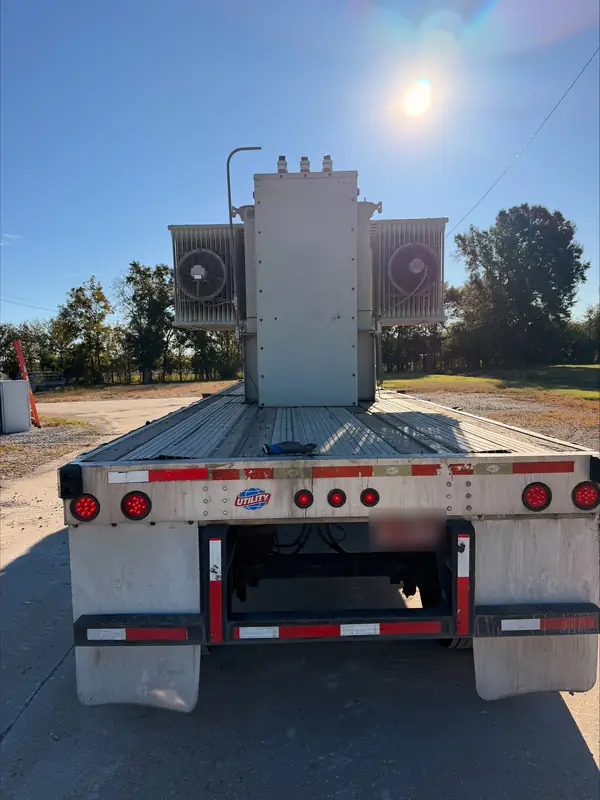
This voltage can appear on three-phase pad-mounted transformers, liquid-filled station-class or substation units, and specialty equipment such as solar or wind collector transformers. Some designs are used as step-up or step-down units, so the 34.5 kV winding may be on either side. Confirm the complete winding arrangement and application before comparing one unit with another.
Three-phase pad-mount transformers span standard ratings from smaller distribution sizes through 10,000 kVA. Larger substation and power transformers are commonly specified in MVA, sometimes with multiple cooling-stage ratings. Those ranges describe equipment families, not a promise that a particular rating or voltage will fit a buyer's project. Explore [three-phase pad-mount transformer configurations](Three-Phase Pad-Mount Transformers) and [substation and power transformer types](Substation & Power Transformers).
- Check whether the unit is single-phase or three-phase.
- Record every kVA or MVA cooling-stage rating.
- Note accessories such as fans, switches and an LTC.
04Compatibility Depends on More Than Transformer Voltage
A matching 34.5 kV label does not by itself establish that a transformer can be reused. Buyers compare the complete primary and secondary voltages, taps, winding connection, phase, impedance and BIL with the receiving system. They also consider frequency, cooling, physical arrangement and accessories. A mismatch in connection or insulation coordination can make an otherwise sound unit unsuitable.
Condition and documentation matter too. Relevant information can include factory test reports, turns-ratio or insulation-resistance results, oil testing or dissolved-gas analysis, PCB records and maintenance history. For liquid-filled equipment, fluid type and quantity are useful details. Compare with [liquid-filled transformer configurations](Liquid-Filled (Oil-Filled) Transformers) when identifying the equipment.
- Confirm the receiving system's written specification.
- Identify copper or aluminum windings if shown.
- Report leaks, corrosion, damaged bushings or missing parts.
- Include available test and fluid records.
05What to Send a 34.5 kV Transformer Buyer
California Transformer Buyer reviews equipment located in California, including used, removed, surplus and new-surplus units. To start an evaluation, send the nameplate photo, overall photos, quantity, location and condition. For a lot, include a count and representative photos of each type; note which units are crated, on skids or previously energized.
Helpful follow-up details include ownership or authority to sell, access constraints, available test reports, fluid and PCB documentation, and whether the unit is part of a larger project. Only photograph equipment you are authorized to access, from a safe position. Do not open compartments or handle, disconnect, drain or move equipment to obtain information.
- Nameplate and overall photos
- Quantity and California location
- Known condition and operating history
- Test reports and environmental records
- Site access or removal constraints
06How Review, Offer and Pickup Are Handled
Call or text Rocky at (951) 403-5738, or submit the details through the website. You can also text equipment photos to that number. Rocky may ask for additional records or clarification before deciding whether the transformer fits current buyer demand. Reviewing the equipment costs nothing and creates no obligation.
If there is a fit, the written offer states the price, what is included, who handles loading or rigging and freight, and payment terms and timing. Those terms are agreed in writing before pickup. Removal is coordinated according to the written terms; de-energizing and disconnecting are handled by the owner's qualified electrical contractor or serving utility. Start with [how to sell your transformer](Sell Your Transformer) or use the [contact form for an offer](Contact / Get an Offer).
07California Voltage Differences Can Affect Reuse
California systems use several primary-voltage classes, and a nearby number does not mean equipment is interchangeable. For example, 33 kV and 34.5 kV are distinct nominal voltages. Actual winding design, taps, BIL and connector class must match the service. A 44 kV marking should also be preserved and checked against the actual plate and utility specification; it should not be assumed to mean 46 kV equipment class.
When identifying other equipment in a project inventory, compare its exact plate with the relevant [21 kV class transformer information](21 kV Class Transformers) or [12 kV and 12.47 kV transformer information](12 kV & 12.47 kV Transformers). For utility-connected reuse, the serving utility's requirements and the receiving system design govern. California Transformer Buyer is an independent buyer and does not represent or speak for utilities.
FAQ34.5 kV Transformer FAQ
Is a 34.5 kV transformer the same as a 33 kV transformer?
No. They are distinct nominal voltage markings, and the nameplate design must match the system. The winding and tap arrangement, BIL and connector class all matter; a seller should not treat a 33 kV unit as a substitute for 34.5 kV based only on proximity of the numbers. Share the full plate and the receiving-system specification so the difference can be evaluated.
Does LADWP use 34.5 kV?
LADWP has documented 34.5 kV in subtransmission service within the City of Los Angeles. This does not establish that all California utilities use that voltage, or that a transformer marked 34.5 kV will meet a particular project requirement. Confirm the actual utility or facility specification and the transformer nameplate before planning reuse.
Can I sell a 34.5 kV unit if I do not know its exact condition?
Yes, you can submit it for review with the condition described as accurately as possible. Send safe-position photos and report known issues such as leaks, corrosion, damaged bushings, missing components or uncertain operating history. Do not open, test, disconnect or move the equipment yourself. A buyer may ask for qualified test reports or other records before deciding whether it is a fit.
What if the transformer has unknown PCB status?
Send any existing PCB labels, test results and fluid records, and state clearly when the status is unknown. Do not assume that an old label or appearance establishes the oil's classification. Sellers should rely on testing, documentation and qualified environmental professionals to determine the appropriate status and handling pathway. This information is general and is not legal or environmental advice.
Can a property owner sell a transformer installed on the property?
Only if the owner has authority to sell it. Equipment installed at a site may belong to a utility or another party, and location alone does not establish ownership. Confirm ownership or written sale authority before submitting the unit. California Transformer Buyer may ask for that information as part of its review.
Do you buy a single transformer or only full lots?
California Transformer Buyer reviews single units as well as multiple transformers and mixed lots located in California. Whether a specific unit is a fit depends on its rating, configuration, condition, documentation and current buyer demand. Send the quantity and identifying details, even if there is just one transformer, to request a review without obligation.