01How a Network Transformer Buyer Identifies the Equipment
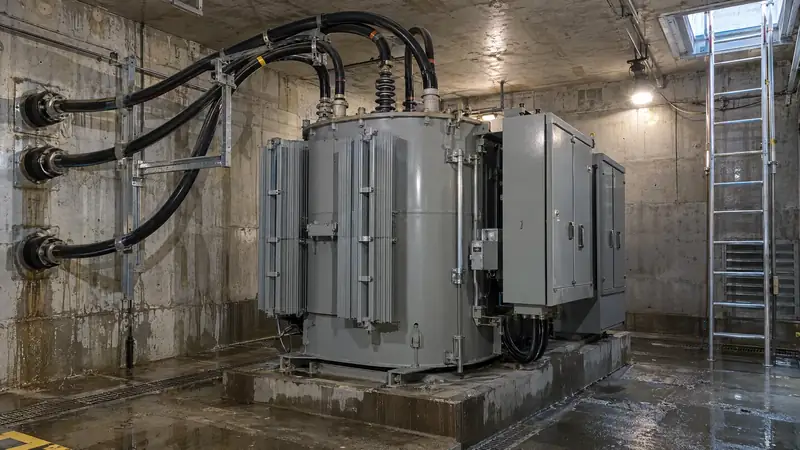
A network transformer supplies power to an interconnected low-voltage secondary network. It is commonly a three-phase, liquid-filled unit installed in an underground vault or other location where equipment may face moisture, corrosion or submersion exposure. Some installations are called spot networks, vault networks or secondary networks.
Look for the arrangement and interface, not just the tank shape. A network-specific transformer may have a protector flange or throat and bus interface designed to connect with a network protector. The protector controls whether the transformer is connected to the network and helps prevent inappropriate reverse power flow. A generic pad-mounted transformer is not automatically interchangeable with a network unit.
From a safe, authorized location, photograph the overall unit, visible fittings and any protector interface. Do not enter a vault or open equipment compartments to inspect it. For related equipment distinctions, see our guide to submersible and vault transformers.
- Check the nameplate for kVA, phase and voltage.
- Note any protector interface or bus connection.
- Record visible corrosion, leaks or missing components.
02How Network Transformers Work in California Facilities
In a secondary network, multiple transformer sources feed interconnected low-voltage conductors. Network protectors coordinate each transformer’s connection to that network. This arrangement can support continuity for dense loads, but the transformer’s voltage, impedance and network-specific interface must suit the system; appearance alone does not establish compatibility.
These units are used in dense downtown utility networks, high-rise and institutional vaults, and spot networks serving continuity-sensitive loads. In California, a seller might encounter one at a commercial or institutional property, but the serving utility may own equipment located on private property. Only the owner or an authorized representative can sell it.
For context on public-power and municipal utility equipment, visit utility and municipal transformer applications. California Transformer Buyer is an independent buyer, not an affiliate or approved purchaser of any utility.
kVACommon Network Sizes We Buy
03Network Transformer Sizes, Voltages and Nameplate Details
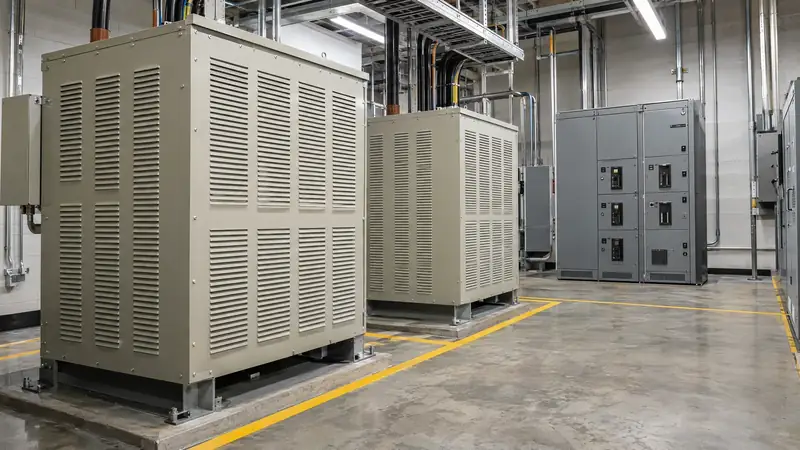
Common network transformer sizes run from 300 to 2500 kVA, with custom ratings such as 600 kVA also occurring. Larger network installations may be described in MVA, but the actual rating and any multiple cooling stages should come from the nameplate, not an estimate based on tank dimensions.
Primary ratings commonly fall between 2.4 and 34.5 kV. A nameplate might show a secondary rated no-load voltage of 216Y/125 V for nominal 208Y/120 V network service; other network values, 480-class units and medium-voltage inter-tie variants also exist. Confirm the actual voltage and connection diagram because nominal service labels do not always match the transformer’s rated no-load values.
A clear nameplate image should capture the manufacturer, serial number, year, kVA, phase, primary and secondary voltage, connection, taps, impedance, BIL, cooling class, fluid type and gallons, and total weight when listed. Send all stages or ratings shown. See examples of common sizes: 300 kVA transformers, 1500 kVA transformers and 2500 kVA transformers.
04Construction Variations That Affect Identification
Many network units are liquid-filled, using mineral oil or natural ester fluid, and have sealed, corrosion-resistant tanks suited to vault service. Some designs are intended for submersible or wet-location exposure. Special dry-type network transformers also exist, so do not rule out a network application just because a unit lacks a liquid-filled tank.
Network-specific construction can include a protector flange or throat, a particular bus interface, reinforced sealing and corrosion protection. Other important design details include secondary voltage, impedance, phase displacement and overload duty. A comparable-looking pad-mount or submersible transformer may have a different interface or electrical design and may not substitute for the network unit.
Look for applicable IEEE C57.12.40 or IEEE C57.12.24 identification on the nameplate or documentation, but do not rely on a standard marking alone to confirm fit for a particular network. Share the nameplate and interface photos so the configuration can be reviewed.
05What Affects a Used Network Transformer’s Resale Value
Network equipment has a narrower application than a generic distribution transformer, so resale potential depends on whether its electrical characteristics and physical interface match a buyer’s need. Rating, primary and secondary voltage, impedance, phase displacement, protector connection and documented network duty all matter. A common kVA rating by itself does not establish compatibility.
Condition is equally important. Leaks, damaged bushings, corrosion, missing parts and evidence of submersion can change how a unit is evaluated. The history of the tank and its sealing matters for equipment designed for vault environments. Include available test reports, such as factory test records, insulation-resistance or turns-ratio results, and oil testing or DGA records where applicable.
Other relevant details include manufacturer and year, winding material if known, fluid type and quantity, PCB records, accessories, and whether the transformer is used or new-surplus. Quantity and site access also affect the transaction. A single working unit, a spare, or a project lot may each warrant review; no rating or condition guarantees a purchase.
06What to Send for a Network Transformer Offer
Start with photos taken from a safe position of equipment you are authorized to access. Send a readable nameplate photo, overall views, and images of visible interfaces and condition concerns. Add the quantity, California location, whether the unit is used or new-surplus, and whether it is still installed or already removed.
If available, include test reports, fluid and PCB documentation, ownership or sale-authority information, and details about site access. For liquid-filled equipment, share records rather than opening the unit or taking a sample. The correct environmental determination depends on testing and documentation; sellers should rely on qualified environmental professionals. This information is not legal advice.
Call or text Rocky at (951) 403-5738, or use the transformer sale form. You can also text photos to that number. Learn more about the steps in the used transformer buying process. Reviewing a transformer costs nothing and does not obligate you to accept an offer.
- Nameplate and overall equipment photos
- Quantity, location and current condition
- Available test, fluid and PCB records
- Ownership authority and access details
07Removal, Vault Access and Environmental Considerations
A network transformer can be heavy and difficult to reach, especially when located below grade or connected to fixed buswork. Do not attempt to de-energize, disconnect, open, drain or move it. The owner’s qualified electrical contractor or serving utility must handle isolation and disconnection, including consideration of possible backfeed from other sources.
Before pickup, the written offer should state what is included and who handles loading, rigging and freight. Vault access, lifting constraints, route limits, equipment condition and required coordination can affect removal planning. Review the details in transformer removal and pickup planning before scheduling work.
PCB status and oil handling require documentation and, where needed, qualified environmental guidance. California has specific rules for PCB-containing oil and used oil, and the appropriate pathway depends on testing and records. Do not assume a label or unknown history settles the equipment’s status; consult qualified environmental professionals for determinations and management requirements.
08Why California Sellers Bring Network Units to Us
California Transformer Buyer reviews used, pulled, surplus, decommissioned and new-surplus transformers from sellers throughout California. Network units can be hard to describe using only a general transformer category, so detailed nameplate and interface information helps Rocky assess what the equipment is and whether its configuration may have a resale path.
The process starts with photos and basic details. Rocky may ask follow-up questions about test reports, fluid or PCB records, ownership and site access. If the unit is a fit, you receive a written offer stating the price, what is included, who handles rigging and freight, and payment terms and timing. Terms are provided in writing before pickup.
If you have several units or a broader equipment lot, include that information with the first inquiry. To request a review, use contact California Transformer Buyer or call/text (951) 403-5738. There is no obligation to accept an offer.
FAQNetwork Transformer FAQ
Can I sell a network transformer if the network protector is separate?
Yes, you can submit the transformer for review even if the protector is a separate piece of equipment. Tell us whether the protector is present, sold separately, or remains installed, and send photos of the transformer’s flange, throat or bus interface. The interface and electrical details are important to assess, and a transformer without its protector is not automatically equivalent to a complete network installation.
Is a 600 kVA network transformer unusual?
Not necessarily. Network units commonly range from 300 to 2500 kVA, and custom ratings such as 600 kVA occur. Send the exact nameplate rating rather than relying on an estimate or a nearby standard size. Include any multiple ratings or cooling stages shown so the configuration can be reviewed accurately.
Will a generic pad-mounted transformer work as a network replacement?
Not automatically. A network transformer may have a protector interface, network-specific secondary voltage, impedance, phase displacement and overload duty that a generic pad-mount unit does not share. Even matching kVA and voltage do not prove interchangeability. The engineer or utility responsible for the system must determine suitability; a buyer can review the equipment details for resale potential.
What if the unit’s PCB status or oil history is unknown?
Provide whatever labels, prior test results and fluid records you have, and state clearly what is unknown. Do not open, drain or sample the transformer to answer the question. PCB status and oil management depend on applicable testing and documentation, so consult a qualified environmental professional for a determination. Unknown records may affect review and handling plans.
Can a property owner sell a transformer installed in a utility vault?
Only the equipment’s owner, or someone authorized by that owner, can sell it. A transformer located on private property may still belong to a serving utility or another party. Check ownership records and confirm authority before submitting it as available for sale. California Transformer Buyer does not claim utility ownership or sell on a utility’s behalf.
What happens after I send the transformer details?
Rocky reviews the information and may ask for additional photos, reports, ownership details or access information. If the equipment is of interest, you receive a written offer that states the price, included work, responsibility for rigging and freight, and payment terms and timing. You can review those terms before deciding whether to proceed; submitting details creates no obligation.