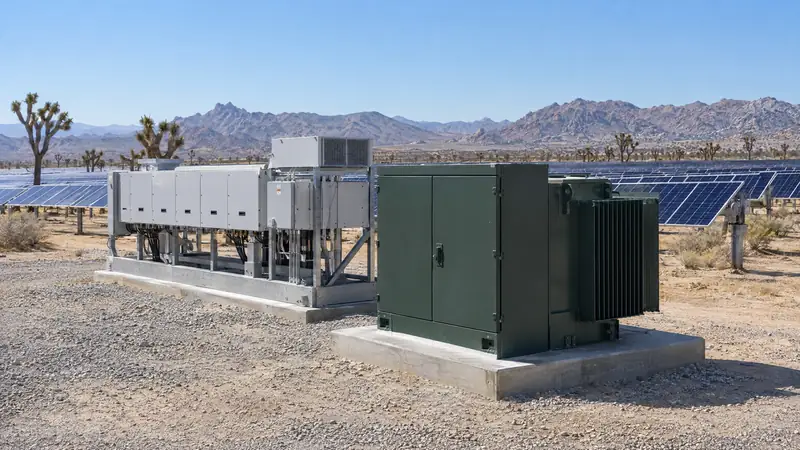
01Selling Surplus Transformers After a Project: Start Before Closeout
A transformer becomes surplus when the project no longer needs it—not necessarily when the final invoice clears. Design revisions, canceled phases, substitutions, and spare-equipment decisions can leave usable assets behind. Start documenting those units while procurement records, site personnel, and equipment access are still available.
For contractors and EPCs, timing is partly a logistics decision. A unit sitting inside an active construction area may be easier to evaluate before temporary access disappears or the laydown yard closes. Request a review early, but do not commit equipment that the owner still needs for commissioning, contingency service, or contractual spare requirements.
California Transformer Buyer’s surplus transformer purchasing page covers project leftovers and other excess inventory. Reviewing your transformer costs nothing and there is no obligation; an early review helps identify missing information without requiring an immediate sale.
- Identify the person authorized to approve disposal.
- Record the project’s latest available pickup window.
- Separate permanent spares from confirmed surplus.
- Keep procurement and commissioning records accessible.
02Confirm Who Owns Each Unit Before Offering It
Possession is not proof of ownership. A transformer in a contractor’s yard may belong to the project owner, a supplier, or a utility. Review purchase records, project agreements, and any return arrangements before representing that you can sell it.
Assign one contact to establish ownership or written authority to sell. For utility equipment, obtain the applicable ownership clarification or release before including it in the surplus lot. The utility-owned transformer ownership checklist explains why equipment located on private property may still be unavailable for sale.
Describe operating history accurately. New-surplus means never energized, whether the transformer remains crated or sits on skids. A briefly energized commissioning unit is used equipment, even if the project never entered commercial operation. Keep the purchase date, manufacturing date, and last operating date separate.
- Match invoices and asset records to serial numbers.
- Identify owner-furnished versus contractor-purchased equipment.
- Document any retained accessories or contractual restrictions.
- State energized status, not just installation status.
03Build a Serial-Number Inventory That a Buyer Can Evaluate
Use one inventory line per transformer, with photographs and reports tied to its serial number. Several similar pad-mounted units can have different taps, impedance, or connections. A single representative photo is not enough to establish that an entire lot has identical specifications.
Record the exact primary and secondary voltages rather than a project shorthand such as “12 kV transformer.” For example, 12,000 V delta and 12,470GrdY/7,200 V are different nameplate configurations. Include all kVA or MVA cooling-stage ratings on a station-class unit, not just its highest rating.
For rating questions, use the guide to transformer kVA, amps, and nameplate ratings. Useful additional fields include impedance, BIL, temperature rise, cooling class, fluid type and gallons, and winding material if stated. Copy what the plate says rather than guessing from appearance.
| Record group | Information to capture | Why it matters |
|---|---|---|
| Identity | Manufacturer, serial number, year, quantity | Connects each unit to its records |
| Electrical specifications | kVA/MVA, phase, HV/LV, connections, taps | Establishes potential application compatibility |
| Condition | Operating history, storage, damage, leaks | Separates known condition from assumptions |
| Location and handling | Exact location, dimensions, weight, access | Supports removal and freight planning |
| Included equipment | Accessories, controls, drawings, test reports | Defines the offered package |
04Preserve Condition While the Equipment Waits
Storage can turn a promising surplus unit into a more difficult resale candidate. Moisture exposure, damaged bushings, cabinet corrosion, missing parts, and oil leaks all affect evaluation. Follow the manufacturer’s storage requirements and have qualified personnel assess concerns; do not assume that equipment suitable for outdoor service can tolerate any storage condition.
Keep a dated storage record: where the unit was kept, whether packaging remained intact, and whether anyone observed damage or leakage. Preserve available shipping documents and the identification of loose accessories. For dry-type equipment, document exposure to dampness, dust, or construction debris without opening electrical compartments yourself.
Do not describe a transformer as tested merely because it looks unused. Factory reports establish specific results at manufacture, while later storage or transport may introduce new concerns. The comparison of new, used, and rebuilt transformers helps distinguish condition categories without overstating what they prove.
- Keep manuals and factory reports with the asset record.
- Track included fans, gauges, controls, and loose fittings.
- Disclose flood, fault, overload, or repair history.
- Arrange professional assessment of leaks or damage.
05Photographs and Test Records Should Reduce Uncertainty
Take photographs only from a safe position where you are authorized to be. Provide a readable, straight-on nameplate close-up and external views of all accessible sides. Show radiators, visible bushings and valves, cabinet exterior, accessible accessory plates, and ground-level clearances without entering restricted areas.
Submit factory and recent service reports already available. Relevant records can include turns ratio, winding resistance, insulation and appropriate dielectric tests, plus liquid dielectric, PCB, and dissolved gas analysis records where applicable. This is a general documentation list, not a test procedure; qualified professionals determine which tests are appropriate.
For liquid-filled units, a “non-PCB” label does not mean zero PCBs. Federal non-PCB classification is below 50 ppm, while California excludes oil containing 5 ppm or more PCBs from its used-oil category. Unknown status may require regulatory assumptions until testing or qualifying documentation establishes concentration. Rely on qualified environmental professionals for the correct pathway; this is not legal advice.
- Identify which serial number each report covers.
- Include test dates and available service history.
- Disclose missing records rather than implying verification.
- Never open compartments or collect fluid samples yourself.
06Bundle Switchgear Carefully Without Obscuring the Transformer
A project may leave a transformer alongside switchgear, protective devices, or control equipment. List related equipment separately and explain whether it forms a close-coupled unit substation or merely shares the same storage location. Do not assume that everything nearby belongs to one package.
For a unit substation, preserve available drawings showing primary equipment, the transformer, and secondary connections. Identify matching serial numbers, ratings, and included interconnection components where documented. Electrical compatibility depends on more than physical fit; voltage, current ratings, protection, connections, and configuration matter.
California Transformer Buyer buys transformers and mixed transformer lots. If you want switchgear considered with the lot, disclose it and ask what can be included rather than assuming acceptance. The transformer liquidation page is useful when a project has multiple assets or a yard-wide inventory to evaluate.
Request that the written offer identify each included item. Also name anything retained by the owner, such as spare elbows, protection equipment, or controls. Clear package boundaries prevent disagreements over accessories at pickup.
07Plan Removal Around Site Access and Qualified Personnel
Report whether each unit is energized, de-energized, and disconnected; these are distinct conditions. Only the owner’s qualified electrical contractor or serving utility should handle electrical isolation and disconnection. Solar, batteries, and generators can introduce backfeed hazards even when normal utility supply is absent.
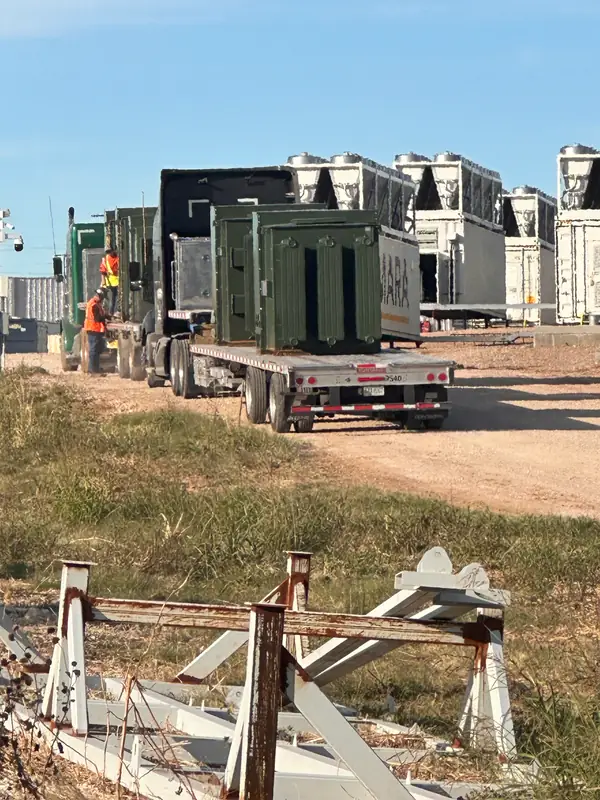
Provide dimensions, operating and shipping weights, documented lifting or rigging points, and forklift or crane access information. Explain gates, restricted working hours, overhead obstructions, ground-level clearances, and removal obligations. A large substation transformer may need specialized transport preparation, and oversize or overweight loads can require state and local approvals.
Consult the transformer removal and pickup guide before finalizing your schedule. Do not move equipment to simplify a sale yourself. Agree in writing who handles rigging, loading, freight, and any required preparation, then coordinate with the responsible qualified parties.
- State the exact pickup location, not just headquarters.
- Identify site access deadlines and owner restrictions.
- Distinguish operating weight from documented shipping weight.
- Confirm what site work remains outside the purchase terms.
08Avoid Closeout Losses With a Complete Written Offer
Avoidable losses often come from missing records, deteriorating storage, incomplete accessories, and late discovery of removal constraints. A familiar manufacturer alone does not establish resale value. Rating, voltage, condition, documentation, demand, and removal complexity all affect the buyer’s assessment.
Compare the whole transaction rather than an offer figure in isolation. The written offer should state the equipment included, who handles loading and rigging, freight responsibilities, and payment terms and timing. If your closeout deadline changes, communicate that before scheduling pickup.
To sell a transformer in California, call or text Rocky at (951) 403-5738 or use the transformer seller submission form. Start with nameplates, overall photos, quantity, exact location, and condition. Rocky reviews the information and may ask for ownership records, tests, fluid documentation, or access details before issuing an offer.
FAQSelling Surplus Transformers After a Project FAQ
Should we sell a leftover transformer or retain it as a project spare?
First confirm whether the owner requires a spare under the project contract or operating plan. Then consider whether the unit actually matches the installed system and whether suitable long-term storage is available. A spare with incompatible voltage or connections may have limited usefulness. The owner’s engineering and operations personnel should make the retention decision before the equipment is offered for sale.
Can we request an offer before the transformer is disconnected?
Yes. You can provide existing records and safely accessible external photos while clearly stating that the unit remains energized or connected. An evaluation does not authorize removal or electrical work. Explain the expected availability date and who is responsible for isolation and disconnection so the written terms and pickup planning reflect the equipment’s actual status.
Does original packaging make a surplus transformer equivalent to new equipment?
Original packaging helps document storage and handling, but it does not establish present condition, warranty coverage, or testing status. Report whether the transformer was ever energized and whether packaging was damaged or exposed to moisture. Include purchase documents and factory reports when available. Do not promise that a manufacturer’s warranty transfers unless that has been confirmed through the applicable warranty terms.
Will an unusual project voltage prevent a sale?
Not necessarily, but it can narrow the potential applications. A transformer selected for a particular solar, industrial, or utility interface may not suit common building distribution needs. Submit the actual nameplate voltage, connection diagram, taps, and ratings. Avoid describing it as interchangeable with a more common configuration; suitability requires technical review of the intended application.
Do efficiency rules make older surplus transformers illegal to resell?
DOE distribution-transformer efficiency standards apply to manufacture, not a blanket prohibition on reselling existing used or surplus equipment. Units manufactured from January 1, 2016 are subject to applicable standards, with new levels scheduled for units manufactured on or after April 23, 2029. A prospective installation may still involve specifications or other requirements that need separate review.
What if our inventory includes both usable units and failed transformers?
Identify them separately and disclose known faults, leaks, missing components, and available environmental records. Do not present the entire lot as ready for reuse. A working transformer sold for reuse is equipment, while failed or leaking units and drained oil need proper determination. Qualified environmental professionals should establish any applicable waste-management requirements; acceptance depends on review, not simply inclusion in a larger lot.