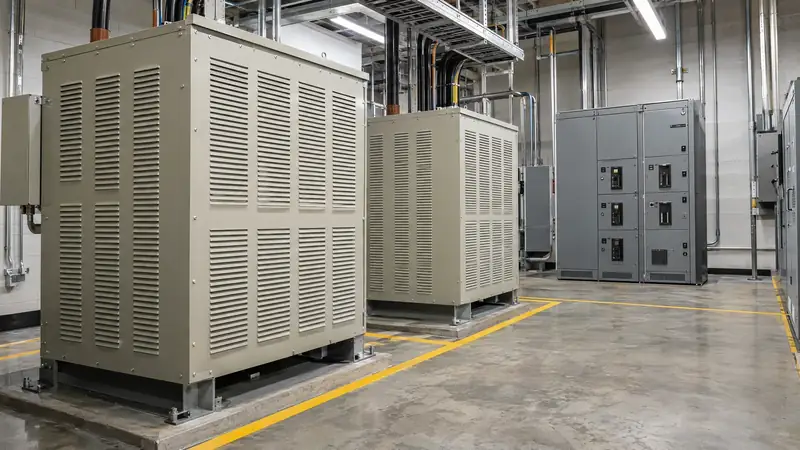
01What a Drive Isolation Transformer Does
A drive isolation transformer buyer looks for equipment designed around a motor drive's electrical and operating demands, not just a general-purpose isolation transformer. These units serve AC variable-frequency drives (VFDs) and DC drives, where harmonic currents and repeated mechanical and thermal duty can affect transformer selection.
The transformer provides electrical isolation and supplies the voltage and winding arrangement specified for the drive. Some designs use multiple secondary windings with phase shifts to serve multi-pulse converters. Drive-duty units may also specify overload capability, impedance, or a motor-horsepower rating; check the actual nameplate and supporting documents rather than assuming these features from appearance.
Related equipment can include a general harmonic-mitigating transformer, but the intended load and winding design differ. See our guide to K-factor and harmonic-mitigating transformers for another transformer type used with non-linear loads.
02How to Identify a Used Drive Isolation Transformer
Start with the nameplate and documentation. Look for terms such as “drive duty,” “VFD,” “SCR,” a motor-HP rating, or a pulse designation such as 12-pulse or 18-pulse. A DIT label or vendor description can help, but the connection diagram, voltage ratios, and number of secondaries are stronger clues to the actual configuration.
From a safe position and only where you are authorized to take pictures, capture the full nameplate and overall exterior. Do not open compartments or approach exposed electrical parts. A photo of the connection diagram, if already available in records, can help identify phase shifts and winding connections.
- Manufacturer, serial number, and year
- kVA rating and any staged ratings
- Primary and secondary voltages, taps, and connections
- Phase, frequency, impedance, and BIL
- Drive pulse count and winding diagram
- Overload or time-duty information
- Insulation type, cooling, and accessories
kVACommon Drive Isolation Sizes We Buy
03Where Drive Isolation Transformers Are Used in California
Drive isolation transformers are found in industrial plants and facilities operating large motors, pumps, mills, and mining equipment. AC VFD and DC drive applications can appear in water and wastewater systems, oil and gas operations, manufacturing, and other industrial processes where a motor needs controlled speed or torque.
In California, the electrical supply depends on the facility and serving utility. A drive installation may have a low-voltage supply, or a medium-voltage input such as 4.16 kV or 13.8 kV where specified by the design. Those examples are not universal service voltages. Confirm the primary and secondary ratings on the nameplate and the project drawings; the transformer voltage guide explains common voltage terms and configurations.
These units are not necessarily interchangeable with distribution or general-purpose transformers. A drive's converter topology, voltage requirements, and operating duty matter, so share the application or drive information when available.
04Drive Isolation Transformer Sizes, Voltages, and Construction
Common low-voltage drive isolation transformer sizes range from tens to hundreds of kVA. Larger industrial medium-voltage drive-duty units can reach multiple MVA. The actual rating depends on the motor and drive arrangement; a motor horsepower figure alone does not establish the transformer's kVA rating or resale fit.
Low-voltage examples include 208, 240, 480, or 600 V on one side and a drive-specified voltage on the other. Medium-voltage systems may use input or output ratings such as 4.16 kV or 13.8 kV, but these are design-specific. Multi-winding and phase-shifted secondary arrangements can make two units with similar kVA ratings very different for a buyer.
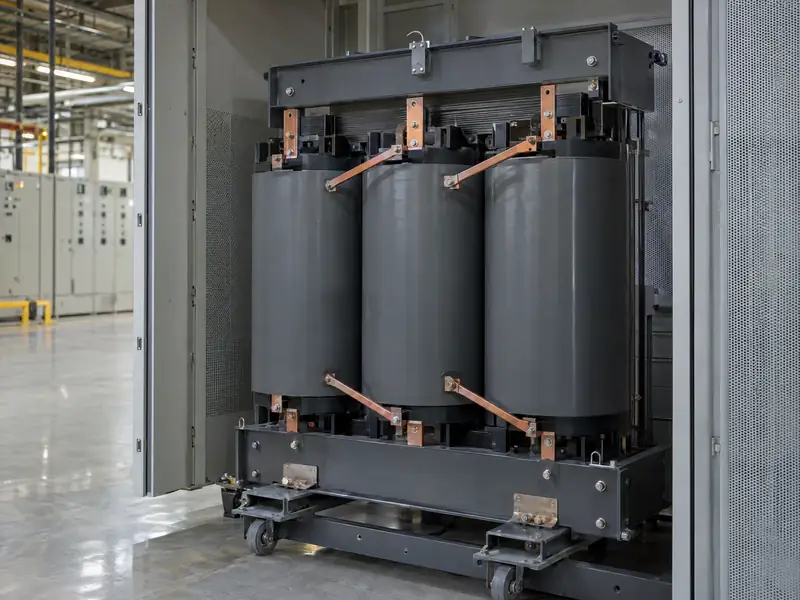
Dry-type construction is common for low-voltage units. Larger drive applications may use medium-voltage dry-type or liquid-filled transformers. Enclosure, cooling, winding material, shielding, impedance, and the presence of fans or other accessories can all vary. For construction context, see dry-type versus oil-filled transformers.
05What Affects Resale Interest and Value
Resale interest depends on how clearly a buyer can match the transformer to a real drive application. Exact kVA, input and output voltages, pulse count, winding connections, phase shifts, impedance, and overload or time-duty capability are important. An available connection diagram and test reports can help verify information that is hard to establish from exterior photos.
Condition and completeness matter too. Age, visible damage, missing parts, winding material, and whether the unit is used or new-surplus can affect its fit. For liquid-filled equipment, provide available fluid and PCB records; for any unit, include factory or field test information when you have it. Do not infer environmental status from appearance or an old label alone.
Configuration, location, quantity, and site access also influence whether a unit can be resold and how removal can be arranged. Drive-specific equipment may have a narrower buyer pool than a common distribution unit, but an unusual rating or multi-pulse design can suit a particular project. Reviewing a transformer costs nothing and creates no obligation.
06What to Send for a Written Offer
To sell a drive isolation transformer, send clear information that helps confirm both the equipment and the site. Text nameplate and overall photos to (951) 403-5738, or use the website form. Photos should be taken from a safe position and only of equipment you are authorized to access.
Rocky reviews the details and may ask about test reports, ownership, site access, or other documentation. If the nameplate is damaged or the unit has multiple secondary windings, share any available drawings, purchase records, or drive documentation rather than guessing at the specifications. California Transformer Buyer purchases from sellers located in California; the owner or an authorized representative must have the right to sell the equipment.
- Nameplate and exterior photos
- Quantity, location, and condition
- Drive type, pulse count, and application
- Available diagrams and test reports
- Fluid or PCB records, if applicable
- Known access or removal constraints
07Removal Planning for Heavy or Connected Equipment
A transformer may be connected to a drive, switchgear, or other plant equipment, and larger units may need specialized rigging and freight planning. Do not disconnect, open, drain, sample, or move it yourself. De-energizing, isolation, testing, grounding, and disconnection belong to the owner's qualified electrical contractor or serving utility, with any required site safety controls.
Before pickup, the written offer states what is included, who handles loading or rigging and freight, and the payment terms and timing. Discuss access restrictions, lifting or transport needs, and coordination with plant operations in advance. For more detail on the transaction and pickup process, see transformer removal and pickup.
08Why California Sellers Contact a Drive Isolation Transformer Buyer
Drive isolation transformers can be difficult to describe in a general equipment listing because the winding arrangement and drive duty are central to their usefulness. California Transformer Buyer reviews used, pulled, surplus, and new-surplus transformers from industrial facilities, contractors, and other California sellers. A single unit or a group of project leftovers can be submitted for review.
Share the nameplate and available records, and Rocky can ask focused follow-up questions before preparing a written offer. The offer sets out the agreed terms before pickup, including who is responsible for rigging and freight. To begin, use the transformer selling process or call or text (951) 403-5738.
FAQDrive Isolation Transformer FAQ
Can I sell a drive isolation transformer without its original drawings?
Yes, you can submit it for review with the information you have. Send the nameplate and exterior photos, plus any available test reports or drive records. If phase-shifted secondaries or pulse count are not shown clearly, tell us what is unknown rather than estimating. Rocky may ask follow-up questions to establish the configuration before deciding whether to make an offer.
Does a transformer labeled “18 pulse” always work with any 18-pulse drive?
No. The pulse label alone does not establish compatibility. Voltage ratios, phase-shift relationships, winding connections, impedance, and the drive's requirements all need to match. Share the transformer connection diagram and the drive or project specifications when available. A qualified electrical professional should confirm application compatibility; a buyer's resale review is not an engineering approval.
Will you consider a failed or damaged drive isolation transformer?
You can provide its details for review, but a purchase is not guaranteed. Clearly describe known problems such as damage, missing components, or a failed test, and provide any reports you have. Do not attempt to open, drain, or move the unit to prepare it for sale. Its condition, documentation, configuration, and removal requirements affect whether it is a fit.
What if the transformer is liquid-filled or its PCB status is unknown?
Send any existing fluid, PCB, and equipment records, and do not sample or drain the transformer yourself. Unknown status should not be treated as proof that the equipment is non-PCB. Environmental requirements depend on testing, documentation, and the applicable rules; sellers should rely on qualified environmental professionals. The information is not legal advice, and additional records may be needed before an offer or removal plan.
Can a drive isolation transformer be sold as a standard isolation transformer?
It may be described as an isolation transformer, but that description leaves out details that drive buyers need. The pulse configuration, secondary winding arrangement, drive-duty rating, and overload capability can be decisive. Include the exact nameplate wording and wiring diagram in your submission so the unit can be reviewed for its actual design rather than categorized only by its general isolation function.
How do I know whether I am authorized to sell the unit?
The seller must own the transformer or have authority from its owner to sell it. Equipment located on your property is not automatically yours; utility-owned equipment cannot be sold by the property owner. If ownership is unclear, resolve that with the owner or responsible organization before arranging a sale. Include relevant ownership or project records when you submit the transformer for review.