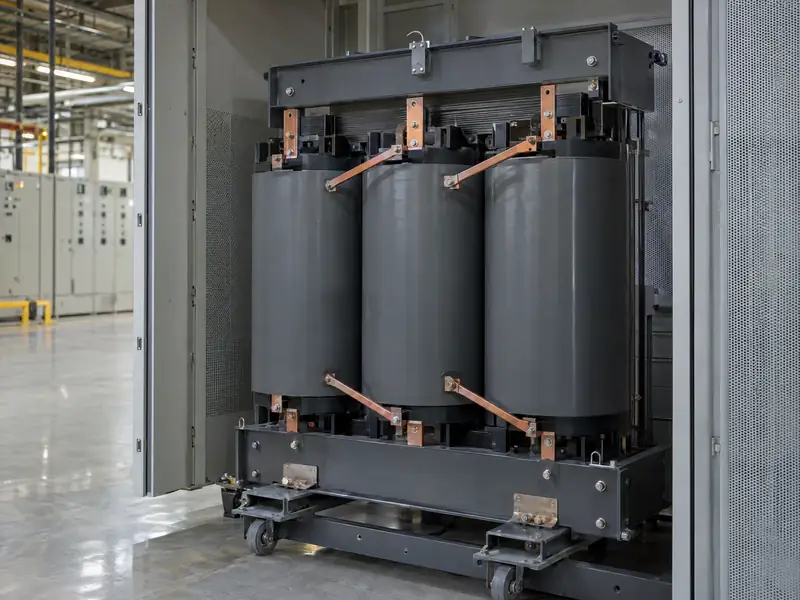
01Cast Resin Transformer Buyer: Identify the Unit First
A cast resin transformer, also called a cast-coil transformer, is a dry-type unit with windings cast or heavily encapsulated in solid resin. Many designs use vacuum-cast epoxy for the high-voltage (HV) winding. There is no bulk insulating liquid in the transformer, but the low-voltage (LV) winding may use a different construction.
From a safe position, sellers can look for smooth, solid resin-covered coil bodies rather than oil-filled tank construction. Do not open compartments or approach equipment unless authorized. A visible resin surface is a useful clue, not proof of the winding design; the nameplate, drawings and manufacturer documentation are better evidence. For a broader comparison, see our guide to dry-type transformer designs.
- Look for a dry-type or cast-coil designation on the nameplate.
- Check whether HV and LV windings are identified separately as cast, VPI or another construction.
- Photograph visible damage, cracks, tracking marks or missing parts from a safe location.
02How Cast Resin Transformers Work and Where California Uses Them
The primary winding creates a changing magnetic field in the core, which induces voltage in the secondary winding. Resin insulation separates and supports the windings, while air carries heat away from the transformer. Units may include thermal sensors and cooling fans; check the nameplate and documentation rather than assuming a particular cooling arrangement.
Cast-resin equipment is used in hospitals, schools, high-rise buildings, industrial plants, data centers, marine installations and renewable-energy facilities. It can suit indoor or space-constrained applications where a dry-type design is specified, but installation suitability depends on the complete equipment and site requirements. See examples of facilities in hospitals, schools and campuses.
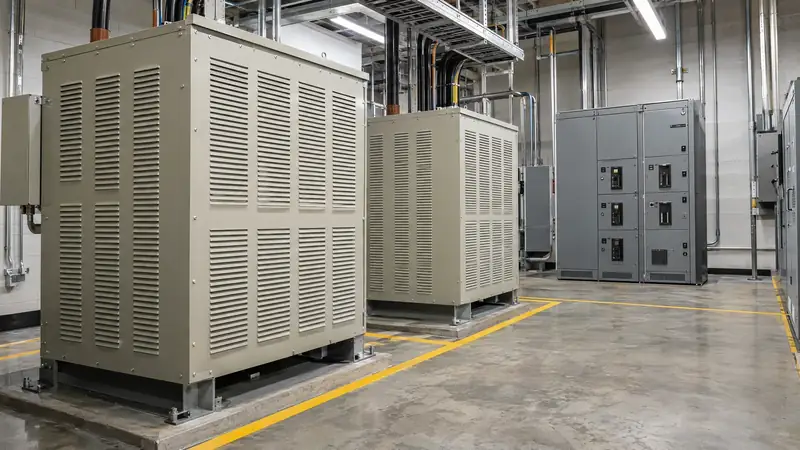
kVACommon Cast Resin (Cast Coil) Sizes We Buy
03Common Cast Resin Transformer Sizes, Voltages and Ratings
Commercial and substation cast-resin units commonly fall in the 300–3,000 or 5,000 kVA range. Larger medium-voltage dry-type designs can exceed 10 MVA, though availability and configuration vary. Ratings such as 1,500 kVA and 3,000 kVA are useful reference points, not a substitute for reading the actual nameplate.
Common primary voltages range from 2.4 to 34.5 kV. Low-voltage secondaries are often 208–600 V; some units instead have a plant medium-voltage secondary. California systems vary by service territory and project, so record the exact primary and secondary voltages, connection and taps. Compare related listings for 1,500 kVA transformers and 3,000 kVA transformers.
- Record the full kVA rating and any multi-stage ratings.
- Note phase, frequency, HV/LV voltage, taps and delta or wye connections.
- Capture impedance, BIL, insulation class and temperature-rise details when shown.
04Construction Variations to Confirm on the Nameplate
The label “cast coil” does not necessarily mean both windings are cast. Some designs have cast HV windings and VPI (vacuum pressure impregnated) LV windings. Confirm each winding individually using the nameplate, OEM drawings or other reliable documentation before describing the unit to a buyer.
Enclosures, cooling fans, thermal sensors, insulation class and medium-voltage BIL also vary by design. These details help distinguish one unit from another and indicate what information may be needed for an application review. Our page on medium-voltage dry-type transformers covers related equipment and configurations.
05What Affects the Resale Value of a Used Cast Resin Transformer
Resale interest depends on whether the unit’s specifications match a potential application and whether its condition can be evaluated. Rating, phase, primary and secondary voltages, taps, connection, impedance, BIL and cooling details all help establish fit. A familiar California voltage configuration may be easier to place than an unusual one, but no specific configuration guarantees a sale.
Cracked resin, impact damage, tracking or a history of partial discharge need specialist evaluation. Age, winding material, missing accessories, test history, quantity and site access also matter. Factory test reports and available electrical test records help buyers assess condition. Fire and moisture resistance are design considerations, not a reason to call an individual unit fireproof or maintenance-free.
- Resin condition and documented repair or discharge history
- Manufacturer, serial number and year of manufacture
- Complete nameplate data and winding construction
- Test reports, drawings and included fans or sensors
- Whether the unit is used or new-surplus
06What to Send a Cast Resin Transformer Buyer for an Offer
Start with clear nameplate photos and overall photos that show the unit’s condition and configuration. Include the quantity, California location and whether the transformer is used, removed, spare or new-surplus. Only photograph equipment you own or are authorized to access, and take pictures from a safe position.
Helpful nameplate fields include manufacturer, serial number, year, kVA, phase, frequency, HV and LV voltages, taps, impedance, BIL, temperature rise and insulation class. Add connection diagrams, enclosure drawings, winding material, total weight and any available test reports. Use the transformer submission process or text photos to Rocky at (951) 403-5738.
- Nameplate and overall equipment photos
- Quantity, location and condition
- Test reports, drawings and available records
- Confirmation that you own the unit or can sell it
07Plan Removal with Qualified Electrical and Rigging Professionals
Do not de-energize, disconnect, open or move a transformer yourself. The owner’s qualified electrical contractor or serving utility handles electrical isolation and disconnection. Any backfeed from solar, batteries or generators must also be considered by qualified personnel.
Before pickup, confirm site access, loading arrangements and who is responsible for rigging and freight. The transformer’s weight, dimensions, access route and installation location can affect removal planning. California oversize or overweight transport may require permits, and local roads can have separate requirements. See transformer removal and pickup considerations for more planning details.
08Why California Sellers Bring Cast Resin Units to Rocky
California Transformer Buyer reviews used, pulled, spare, project-surplus and new-surplus transformers from sellers throughout California. Send the information for a single unit or a mixed group; Rocky reviews the details and may ask follow-up questions about test reports, ownership, records or site access.
If the unit is a fit, you receive a written offer explaining the price, what is included, who handles loading or rigging and freight, and the payment terms and timing. Those terms are set out before pickup. Reviewing your transformer costs nothing and carries no obligation. To start, use the contact form to request an offer or call or text (951) 403-5738.
FAQCast Resin (Cast Coil) Transformer FAQ
How can I tell whether my dry transformer is cast resin or VPI?
Start with the nameplate, manufacturer drawings and equipment records. Smooth resin-covered coil bodies can suggest cast construction, but appearance alone may not establish how every winding was made. Some transformers have a cast HV winding and a VPI LV winding. If the records do not clarify the design, share the available photos and documentation for review rather than opening the equipment.
Can I sell a cast resin transformer that has been removed from service?
A removed unit may be reviewed, whether it is a spare, a decommissioned transformer or project surplus. Its rating, condition, completeness and available test records help determine resale interest. The seller must own the transformer or have authority to sell it; equipment owned by a utility cannot be sold by a property owner. Share its location and removal status when requesting an offer.
Does a cracked resin winding mean the transformer has no resale value?
Not necessarily, but cracked resin or impact damage requires specialist evaluation and can affect buyer interest. The extent and location of damage, any tracking or partial-discharge history, test results and completeness of the unit all matter. Do not attempt repairs or open the transformer to investigate. Provide photographs taken safely and any inspection or test documentation you already have.
Are cast resin transformers fireproof and maintenance-free?
No blanket claim like that should be made for an individual transformer. Cast-resin construction uses solid insulation and is often selected for applications with fire or moisture concerns, but performance depends on the specific design, condition and installation. Follow the equipment documentation and qualified professionals’ guidance for maintenance and fire-safety requirements. Provide any applicable fire or environmental classifications with the unit information.
Do I need PCB testing records for a cast resin transformer?
Cast-resin transformers have solid resin insulation and no bulk insulating liquid, but do not assume that every environmental record is irrelevant. Share existing labels, records and test documentation, especially if the equipment has associated oil-filled components or uncertain history. PCB status and management requirements depend on applicable rules and evidence. Sellers should rely on testing, documentation and qualified environmental professionals; this is not legal advice.
What happens after I send photos and nameplate information?
Rocky reviews the information and may ask for details such as test reports, ownership confirmation, records, quantity or site access. If the transformer is a fit, the written offer states the price, what is included, loading or rigging and freight responsibilities, and payment terms and timing. You can review those terms before deciding. Pickup is scheduled only under the written terms.