01What a 3000 kVA Transformer Rating Tells a Buyer
A 3000 kVA transformer has a nominal capacity of 3 MVA and is most commonly a three-phase unit. It is a familiar commercial and catalog rating, although 3000 kVA is not listed in the verified preferred three-phase ratings in IEEE C57.12.00-2015, Table 2. That preferred-rating list does not prohibit custom or other catalog ratings.
When comparing a unit with nearby sizes, confirm the full nameplate rating and any multiple cooling stages rather than estimating from its appearance. A 2500 kVA or 3333 kVA unit is not interchangeable just because it is close in capacity; system voltage, connections, impedance, and load requirements matter too. See the related 2500 kVA transformer rating and 3333 kVA transformer rating pages for comparison.
FLAFull-Load Amps for a 3000 kVA Transformer
Rated full-load current at common California voltages. Single-phase: amps = kVA × 1000 ÷ volts. Three-phase: amps = kVA × 1000 ÷ (1.732 × volts). Use the nameplate voltage of your unit.
| Phase | Voltage | Full-load amps |
|---|---|---|
| Three-phase | 480 V | 3,608 A |
| Three-phase | 4.16 kV | 416 A |
| Three-phase | 12 kV | 144 A |
| Three-phase | 12.47 kV | 139 A |
| Three-phase | 20.78 kV | 83.4 A |
| Three-phase | 34.5 kV | 50.2 A |
| Three-phase | 66 kV | 26.2 A |
02Transformer Types Commonly Found at 3000 kVA
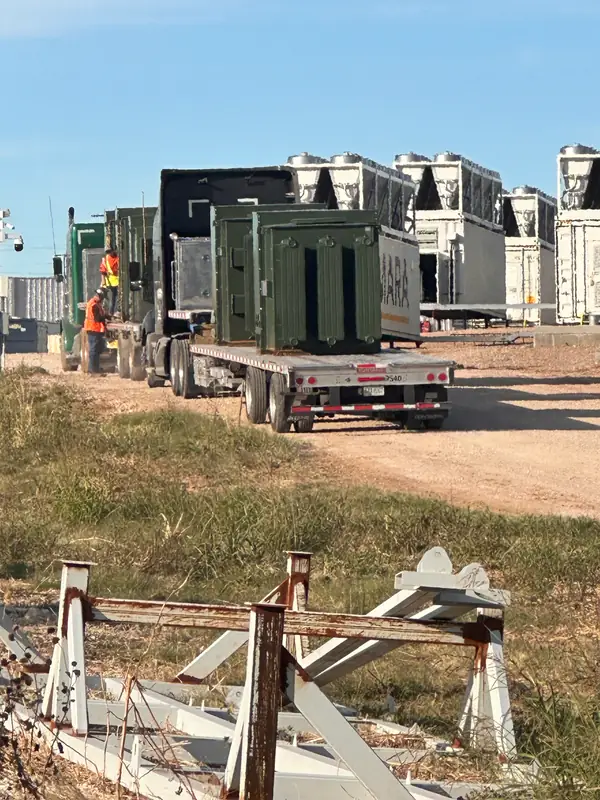
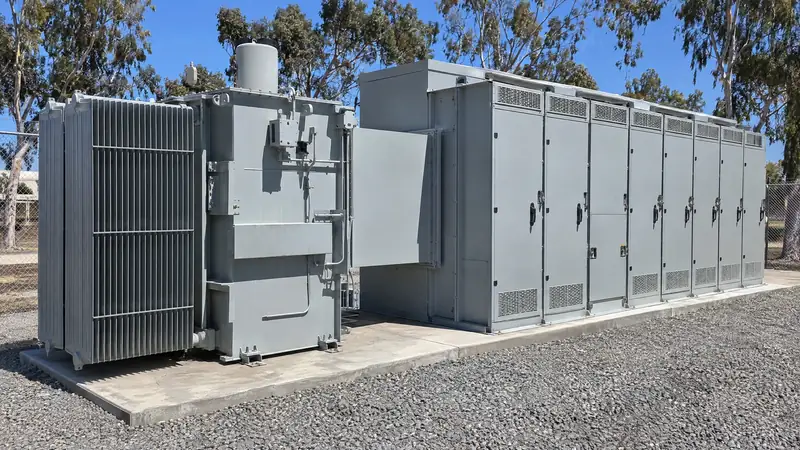
A 3000 kVA unit may be a three-phase liquid-filled pad-mount transformer, an indoor medium-voltage dry-type or cast-resin transformer, or a specialized step-up unit for solar, inverters, or battery energy storage. Large data-center electrical systems may also use transformers at this capacity. Construction and accessories vary with the project and manufacturer.
- Liquid-filled pad-mount: commonly used for outdoor service and project distribution.
- Medium-voltage dry-type or cast-resin: used where a dry-insulated design is specified.
- Solar or inverter step-up: connects power-conversion equipment to a medium-voltage collection system.
- Battery-storage transformer: may be part of a battery energy storage system (BESS) or power-conversion block.
Distinguish Distribution Units from Station Equipment
At 3 MVA, equipment may be part of a unit substation or a project-specific station arrangement, but do not identify a transformer as station class based on kVA alone. Check its construction, cooling, switching and protection arrangement, and the role it served. For equipment built as a pad-mounted design, see three-phase pad-mount transformer configurations.
Dry-Type and Renewable Project Designs
Dry-type units can use VPI/VPE or cast-resin construction. Solar and storage equipment may have application-specific connections and ratings, so nameplate details and project documentation help identify the unit. Related pages cover medium-voltage dry-type transformers, cast-resin transformers, and solar and inverter step-up transformers.
03Typical Voltage Combinations and Nameplate Checks
Voltage combinations depend on the equipment and the system it serves. Three-phase 3000 kVA transformers may be found with medium-voltage primaries such as 12.47 kV, 20.78 kV, or 34.5 kV and low-voltage secondaries such as 480Y/277 V. Other designs may have different primary or secondary voltages, including medium-voltage outputs for project systems. Treat these as examples, not a guarantee of a particular configuration.
Read the actual nameplate before comparing the unit with a project requirement. Record high- and low-voltage ratings, delta or wye connection, tap positions, impedance, BIL, frequency, cooling class, and temperature rise. For liquid-filled units, note fluid type and gallons; for dry types, identify the insulation and temperature-rise rating. The full nameplate, not a catalog description, controls.
04How to Use the 3000 kVA Full-Load Amps Chart
The full-load amps chart rendered on this page shows calculated three-phase current at several listed voltages. Find the voltage row that matches the transformer’s rated winding voltage and use the corresponding amps as the full-load reference for that voltage. Current changes with voltage, so do not use a value from a different row.
This chart is a reference, not a substitute for engineering review or protective-device coordination. Confirm that the chart voltage matches the actual nameplate and system, and ask a qualified electrical professional to assess operating conditions, loading, and equipment selection. For the relationship between kVA, voltage, and current, use the transformer kVA and amps guide.
05Where 3000 kVA Units Serve California Projects
This size is suited to large 480 V or 600 V services and to renewable-energy and power-conversion blocks. Depending on its design, a unit may support a large commercial or industrial facility, a data-center electrical system, a solar project, or battery storage. The application and location help establish whether its voltage, connections, and construction match current demand.
California systems vary by utility and site. PG&E lists 20,780 V primary configurations in its service territory, while 34.5 kV equipment also appears in some industrial and renewable applications. Never assume a unit matches a local service based on geography alone; verify the nameplate and have the serving utility or qualified electrical contractor confirm compatibility.
06Physical Size, Weight, and Removal Planning
A 3000 kVA transformer is substantial equipment, but its footprint, height, and weight vary by manufacturer, design, cooling arrangement, enclosure, and accessories. A liquid-filled pad-mount, an indoor dry-type unit, and a project-specific step-up transformer can differ significantly. Use the nameplate or shipping documents for total weight and, where shown, tank-and-fittings and core-and-coil weights.
For an offer, provide overall photos from a safe position and describe access constraints such as indoor placement, restricted routes, or nearby equipment. Do not open compartments, move the transformer, or attempt disconnection or preparation. The owner’s qualified electrical contractor or serving utility is responsible for isolation and disconnection; loading, rigging, and freight responsibilities are set out in the written terms.
07What Affects a Used or Surplus 3000 kVA Transformer’s Value
A buyer evaluates the complete transformer, not capacity alone. Voltage and connection, cooling class, impedance, condition, age, winding material, and whether the unit is used or new-surplus all affect its potential resale. Commonly useful California voltages and complete, documented configurations may suit more projects, but no rating or condition guarantees a purchase or value.
- Nameplate completeness, manufacturer, serial number, and year of manufacture.
- Test reports, including factory reports or available electrical test results.
- Physical condition: leaks, corrosion, bushing damage, missing parts, or evidence of impact.
- Accessories such as fans, gauges, switches, fuses, and load-tap changers, if applicable.
- Fluid type and PCB records for liquid-filled equipment; dry insulation details for dry types.
- Quantity, ownership authority, site access, and the complexity of removal.
Environmental Records Matter
Share available fluid and PCB documentation rather than making assumptions from a label or age. Unknown status may require additional documentation or testing, and California requirements for PCB-containing oil differ from federal classifications. Rely on testing, records, and qualified environmental professionals for determinations; this information is not legal advice. See factors that affect a used transformer’s value and how surplus transformers are reviewed.
08What to Send California Transformer Buyer for an Offer
To sell a 3000 kVA transformer, send clear photos of the nameplate and the full unit, along with the quantity, California location, and condition. Include available test reports, fluid or PCB records, and details about accessories or known issues. Only photograph equipment you own or are authorized to access, and take photos from a safe position without opening or handling the equipment.
Call or text Rocky at (951) 403-5738, or submit the website contact form. He may ask follow-up questions about ownership, test records, and site access. If the unit is a new-surplus transformer, note whether it has never been energized and whether it remains crated or on skids.
If the unit is a fit, you receive a written offer stating what is included, who handles rigging and freight, and the payment terms and timing before pickup is scheduled. Reviewing your transformer costs nothing and carries no obligation. For the steps and submission options, see how to sell your transformer or request an offer from California Transformer Buyer.
kVANearby Transformer Sizes We Buy
FAQ3000 kVA Transformer FAQ
Is every 3000 kVA transformer three-phase?
Three-phase is the common configuration at this capacity, and the 3000 kVA rating information on this page is for three-phase equipment. Do not assume phase from size alone when evaluating an individual unit. Check the nameplate for phase, voltage, and connection, and send a clear photo so the buyer can review the actual configuration.
Can I sell a 3000 kVA transformer that is still installed?
You can request an offer for an installed unit, provided you own it or have authority to sell it. Do not disconnect or move it yourself. The owner’s qualified electrical contractor or the serving utility handles isolation and disconnection, and the written offer explains who is responsible for rigging, loading, and freight before pickup is arranged.
Will you consider a 3000 kVA transformer with no test report?
You can still submit the unit for review if a test report is unavailable. State that clearly and provide the nameplate, overall photos, known condition, and any records you do have. Testing and documentation can affect buyer evaluation, so be accurate about what is missing rather than assuming the unit is either usable or unusable.
Do you buy new-surplus 3000 kVA transformers?
California Transformer Buyer considers new-surplus equipment from sellers in California. Explain whether the transformer has never been energized and whether it is crated or on skids, then send photos of the unit and its nameplate. Include storage condition, quantity, location, and available factory documents so the equipment can be assessed accurately.
What if the transformer has unknown PCB status or a leak?
Disclose unknown PCB status, leaks, or other environmental concerns when you contact the buyer, and share any existing labels, test results, or records. Do not drain, sample, or open the equipment. PCB and used-oil requirements depend on the facts and applicable rules; rely on qualified environmental professionals and supporting documentation for determinations.
Does 3000 kVA mean the unit will work for my facility?
No. The kVA rating describes capacity, but a match also depends on primary and secondary voltage, phase, connections, impedance, protection, and site conditions. Compare the nameplate with the project requirements and have a qualified electrical professional verify suitability. The full-load amps chart is a reference and is not an equipment-selection approval.