01Which 7500 kVA Transformer Configurations Are Common?
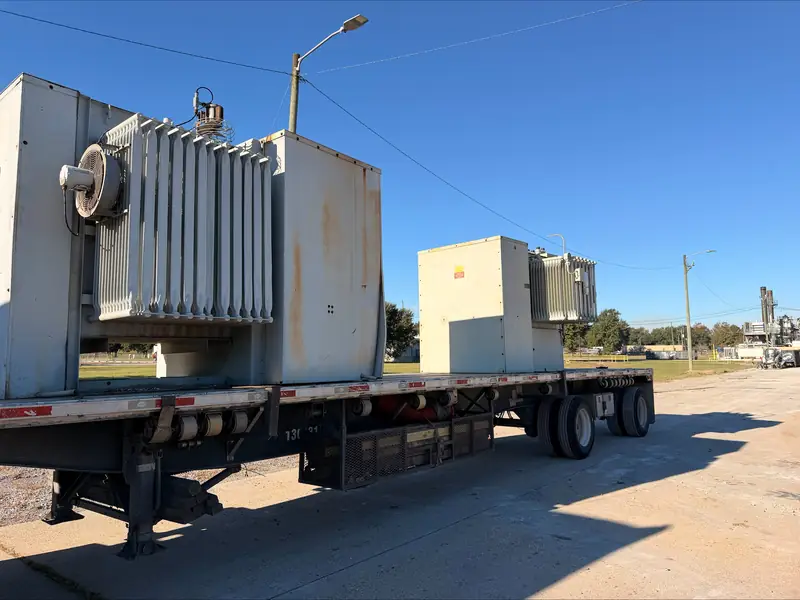
A 7500 kVA transformer is a substantial three-phase unit, not a typical pole-mounted distribution transformer. The rating appears in liquid-filled padmount equipment, station-class transformers, primary unit substations, medium-voltage VPI dry types and cast-resin designs.
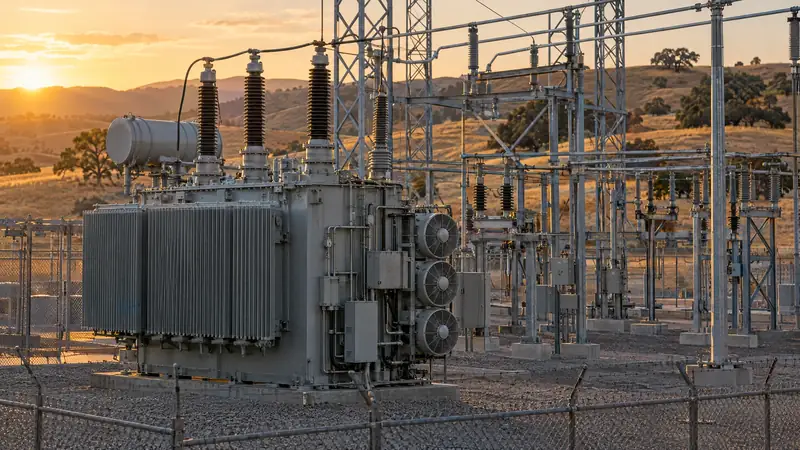
A 7500 kVA pad mount transformer generally uses an enclosed, ground-level arrangement. Substation designs may have exposed bushings, radiators and cooling fans. Identify the construction as well as the capacity: two 7.5 MVA units can serve very different electrical systems.
- Three-phase pad-mounted transformers: enclosed equipment for distribution and specialty applications.
- Substation and power transformers: station-class equipment for utility and industrial systems.
- Unit substation transformers: assemblies designed to interface with adjacent switchgear.
- Medium-voltage dry-type transformers: VPI and cast-resin equipment without insulating liquid.
FLAFull-Load Amps for a 7500 kVA Transformer
Rated full-load current at common California voltages. Single-phase: amps = kVA × 1000 ÷ volts. Three-phase: amps = kVA × 1000 ÷ (1.732 × volts). Use the nameplate voltage of your unit.
| Phase | Voltage | Full-load amps |
|---|---|---|
| Three-phase | 480 V | 9,021 A |
| Three-phase | 4.16 kV | 1,041 A |
| Three-phase | 12 kV | 361 A |
| Three-phase | 12.47 kV | 347 A |
| Three-phase | 20.78 kV | 208 A |
| Three-phase | 34.5 kV | 126 A |
| Three-phase | 66 kV | 65.6 A |
02Voltage Combinations and California Applications
At 7.5 MVA, applications include utility and industrial medium-voltage distribution, solar inverter step-up service and battery energy storage systems. A renewable block may use this rating to connect inverter output to a medium-voltage collection system. Industrial units may supply plant distribution buses or large groups of loads.
Possible configurations include a 12 kV-class primary feeding a 4.16 kV industrial bus, a medium-voltage primary feeding 480Y/277 V equipment, or an inverter step-up arrangement connected to a 34.5 kV collection system. These are application examples, not interchangeable specifications or assurances of availability.
California systems vary by service territory. PG&E documents 12,000 V and 20,780 V primary configurations; SCE uses several distribution classes, including 12 kV and 16 kV. The actual nameplate voltage, connection, BIL and tap range—not the utility name alone—determine whether a unit suits another installation.
03How to Read the Full-Load Amps Chart
The full-load amps chart on this page shows calculated three-phase line current at selected line-to-line voltages for 7500 kVA. Find the voltage that matches the winding you are evaluating. The same apparent-power rating produces higher current at a lower voltage.
The calculation is amps = kVA × 1,000 ÷ (√3 × line-to-line volts). For a grounded-wye rating, use the line-to-line voltage rather than the line-to-neutral value. Our guide to transformer kVA and amps explains the relationship.
Chart entries do not establish a transformer's actual voltage ratings, fault current or protective-device sizing. Nor does 7.5 MVA automatically mean 7.5 MW of usable load: real power depends on power factor, and operating limits depend on the complete design and installation.
04Nameplate Details That Determine Reuse Potential
A clear nameplate photo is the starting point for reviewing a used 7500 kVA transformer. Photograph the entire plate from a safe, authorized position. If information is unreadable or absent, send existing specification sheets or factory records rather than guessing.
Record every cooling-stage rating. A plate showing 7500 kVA at one cooling stage may list a different capacity with fans operating. Those stages affect how the transformer should be described and evaluated.
- Manufacturer, serial number, manufacture year, phase and frequency.
- HV and LV voltages, delta/wye connections, vector diagram and taps.
- All kVA/MVA stages, cooling class and temperature rise.
- Impedance percentage and basic impulse insulation level.
- Fluid type and gallons, or dry-type insulation construction.
- Total weight, winding material if stated, and PCB labeling.
05What Affects a Used 7500 kVA Transformer's Value?
As a 7500 kVA transformer buyer, California Transformer Buyer evaluates electrical compatibility, condition and the practical cost of recovering the equipment. Capacity alone is not enough. An unusual secondary voltage, missing accessories or difficult site access can narrow reuse options.
Factory reports, turns-ratio results, insulation-resistance records and available oil tests or dissolved-gas analysis help document condition. New-surplus equipment also needs storage history: never energized does not necessarily mean free of moisture exposure, corrosion or shipping damage.
Our guide to used transformer value covers these factors in more detail. Reviewing your transformer costs nothing and carries no obligation; an offer depends on the specific unit and supporting information.
- Leaks, damaged bushings, rust and missing fans or gauges.
- Voltage demand, impedance, connections and available taps.
- Copper or aluminum windings when documented.
- Fluid records, test history and completeness of accessories.
- Quantity, ownership status and loading constraints.
06Physical Size, Site Access and Fluid Documentation
Dimensions and weight vary by manufacturer, voltage class, insulation system and cooling arrangement. Expect substantial equipment requiring engineered handling—not a size or weight that can be reliably inferred from 7500 kVA alone. Use certified drawings and listed weights to assess gates, overhead clearance, crane access and transport requirements.
For liquid-filled equipment, provide existing fluid and PCB records. A “non-PCB” designation does not mean zero PCBs, and California has stricter rules for PCB-containing oil. Testing, documentation and qualified environmental professionals should determine the appropriate management pathway; this is not legal advice.
The owner's qualified electrical contractor or serving utility handles isolation and disconnection, including possible solar, battery or generator backfeed. The transformer removal and pickup guide explains the planning information needed before transport.
07Send Rocky the Information Needed for an Offer
To sell a 7500 kVA transformer, call or text Rocky at (951) 403-5738, or request a transformer offer through the contact form. Start with photos and basic location details; Rocky may request test reports, ownership confirmation and access information.
The written offer states what is included, who handles loading or rigging and freight, and payment terms and timing. Agree on those terms before pickup. Equipment located on your property must be yours to sell or covered by your authority to act.
- Readable nameplate and overall photos taken safely.
- Quantity, California city and current condition.
- Whether energized, removed, stored or never energized.
- Known defects, available reports and fluid records.
- Site access restrictions and expected availability.
kVANearby Transformer Sizes We Buy
FAQ7500 kVA Transformer FAQ
Is 7500 kVA the same rating as 7.5 MVA?
Yes. One MVA equals 1,000 kVA, so 7500 kVA and 7.5 MVA describe the same apparent-power capacity. Check which cooling stage carries that rating, however. If a specification lists several capacities, send the complete rating sequence so the review does not confuse base cooling capacity with a higher fan-assisted rating.
Can I sell a transformer that is still operating?
You can submit an operating unit for review and explain its expected release date. Photos must be taken only from safe positions where you are authorized to be. Any shutdown, isolation and disconnection must be handled by your qualified electrical contractor or serving utility, with availability and pickup arrangements addressed in the written terms.
Will a solar or BESS transformer work in an industrial installation?
Not automatically. Renewable-energy transformers may have winding arrangements, voltage ratings, grounding provisions or duty requirements that differ from industrial distribution equipment. A matching 7.5 MVA rating is only one consideration. Provide the connection diagram, voltage details and design documentation so compatibility can be evaluated rather than assumed.
Should I send information if the transformer has failed?
Yes, you can submit a failed unit for review, but purchase is not guaranteed. Describe the failure, known damage, leaks and any missing components. Existing diagnostic and fluid records are useful. A failed transformer may require a different recovery or environmental pathway from working equipment intended for reuse.
Can a property owner sell a utility transformer on the property?
Only if the property owner owns the equipment or has authorization from its owner. Location on private property does not establish ownership. Check asset records, purchase documents or agreements with the serving utility before offering it for sale. California Transformer Buyer may request ownership information during the review.
Do you review a single spare or only multiple transformers?
California Transformer Buyer reviews single units as well as multiple transformers and mixed lots located in California. A spare 7500 kVA unit can be submitted with its storage history and documentation. For multiple units, identify each nameplate separately so differences in voltage, cooling stages and condition are not overlooked.