01What a 12 MVA Transformer Rating Means
A 12 MVA transformer has a rated apparent-power capacity of 12 megavolt-amperes, or 12,000 kVA. At this size, three-phase construction is the expected configuration and is the preferred three-phase base rating in the verified IEEE rating series provided for this page. A custom rating or multiple cooling-stage ratings may appear on an individual nameplate, so use the actual unit documentation rather than assuming every 12 MVA transformer has identical capability.
This capacity is far above typical building distribution equipment. It generally points to a power transformer serving a utility or industrial substation, a generator connection, or another large electrical system. For comparison with nearby ratings, see our pages on 10 MVA transformers and 15 MVA transformers.
FLAFull-Load Amps for a 12 MVA Transformer
Rated full-load current at common California voltages. Single-phase: amps = kVA × 1000 ÷ volts. Three-phase: amps = kVA × 1000 ÷ (1.732 × volts). Use the nameplate voltage of your unit.
| Phase | Voltage | Full-load amps |
|---|---|---|
| Three-phase | 4.16 kV | 1,665 A |
| Three-phase | 12.47 kV | 556 A |
| Three-phase | 20.78 kV | 333 A |
| Three-phase | 34.5 kV | 201 A |
| Three-phase | 66 kV | 105 A |
| Three-phase | 69 kV | 100 A |
| Three-phase | 115 kV | 60.2 A |
02Transformer Types Commonly Found at 12 MVA
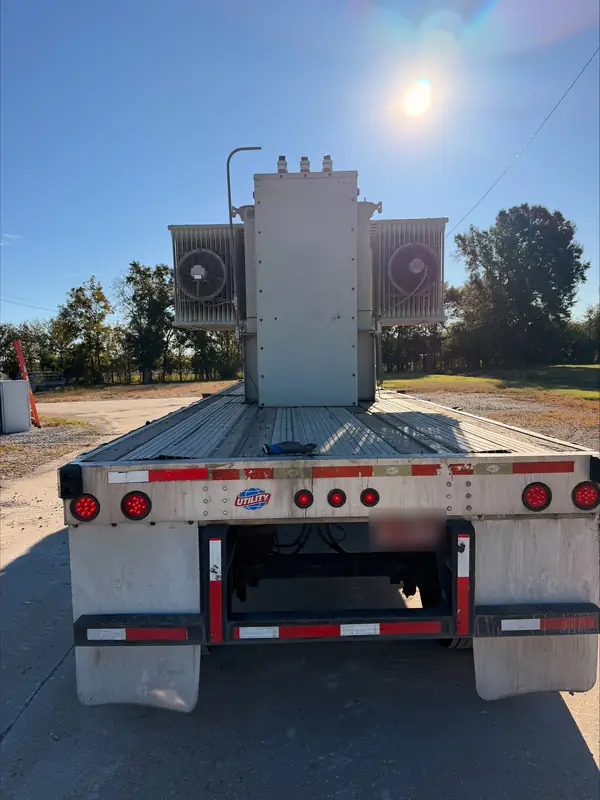
The verified 12 MVA equipment categories include substation power transformers, generator step-up transformers, autotransformers and mobile-substation transformers. These designs are built for larger power-system duties; the connections, cooling arrangements and accessories vary with the project and manufacturer.
- A station-class unit may have radiators, fans, a conservator or sealed tank, and tap-changing equipment.
- A generator step-up (GSU) transformer connects generation equipment to a higher-voltage system.
- An autotransformer shares part of its winding between voltage levels; it is not interchangeable with every two-winding design.
- A mobile-substation transformer is part of equipment intended for transport and temporary or emergency service.
Is a 12 MVA Pad-Mount or Dry-Type Unit Typical?
A 12 MVA pad-mount transformer is not a typical standard distribution pad-mount size. Three-phase pad-mount products commonly reach 10 MVA in the stated standard scope, so a claimed 12 MVA pad-mounted unit should be checked against its nameplate and configuration. Pole-mount designs are not usual at this rating, and a dry-type unit of this capacity would be a specialized installation rather than the common form.
For larger enclosed power units, compare the equipment details with our substation and power transformer guide, generator step-up transformer information, autotransformer overview and mobile substation transformer guide.
03Voltage Combinations and California Applications
The full-load amps chart on this page lists three-phase examples across voltages from 4.16 kV through 115 kV. A 12 MVA transformer may therefore be found with medium-voltage windings serving a plant or substation, or with higher-voltage connections for subtransmission, transmission or generation interconnection. The actual high- and low-side combination depends on the system and project; verify both voltages, winding connections and tap positions on the nameplate.
California applications include utility and industrial substations, generator step-up service, and generation interconnections. Solar, wind, storage and conventional generation projects may use transformers to connect equipment to a collection or utility system, but the required voltage and design are project-specific. California utility systems have different documented voltage configurations, so a familiar voltage alone does not establish that a unit is suitable for a particular site.
- Record the high-voltage and low-voltage ratings exactly as shown.
- Include delta or grounded-wye connection details and tap range.
- Note all cooling-stage ratings, such as ONAN or ONAF, if listed.
04How to Read the 12 MVA Full-Load Amps Chart
The chart rendered on this page gives the calculated full-load line current for a three-phase 12 MVA transformer at each listed voltage. Use the row matching the relevant winding voltage to understand the current associated with the rated apparent power. The chart is a reference, not a substitute for the unit's nameplate, engineering documents or protection and conductor design.
Current changes with voltage: for the same three-phase apparent-power rating, a lower-voltage winding carries more current than a higher-voltage winding. The chart does not show that a transformer can safely carry more than its stated rating, nor does it account for every operating condition or cooling stage. For the calculation method and additional rating guidance, see how transformer kVA and amps relate.
05Physical Size, Weight and Removal Planning
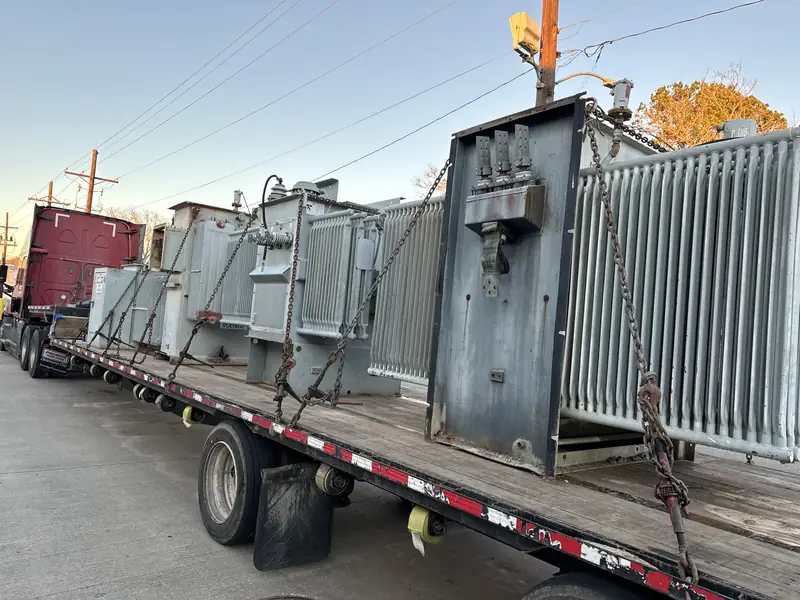
A 12 MVA power transformer is substantial equipment. Compared with distribution transformers, it typically has a much larger tank and may have substantial radiators, bushings, fans and other fittings. Overall dimensions and total weight vary by manufacturer, voltage class, cooling design and accessories; use the shipping or nameplate weight rather than estimating from the rating alone.
Large units can require specialized rigging and transport planning. Access, overhead and ground clearances, loading arrangements, road restrictions and whether components are shipped with the unit can affect logistics. California oversize or overweight permits may apply when a shipment exceeds common state-highway limits, and local roads may have separate requirements. Qualified personnel must handle electrical isolation, disconnection and equipment movement.
06What Affects the Value of a Used 12 MVA Transformer
A buyer needs to establish what the transformer is, how it is configured and what evidence is available about its condition. The rating matters, but it does not determine value on its own. Voltage combination, taps, impedance, BIL, cooling class, fluid or insulation type, winding material and year of manufacture all help establish potential uses and market fit.
Condition and records also matter. Leaks, corrosion, damaged bushings or missing accessories can affect evaluation, while factory test reports, oil test or DGA records, insulation-resistance results and turns-ratio results can help document condition. New-surplus equipment with clear records may be evaluated differently from a previously energized unit. PCB documentation and fluid details should be shared; rely on testing, records and qualified environmental professionals for environmental determinations, not an informal assumption.
Configuration demand, quantity, ownership authority and site access also affect an offer. A clear explanation of what is included and how rigging and freight will be handled helps avoid uncertainty. For more on these evaluation factors, read how a buyer evaluates a used transformer.
07What to Send California Transformer Buyer for an Offer
California Transformer Buyer purchases used, pulled, surplus and new-surplus transformers from sellers located in California. To begin a review, call or text Rocky at (951) 403-5738, or use the contact form to request an offer. Photos should be taken only from a safe position and of equipment you are authorized to access; do not open compartments or attempt electrical work to gather information.
After reviewing the information, Rocky may ask follow-up questions about test reports, fluid or PCB records, ownership, site access and removal requirements. If an offer is made, it will state the price, what is included, who handles loading, rigging and freight, and payment terms. Those terms are provided in writing before pickup. Reviewing a transformer costs nothing and carries no obligation.
- Clear nameplate photos, plus overall photos from a safe position
- Quantity, California location and current condition
- Manufacturer, serial number and year, if legible
- Voltage, taps, cooling stages and accessories
- Available test reports and fluid or PCB documentation
- Confirmation that you own the unit or have authority to sell it
kVANearby Transformer Sizes We Buy
FAQ12 MVA Transformer FAQ
Can I sell a 12 MVA transformer that has been in service?
Yes, California Transformer Buyer reviews used and previously energized transformers located in California. An offer depends on the unit's configuration, condition, records and removal circumstances; purchase is not guaranteed. Send photos and available test information so the unit can be evaluated. The owner or an authorized representative must have authority to sell it.
What if the transformer nameplate is damaged or unreadable?
Send the clearest safe-position photos available, including any remaining nameplate details, equipment labels and overall views. Provide whatever you know about the manufacturer, voltage, capacity, year, site and service history. Do not open a cabinet or approach energized equipment to improve a photo. The buyer may need additional records or clarification before deciding whether the unit can be evaluated.
Does a 12 MVA unit need to be in working condition?
Not necessarily. California Transformer Buyer reviews equipment in different conditions, including used, decommissioned, surplus and new-surplus units, but condition affects whether there is a potential offer and what terms may apply. Disclose known problems such as leaks, damaged bushings, missing parts or failed tests. A failed or leaking unit may also need appropriate environmental review and handling.
Will you buy a transformer owned by my utility?
A property owner cannot sell utility-owned equipment merely because it is located on the property. The seller must own the transformer or have authority from its owner to sell it. If ownership is unclear, establish that authority before proceeding. Include any relevant ownership or project documentation when you contact California Transformer Buyer.
Do I need to disconnect or move the transformer before requesting an offer?
No. Do not disconnect, de-energize, open, drain or move the transformer yourself. Those activities must be handled by the owner's qualified electrical contractor or the serving utility, as applicable. For an initial review, provide photos from a safe position and details about site access. Any loading, rigging and freight responsibilities should be set out in the written offer.
Can a 12 MVA transformer be resold if its PCB status is unknown?
Unknown status should not be treated as proof that equipment is non-PCB. Share any labels, fluid records and test documentation you have, and rely on qualified environmental professionals for testing and management decisions. PCB requirements depend on the equipment, oil and documentation, and California has specific rules for PCB-containing oil. This information is general and is not legal advice.