01Sell a GE & Prolec GE Transformer to a California Buyer
California Transformer Buyer, run by Rocky, reviews GE and Prolec GE equipment offered by sellers located in California. We consider used, pulled, surplus, new-surplus, decommissioned and spare transformers, as well as project leftovers and mixed lots. A review does not guarantee a purchase.
We may consider distribution, network, power and dry-type equipment, including a GE & Prolec GE pad mount transformer, depending on its details and condition. For pad-mounted equipment, see our [pad-mount transformer buyer information](pad-mounted transformer buying details).
- Single transformers or multiple units
- New-surplus equipment, including crated or skidded units
- Used or removed equipment with available condition and test records
02How GE and Prolec GE Manufacturer Names Relate
GE legacy nameplates appear on several transformer types, including overhead, pad-mounted, network, power and dry-type equipment. GE distribution transformer activities have a successor relationship with Prolec/GE Vernova, but a GE logo alone does not establish the successor or factory for every product line. Product line and factory identification matter.
Prolec has a long history making distribution, renewable and power transformers and was historically a GE–Xignux joint venture. GE Vernova completed its acquisition of the remaining 50% of Prolec GE on February 2, 2026; descriptions of the business as currently 50/50 owned are outdated. GE Vernova is now the parent, while particular legacy equipment still needs identification from its plate and records.
03GE and Prolec GE Transformer Types We Review
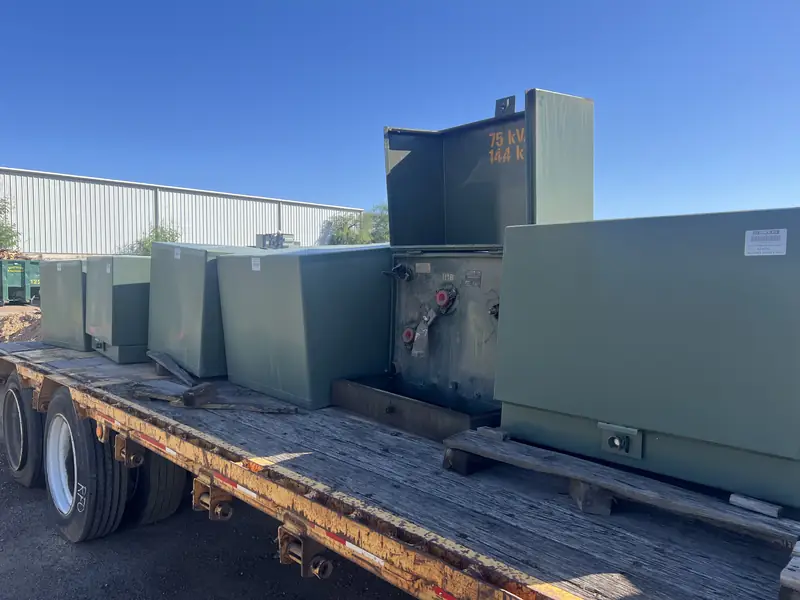
Prolec GE equipment includes pad-mounted, overhead, network and substation transformers, as well as generator step-up (GSU) units and autotransformers. GE legacy equipment spans additional product lines, including dry-type and power transformers. We assess the actual unit rather than assuming its type or specifications from the brand name.
For larger station-class units, details such as MVA rating, cooling stages, impedance, voltage, accessories and available test reports help us understand the equipment. See our [substation transformer buying information](substation transformer buying details) for the kinds of large-unit information that can help with a review. For dry-type equipment, the [dry-type transformer guide](dry-type transformer types and details) explains common configurations.
- Pad-mounted and overhead distribution transformers
- Network and submersible/vault equipment
- Power, substation, GSU and autotransformer units
- Dry-type transformers
04Where to Find the GE & Prolec GE Transformer Nameplate
Look for the manufacturer plate on an accessible exterior surface of the tank or enclosure. Plate position and layout vary by unit and age. Do not open compartments or move equipment to find it; take photos only from a safe position and only where you are authorized to be.
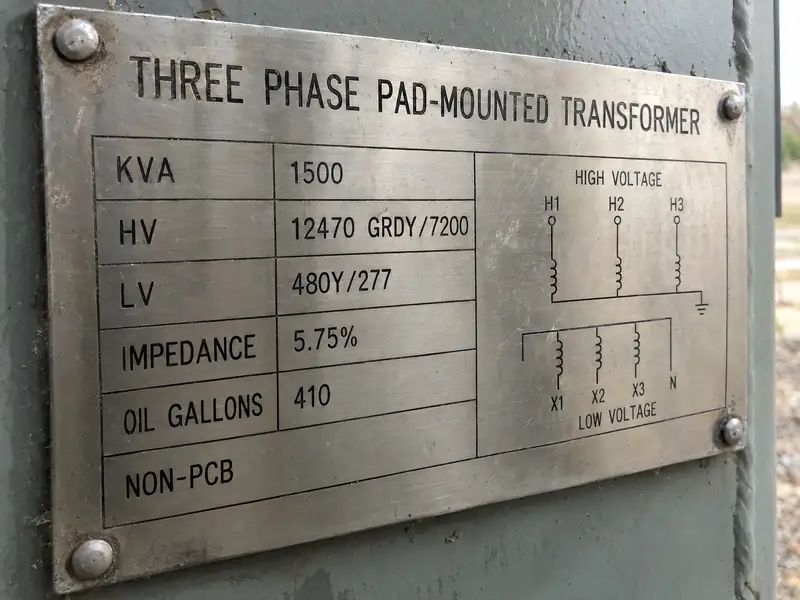
A GE & Prolec GE transformer nameplate may show a serial number, catalog or style number, and year or date of manufacture. These fields are not always presented in the same way, and a date may not be obvious. Send a clear photo of the full plate rather than relying on a guessed serial-number or date format. Our [transformer nameplate guide](guide to reading transformer nameplates) covers other fields buyers use.
- Manufacturer and serial number
- Catalog, style or identification number, if shown
- Year or date of manufacture, if shown
- kVA or MVA, phase and frequency
- High- and low-voltage ratings, taps and connection
- Impedance, BIL, cooling class and temperature rise
- Fluid type, gallons, weight and any PCB label
05What to Send for a Transformer Review
Start with a full nameplate photo and several overall photos that show the transformer configuration and visible condition. Include the quantity, California location, whether the unit is used or new-surplus, and any known leaks, corrosion, damaged bushings or missing parts.
If available, include factory test reports, oil test or DGA records, insulation-resistance or turns-ratio results, fluid and PCB documentation, and a description of accessories. Do not sample fluid or open the unit to gather information. A qualified environmental professional should advise on testing and documentation when PCB status is uncertain; this page is not legal advice.
Call or text Rocky at (951) 403-5738, or submit details through the website form. You can also review [how to sell your transformer](steps for submitting a transformer for review).
06Rating, Age and Condition Matter More Than the Logo
Brand can help verify equipment identity, but it does not determine value on its own. Buyers also consider kVA or MVA, phase, primary and secondary voltages, taps, connections, impedance, cooling, winding material, year, condition, quantity and the availability of records and accessories.
A common rating or voltage configuration may have broader demand than a less common one, but the nameplate must confirm the actual ratings. New-surplus status and original records can be relevant; used equipment is reviewed in light of its condition and available test information. For more context, see [what affects used transformer value](factors that affect a used transformer's value).
07Independent Buying and Safe Pickup Planning
California Transformer Buyer is an independent buyer and is not affiliated with GE, Prolec GE, GE Vernova or any utility. The seller must own the transformer or have authority to sell it; equipment owned by a utility cannot be sold by a property owner.
Before pickup, the written offer states the price, what is included, who handles loading, rigging and freight, and payment terms and timing. We tell you up front who handles rigging and freight. Removal is coordinated after the terms are agreed; the seller's qualified electrical contractor or serving utility handles any required isolation and disconnection. Reviewing your transformer costs nothing and creates no obligation.
- Send photos only from a safe, authorized position
- Do not open, disconnect, drain, sample or move the transformer yourself
FAQGE & Prolec GE FAQ
Do you buy every GE or Prolec GE transformer offered in California?
No. We review equipment details before deciding whether to make an offer, and a particular brand or nameplate does not guarantee a purchase. The rating, condition, configuration, records, quantity and removal circumstances all matter. Send photos and the available specifications so California Transformer Buyer can assess the specific unit.
Can you identify a transformer if the nameplate is damaged or unreadable?
A clear plate photo is helpful, but send whatever information remains legible along with overall photos. Existing test reports, purchase or maintenance records, and details about the unit's location and configuration may help clarify its identity. Do not remove or alter the plate. If the manufacturer, serial number or ratings cannot be verified, tell us what is uncertain.
Is a GE logo enough to determine who made the transformer?
Not necessarily. GE legacy plates occur across multiple equipment types, and successor relationships vary by product line and factory. The logo alone may not identify the exact manufacturing entity or current successor. A complete nameplate photo, including serial and catalog or style details where shown, is a better starting point for identification.
Do you consider new-surplus GE and Prolec GE equipment?
Yes, we review new-surplus transformers, including units that have never been energized and remain crated or on skids. Share the nameplate, photos of the packaging and equipment, quantity, location, and any factory test records. New-surplus status is one consideration, not a promise of an offer or purchase.
What if the transformer has unknown PCB status?
Share the available PCB label, fluid records, test results and manufacturing information, and explain what is unknown. Do not sample or drain the transformer yourself. PCB classification and handling depend on testing and qualifying documentation; consult a qualified environmental professional for guidance on the unit and its records. This information is general and is not legal advice.
Who handles loading and removal if you make an offer?
The written offer states what is included and who handles loading, rigging and freight, along with payment terms and timing. Review those terms before pickup is scheduled. Any required electrical isolation or disconnection must be handled by the owner's qualified electrical contractor or the serving utility, not by the seller.