01How a K Factor Transformer Buyer Identifies the Unit
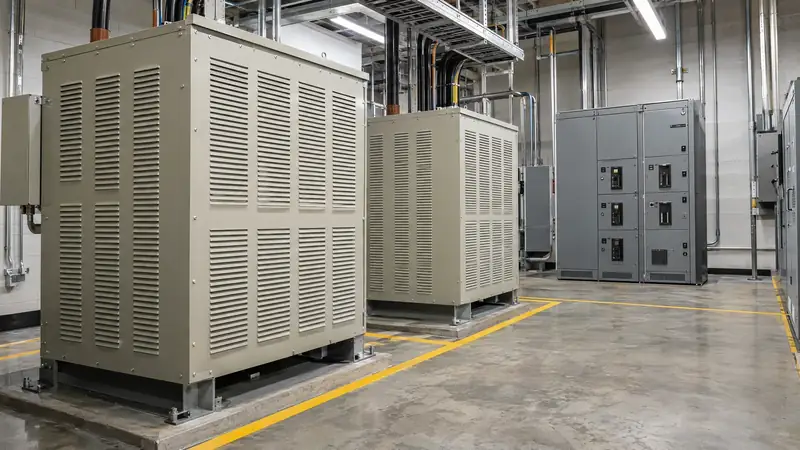
A K-rated transformer is designed to tolerate specified harmonic heating from nonlinear loads. Look for an explicit K-rating, such as K-4, K-13, or K-20, on the nameplate or equipment documentation. The enclosure and cooling openings may resemble other dry-type units, so appearance alone does not establish the rating.
A harmonic-mitigating transformer (HMT) is identified by its winding or phase-shift design, often shown in a connection diagram. Some nameplates or drawings show a zig-zag arrangement, multiple outputs, or a specified phase shift. A general label such as “power quality” is not enough to confirm either function.
For an initial review, take photos from a safe position and only where you are authorized to access the equipment. A clear nameplate and overall view help distinguish a K-rated unit from an HMT or a standard dry-type transformer. See our guide to transformer types we buy and the details for drive isolation transformers.
- K-rating stated on nameplate or documentation
- Manufacturer, serial number, and year
- kVA, phase, and primary/secondary voltage
- Neutral rating and shield, if supplied
- Connection or phase-shift diagram for HMT designs
02K-Rated Capacity Is Not the Same as Harmonic Mitigation
K-rating describes a transformer’s ability to tolerate specified harmonic heating; it does not mean the transformer removes harmonics. An HMT uses winding and phase-shift arrangements intended to reduce selected harmonic effects. The functions are related to nonlinear-load service, but they are not interchangeable.
When evaluating a unit, match the design to its original duty. Harmonic spectrum, neutral current capacity, loading, and the HMT phase-shift pairing matter. If a site needs harmonic reduction, confirm the intended system arrangement with a qualified electrical professional rather than treating a K-rating as proof of mitigation.
03Where K-Factor Transformers Serve California Loads
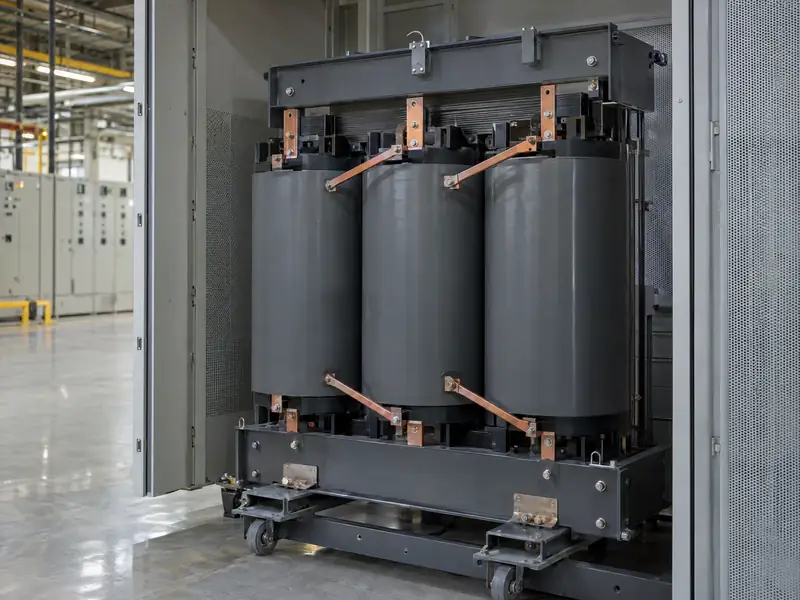
K-rated and harmonic-mitigating dry-type transformers are used with nonlinear electronic equipment, including IT and computer loads, data centers, office systems, variable-frequency drives (VFDs), and LED lighting. These loads can produce harmonic currents that increase transformer heating or affect selected parts of a power system.
In California, these units may be found in commercial buildings, campuses, industrial facilities, and data-center electrical rooms. A retrofit, equipment replacement, or facility consolidation can leave a usable transformer in serviceable condition but no longer needed by its owner. Property teams managing electrical assets can also review our information for commercial property owners and managers.
The equipment’s original application helps explain its design, but it does not by itself determine resale suitability. Buyers need the actual nameplate, winding details, condition, and any available reports to understand what loads and configurations the transformer can serve.
04K-Factor Transformer Sizes, Voltages, and Construction
Common low-voltage, three-phase K-rated and harmonic-mitigating transformers range from 15 to 1,000 kVA; larger custom units also exist. A common voltage combination is 480 V to 208Y/120 V, while other low-voltage ratios and phase-shifted multiple outputs depend on the model. Use the actual nameplate values rather than assuming a standard configuration.
Most are dry-type, solid-insulation, air-cooled units. Specialized liquid designs exist, so identify the medium from the nameplate and equipment records. Construction may also include a neutral sized for the intended duty, an electrostatic shield, or specific winding arrangements. For related equipment, compare our dry-type and oil-filled transformer guide and transformer kVA size reference.
| Item | Typical or possible detail | Why it matters |
|---|---|---|
| K-rating | K-4, K-13, K-20 | Confirms stated heating duty |
| Three-phase capacity | 15–1,000 kVA common | Establishes unit scale |
| Low-voltage ratio | 480 V to 208Y/120 V common | Confirms system compatibility |
| HMT arrangement | Phase-shifted, sometimes zig-zag | Shows design and pairing |
| Construction | Usually dry-type, air-cooled | Identifies medium and cooling |
05What Affects Resale Value for a Used K-Factor Transformer
Resale interest depends on the complete configuration and condition, not just the K-rating. Capacity, phase, primary and secondary voltages, winding design, neutral capacity, and whether the unit is K-rated or harmonic-mitigating all affect how easily it can match another project. Common, clearly documented configurations may be more useful to buyers than an unusual or incomplete unit.
Age, visible condition, missing parts, and available test records also matter. Factory reports or applicable electrical test results can help establish condition; unclear ownership or incomplete documentation can delay review. New-surplus status—never energized and typically crated or on skids—is different from used equipment that has been in service.
A single transformer can be considered along with spare units, project leftovers, or a mixed lot. California Transformer Buyer reviews used, pulled, surplus, and new-surplus equipment from California sellers, but each unit is assessed individually. See options for used transformer buyers and new-surplus transformers.
06What to Send for an Offer on a K-Factor Transformer
Start with clear photos of the nameplate and the overall transformer, plus the quantity, California location, and known condition. Include available drawings, test reports, and records that confirm the K-rating or HMT winding and phase-shift arrangement. You do not need to open the equipment to provide initial information.
The nameplate helps establish manufacturer, serial number, year, kVA, phase, frequency, voltage, taps, connection, impedance, temperature rise, and other configuration details. If a field is not visible, share what you have rather than guessing. Rocky may ask follow-up questions about condition, ownership, documentation, and site access.
Call or text Rocky at (951) 403-5738, or use the contact form to request an offer. Reviewing your transformer costs nothing and there is no obligation. We buy only from sellers located in California, and the seller must own the unit or have authority to sell it.
- Nameplate and overall photos
- Quantity and site location
- Known condition and operating history
- Test reports and design drawings, if available
- Ownership authority and access information
07Plan Transformer Removal with Qualified Personnel
Removal is coordinated with the owner’s qualified electrical contractor or serving utility. Sellers should not de-energize, disconnect, open, move, or alter the transformer themselves. Only qualified personnel handle electrical isolation and related safety steps; any solar, battery, or generator backfeed must also be considered.
Before pickup, confirm site access, loading conditions, and who is responsible for rigging and freight. The written offer states what is included, who handles loading or rigging and freight, and the payment terms and timing. Larger or difficult-access equipment may require additional planning. For details, see transformer removal and pickup.
If equipment is leaking, failed, or has uncertain fluid or PCB status, share the records you have. Rely on testing, documentation, and qualified environmental professionals to determine appropriate handling; this information is not legal advice. Review of these details helps clarify whether the unit is suitable for resale and how removal should be addressed.
08Why California Sellers Contact Us About K-Rated Equipment
A K-rated or harmonic-mitigating transformer can have a narrow application, and a replacement project may leave it unused even when it remains a useful asset. California Transformer Buyer gives sellers a direct way to submit unit details for review, whether they have one used transformer or several surplus units.
After receiving the information, Rocky reviews the equipment and may request follow-up records or site details. If the unit is a fit, the offer is provided in writing before pickup, including scope, removal responsibilities, freight, and payment terms. Call or text (951) 403-5738 to discuss a k factor transformer in California, or learn more about how the transformer sale process works.
FAQK-Factor & Harmonic Mitigating Transformer FAQ
Does a K-rated transformer reduce or eliminate harmonics?
No. A K-rating indicates the transformer is designed to tolerate specified harmonic heating; it does not mean the unit removes harmonics. A harmonic-mitigating transformer uses a winding or phase-shift arrangement intended to reduce selected harmonic effects. If you are identifying equipment for resale, share the nameplate and connection diagram so the design can be evaluated accurately.
How can I tell whether my transformer is K-13 or K-20?
Check the nameplate and equipment documentation for an explicit K-rating, commonly stated as K-4, K-13, or K-20. The enclosure shape, age, or application is not enough to establish the rating. If the plate is hard to read, send clear photos from a safe, authorized position and include any drawings or records you have.
What information is most important for a used K factor transformer?
The key details are the stated K-rating or HMT design, kVA, phase, primary and secondary voltages, connection, neutral capacity, and condition. For an HMT, a winding or phase-shift diagram is especially useful because the pairing affects how the unit is applied. Test reports, year, and photos of the complete unit help round out the review.
Can I sell a K-factor transformer if it is still installed?
You can submit an installed unit for review, but removal must be coordinated with the owner’s qualified electrical contractor or serving utility. Do not disconnect, de-energize, open, or move it yourself. Share the location, access conditions, photos taken safely, and any known constraints so removal responsibilities can be addressed in the written offer.
Will you consider a transformer without test reports?
You may still send the nameplate, overall photos, known condition, and whatever records are available. Test reports can help establish condition, but Rocky may ask follow-up questions or request additional documentation before making an offer. Do not assume the transformer’s electrical condition from appearance alone; rely on qualified personnel and documented evaluation.
Do you buy K-factor transformers outside California?
California Transformer Buyer purchases transformers from sellers located in California only. If the equipment is in California, send its location, quantity, nameplate photos, overall photos, and condition for review. Ownership or authority to sell is required. Call or text Rocky at (951) 403-5738 to discuss a unit or submit the website contact form.