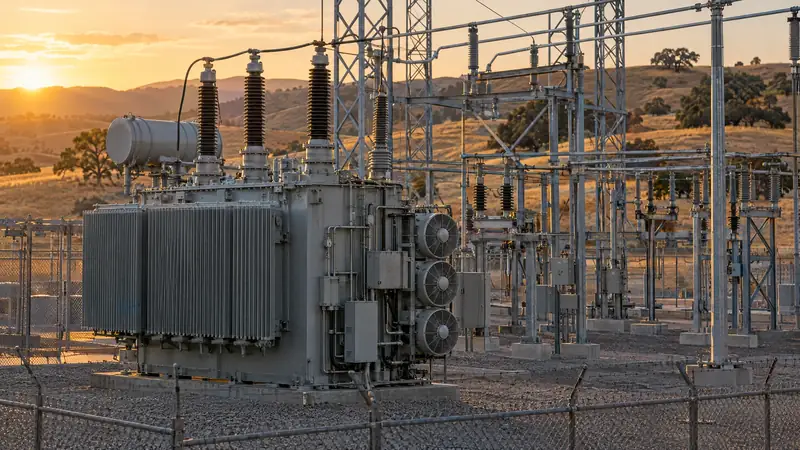
01What an Autotransformer Is—and What It Is Not
An autotransformer changes voltage using a winding with a portion electrically common to both the input and output circuits. Depending on the connection, the unit can step voltage up or down. Unlike a conventional two-winding transformer, it does not provide galvanic isolation between primary and secondary.
That shared winding is the key point for identification and resale. Do not describe an autotransformer as an isolation transformer, even if it has a separate tertiary winding. A tertiary may provide an additional connection for system needs, but it does not change the electrical relationship between the main input and output windings.
The term covers equipment from low-voltage motor-starting units to large transmission autotransformers. See other equipment categories on our transformer types guide if the unit’s design or purpose is unclear.
02How to Identify an Autotransformer from Its Nameplate
Start with the nameplate and connection diagram, not the tank shape. Look for an AUTO or autotransformer designation, a winding diagram showing a common electrical portion, and separate common-winding and series-winding ratings. A large power unit may also list a tertiary winding.
Record rated throughput and any equivalent two-winding kVA information separately if it is provided. They describe different rating bases; a buyer should not have to infer one from the other. For a motor-starting unit, capture the duty or time rating because it may be designed for intermittent operation rather than continuous service.
Photograph the manufacturer, serial number, year, phase, frequency, voltage ratios, taps, impedance, BIL, cooling class, connection diagram, and weights when those fields are present. Photos should be taken only from a safe position and only where you are authorized to access the equipment.
- Look for AUTO wording or a connected-winding diagram.
- Capture all voltage ratios and tap positions.
- Note throughput, winding ratings, and any tertiary.
- For motor-starting units, record short-time duty details.
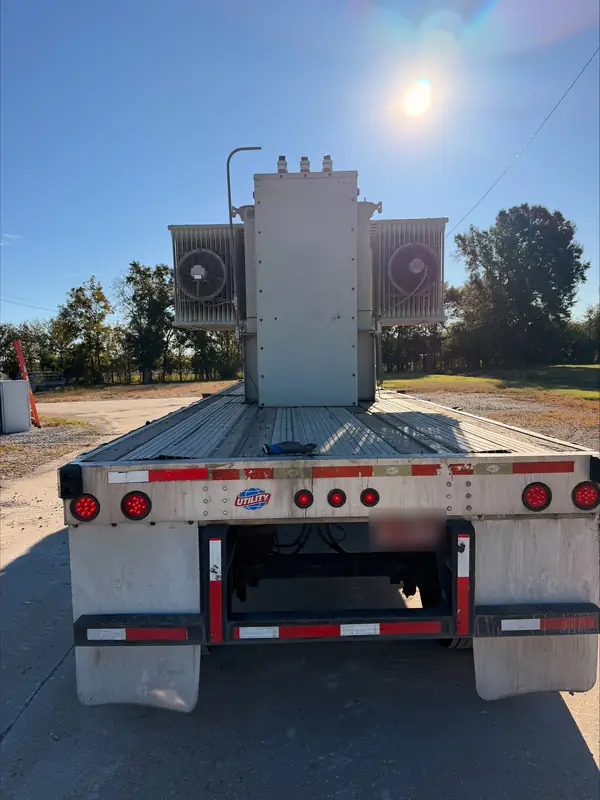
kVACommon Autotransformers Sizes We Buy
03Autotransformer Buyer: Common Sizes and Applications
Low-voltage autotransformers range from small kVA units to hundreds or thousands of kVA. Nameplate ratios may include 208↔240 V or 480↔600 V. A 600 V rating is uncommon in California, so confirm the actual voltage and connection rather than relying on a description or remembered application.
Motor-starting autotransformers reduce voltage applied during starting, with the unit’s duty rating determining how it may be used. Other low-voltage applications include closely spaced voltage conversion and buck-boost connections. A buck-boost arrangement is a connection/application, so the nameplate and wiring information still matter when evaluating the unit.
Power-system autotransformers commonly range from tens to hundreds of MVA. Examples include 230↔115 kV and 138↔69 kV ratios. They can be used for transmission interconnection and substation voltage transformation. Explore related substation transformer purchasing information or examples such as 12 MVA transformers and 20 MVA transformers.
| Application | Example rating or ratio | Details to confirm |
|---|---|---|
| Low-voltage conversion | 208↔240 V | Phase, connection, taps |
| Low-voltage conversion | 480↔600 V | Continuous rating and duty |
| Motor starting | Varies by unit | Starting duty or time rating |
| Transmission interconnection | 230↔115 kV | MVA, impedance, tertiary |
| Transmission interconnection | 138↔69 kV | MVA, grounding, cooling stages |
04Construction Variations and System Details That Matter
Low-voltage units may be dry-type, while power autotransformers are commonly oil- or ester-filled. Large units can have cooling stages and accessories such as fans, radiators, gauges, or tap-changing equipment. Construction and cooling information help establish the unit’s rating and condition; for background, see transformer cooling classes explained.
Some designs include a tertiary winding in addition to the common and series winding sections. Others differ in phase, enclosure, tap arrangement, connection, and mounting. A clear photograph of the diagram and nameplate is more useful than guessing from the external appearance.
For evaluation, capture the fault-duty or impedance basis and grounding implications where documented. The connected winding arrangement affects how the equipment fits a system, so a buyer needs more than the two voltage numbers to assess likely reuse.
05What Affects the Resale Value of a Used Autotransformer
Value depends on the specific unit and its possible reuse, not simply its size or age. Rating, phase, voltage ratio, taps, impedance, BIL, cooling class, winding material, and whether it has a useful tertiary can all affect buyer interest. Common, clearly documented configurations may be easier to place than unusual or incomplete units.
Condition and records matter. Share available factory test reports, oil test or dissolved gas analysis records, insulation resistance or turns-ratio results, fluid type and quantity, PCB documentation, and information about leaks, corrosion, damaged bushings, missing parts, or repair history. For units with uncertain PCB status, rely on testing, existing documentation, and qualified environmental professionals; this is not legal advice.
A new-surplus unit that has never been energized is different from used equipment, but both require accurate condition and ownership information. A complete file helps us evaluate what the transformer is and what further questions may be needed before making an offer.
- Rated throughput and winding ratings
- Voltage ratios, taps, phase, and impedance
- Condition, accessories, and winding material
- Test reports and environmental documentation
- Quantity, location, and removal access
06What to Send an Autotransformer Buyer for an Offer
To request an offer, send clear nameplate photos, overall equipment photos, the number of units, their California location, and a brief condition description. Include the voltage ratios, MVA or kVA ratings, and whether the transformer is used, pulled, surplus, or new-surplus if you know them.
Rocky reviews the information and may ask for test reports, fluid or PCB records, ownership confirmation, or details about site access. You can text photos to (951) 403-5738 or use the transformer sale information page. Reviewing a transformer costs nothing and creates no obligation.
The written offer states the price, what is included, who handles loading or rigging and freight, and payment terms and timing. California Transformer Buyer buys from California sellers only, from individual units to mixed lots. See used transformer purchasing details for related equipment.
- Nameplate and overall photos
- Quantity and California location
- Condition and operating history, if known
- Available test and fluid records
- Ownership or authority to sell
07Removal Planning for Large and Low-Voltage Units
Autotransformers can range from compact dry-type equipment to heavy station-class units. Before pickup, the written terms identify who is responsible for rigging, loading, and freight. Site access, lifting constraints, dimensions, total weight, and whether accessories are present can affect the removal plan.
Do not disconnect, open, drain, sample, or move the transformer yourself. The owner’s qualified electrical contractor or serving utility must handle isolation and disconnection. Solar, battery, or generator backfeed must also be considered by qualified personnel. Large shipments may require oversize or overweight permits and route approvals; the appropriate plan depends on the load and route.
For removal responsibilities and planning, review transformer removal and pickup details. Equipment must belong to the seller or the seller must have authority to sell it; property owners cannot sell utility-owned equipment.
08Why California Sellers Bring Autotransformers to Us
Rocky works with California facilities, contractors, project teams, utilities, and property owners looking to sell used, removed, surplus, new-surplus, or decommissioned transformers. An autotransformer may be a project spare, a retired transmission asset, a motor-starting unit, or equipment left after a system change. Providing its exact ratings helps distinguish reusable equipment from a unit that needs further review.
Call or text (951) 403-5738, or submit the website contact form to start. California Transformer Buyer serves sellers throughout the state from Riverside County in the Inland Empire. We are not affiliated with any utility or manufacturer, and a written offer is based on the equipment and terms presented.
FAQAutotransformers FAQ
Can an autotransformer provide electrical isolation?
No. Its input and output share an electrically connected winding portion, so it does not provide galvanic isolation like a two-winding transformer. A separate tertiary winding does not change that fact about the main input and output. Confirm the connection diagram and application with the responsible electrical professional before deciding whether the unit is suitable for a system.
Is every transformer marked for voltage conversion an autotransformer?
No. A voltage ratio by itself does not prove that the unit is an autotransformer. Look for an AUTO designation, a connection diagram showing a common winding, and relevant common- and series-winding ratings. If the nameplate is unclear, send readable photos of the diagram and plate rather than identifying the unit from its enclosure or appearance alone.
Can you evaluate a motor-starting autotransformer?
Yes, you can submit one for review. Include its voltage and current or kVA information, manufacturer and serial number, and any duty or time rating shown on the nameplate. Motor-starting units may be intermittent-duty, so the duty details are important. Share the condition and available test records as well; an offer depends on the specific equipment and information available.
What if the autotransformer has no readable nameplate?
Send overall photos and close views of any remaining labels, diagrams, or stamped identification, along with dimensions, location, quantity, and a description of its known application. Do not open compartments or move the unit to search for a plate. Without clear ratings or identity, evaluation may require follow-up documentation or inspection by qualified personnel.
Can I sell an autotransformer located at my property if the utility owns it?
No. The seller must own the transformer or have authority to sell it. Equipment owned by a serving utility cannot be sold by a property owner merely because it is installed on that property. If ownership is uncertain, clarify it with the utility, asset owner, or project party before requesting an offer.
Do you buy a single autotransformer, or only a lot?
California Transformer Buyer reviews single units as well as multiple transformers and mixed lots from California sellers. The unit’s size, condition, ratings, documentation, and location all help determine whether it can be considered. Send the quantity and basic equipment details with the photos; review is free and does not obligate you to accept an offer.