01How to Identify a Mobile Substation Transformer
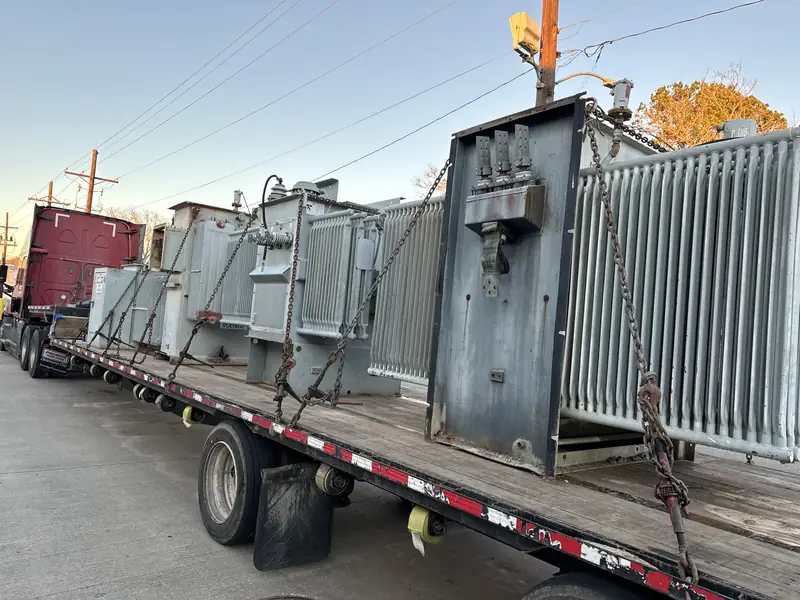
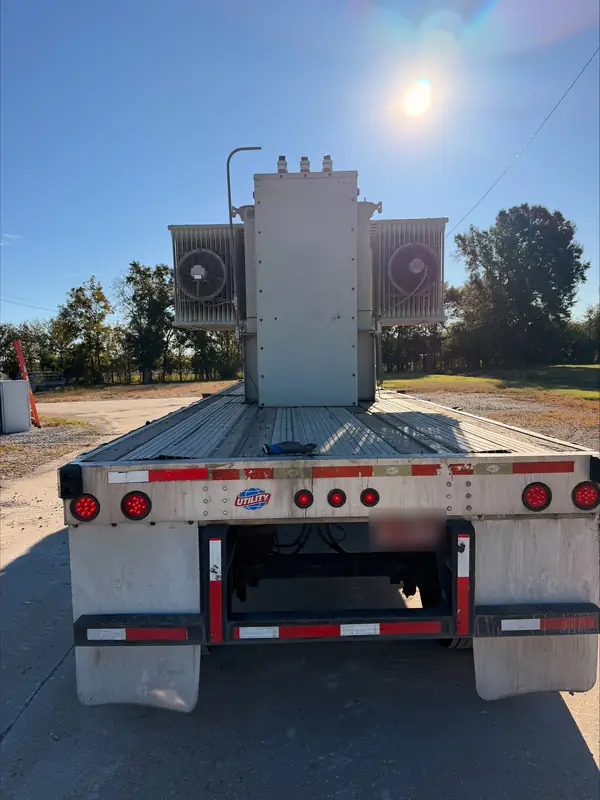
A mobile substation is built for transport and temporary service, not simply a standard transformer placed on a flatbed. Look for a purpose-designed trailer or skid frame, transport-related supports or removable accessories, and electrical equipment such as breakers, grounding provisions or controls integrated into the package. A reconnectable voltage diagram and tap settings may indicate that the unit can serve more than one system configuration.
The nameplate and drawings help distinguish the transformer from the complete mobile substation package. Record the manufacturer, serial number, year, MVA rating at each cooling stage, high- and low-side voltages, taps, impedance, cooling class and connection diagram. Also note whether the records describe the trailer, switches, protection and other accessories as included.
- Photograph the overall unit and trailer or skid from a safe, authorized position.
- Capture the transformer nameplate and any reconnectable voltage or connection diagram.
- Note missing or separate accessories without opening compartments or handling equipment.
02How Mobile Substations Serve California Utilities and Industry
A mobile substation provides temporary transformation and, depending on its configuration, switching and protection while a permanent transformer is out for maintenance or replacement. Utilities may deploy one for emergency grid restoration or planned substation work. Industrial operators can also use mobile equipment to maintain temporary power during equipment outages or project changes.
California systems use a range of transmission and subtransmission voltages, so the actual primary and secondary ratings matter more than a general description such as “high voltage.” A unit with selectable or dual primary voltages may suit more applications, but compatibility depends on the nameplate, connections, protection and system requirements. See our [substation transformer buyer information]( substation transformer buying information ) for related station-class equipment.
kVACommon Mobile Substation Sizes We Buy
03Mobile Substation Sizes, MVA Ratings and Voltages
Common utility mobile transformers are roughly 5–60 MVA, while larger units can exceed 100 MVA. These are broad market ranges, not a specification for every mobile substation. Cooling-stage ratings may be shown as several values, such as ONAN/ONAF/ONAF, so report all stages rather than just the largest number.
High-side voltages commonly include 34.5, 69, 115, 138 and 230 kV. Selectable or dual primary arrangements and different distribution-side ratios are also common. Record the exact nameplate voltage and connection; do not infer a rating from the utility, site or equipment appearance.
| Item | Typical information | Seller should verify |
|---|---|---|
| Power rating | About 5–60 MVA; larger units exist | All cooling-stage MVA ratings |
| High-side voltage | 34.5, 69, 115, 138 or 230 kV | Actual primary voltage and taps |
| Secondary voltage | Varies by unit and application | Voltage, connection and configuration |
| Cooling | Often compact forced cooling | Cooling class and fan/pump equipment |
Compare the Unit With Its Actual Nameplate
For context on large power-transformer ratings, see the pages for [12 MVA transformers]( 12 MVA transformers ), [20 MVA transformers]( 20 MVA transformers ) and [60 MVA transformers]( 60 MVA transformers ). A mobile unit’s value still depends on its complete electrical and transport configuration.
04Trailer, Skid and Accessory Configurations
Mobile equipment varies from a transformer on a transport-engineered trailer to a more complete package with switching, protection, grounding and controls. Some accessories may be removable for transport or stored separately. Cooling is often liquid-filled and compact, with fans or pumps, but the cooling arrangement and dependence on auxiliary equipment are specific to each model.
A skid-mounted mobile transformer may be intended for transport but lack a road trailer. Confirm whether the trailer is included, who owns it and whether its title and identifying information are available. Dimensions, axle loads, transport weight and included components help establish whether the package can be moved and used as represented.
05What Affects a Mobile Substation’s Resale Value
The potential buyer pool depends on electrical coverage: MVA at each cooling stage, primary and secondary voltages, taps, connection, impedance and protection arrangement. Condition, age, test reports and fluid documentation also matter. A complete, documented unit is easier to assess than one with missing accessories or unclear ratings.
Transport factors can be decisive for a mobile package. Buyers consider road-legal dimensions, axle loads, trailer ownership and title, transport condition, and whether required accessories are present. A standard transformer on a flatbed is not equivalent to a transport-engineered mobile substation. Brand can help verify specifications, but rating, condition, completeness and transportability are key factors.
For used oil-filled equipment, share available PCB labels, test results and records rather than making assumptions. PCB status and oil handling depend on testing and documentation; sellers should rely on qualified environmental professionals for determinations and management pathways. This information is general and is not legal advice.
06What to Send a Mobile Substation Buyer
To request an offer, send nameplate and overall photos, the unit’s California location, quantity and a brief condition description. Include available drawings, factory test reports, oil tests or DGA, insulation-resistance and turns-ratio results, and any maintenance or repair records. Photos should be taken only from a safe position and where you are authorized to access the equipment.
Mention whether the equipment is used, new-surplus or removed from service. Identify visible leaks, rust, damaged bushings, missing fans or pumps, and any separate breakers, controls or trailer components. Tell us whether you own the trailer and can provide its title or ownership information, if applicable.
California Transformer Buyer reviews transformers from California sellers only. Rocky may ask follow-up questions about test reports, fluid or PCB records, ownership and site access. You can use the [sell your transformer information page]( information about selling your transformer ) or contact us to start a review.
- Nameplate photo and voltage or connection diagram
- Overall photos, quantity and California location
- Condition notes and available test or fluid records
- Trailer ownership, dimensions and transport details
07Removal Planning and a Written Offer
Mobile substations are heavy, oversize loads may require permits, and local roads can have separate restrictions. Caltrans issues permits on state highways for loads exceeding common limits such as 8 feet 6 inches wide, 14 feet high or 80,000 pounds gross. Actual routing, dimensions and weight determine what approvals and transport arrangements are needed.
Do not disconnect, open, drain, sample or move the transformer yourself. The owner’s qualified electrical contractor or serving utility handles de-energizing and disconnection; rigging and transport should be planned by qualified parties. Large units may ship with some components removed and may require appropriate preparation by qualified personnel.
After reviewing the information, Rocky provides a written offer stating the price, what is included, who handles loading or rigging and freight, and payment terms and timing. Removal is scheduled under the written terms. Reviewing the equipment costs nothing and carries no obligation; see our guide to [decommissioning a substation transformer]( substation transformer decommissioning considerations ) and [transformer removal and pickup]( transformer removal and pickup planning ).
FAQMobile Substation Transformer FAQ
Can I sell a mobile substation if the trailer is not included?
Yes, you can submit the transformer or skid-mounted package for review even if there is no trailer, but be clear about what is being sold. Send photos of the transformer and all included accessories, along with transport dimensions and weight if available. Trailer ownership, title and road condition affect resale and logistics, so those details should not be left ambiguous.
Does a mobile substation have to be operational to be considered?
Not necessarily. A used unit may be reviewed with known defects, missing components or incomplete operating history, but the condition and test records affect whether it is suitable for reuse. Describe the issue and provide any inspection or test documentation you have. Do not energize or access internal compartments to create new information; qualified personnel should handle inspections and testing.
What if the nameplate shows several MVA ratings?
Send every listed rating and the associated cooling notation. Mobile transformers often have multiple capacity stages that depend on their cooling configuration, so the highest figure alone may not describe normal or available operation. Include photos of the full nameplate and cooling equipment, including fans or pumps if visible from a safe position.
Can California Transformer Buyer purchase equipment owned by a utility?
The seller must own the transformer or have authority to sell it. Equipment located on private property is not necessarily property of the landowner; utility-owned equipment cannot be sold by the property owner. Confirm ownership or sale authority before requesting an offer, and share any relevant asset or project documentation.
What if the unit’s PCB status or oil history is unknown?
Share the records and labels that are available and state clearly when status is unknown. Do not assume that a label or appearance establishes the present PCB concentration. Testing, documentation and qualified environmental professionals are important for determining status and appropriate handling. PCB rules can depend on the equipment’s age, fluid and test results, so this information is not legal advice.
How do I start a review with Rocky?
Call or text Rocky at (951) 403-5738, or submit the website contact form. Send the nameplate and overall photos, quantity, California location and condition, plus any available test and fluid records. Rocky reviews the details and may ask follow-up questions before providing a written offer. Terms, including scope, loading, freight and payment, are stated in writing before pickup.