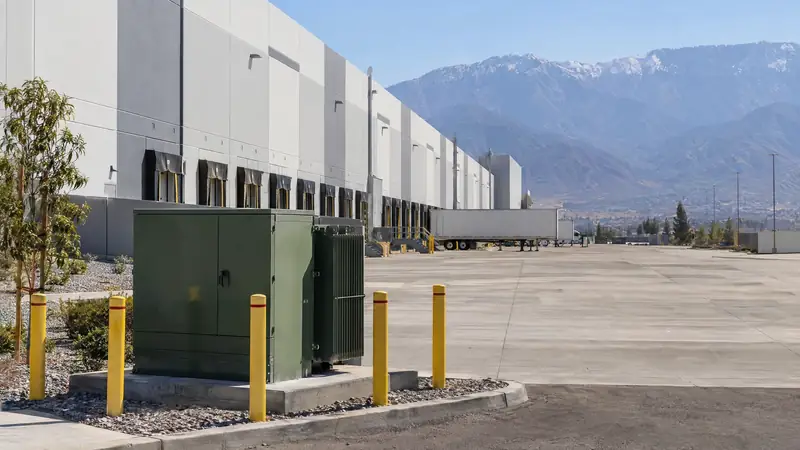
01What a 225 kVA Transformer Usually Looks Like
A 225 kVA transformer is a common three-phase rating for commercial and institutional electrical systems. California Transformer Buyer evaluates used and surplus units in California, including equipment removed from a facility, spare transformers, project leftovers and never-energized new-surplus inventory.
The common types at this rating include three-phase pad-mount transformers, low-voltage dry-type transformers and secondary-unit-substation transformers. A pad-mount unit is typically enclosed for outdoor installation; dry-type units are used indoors or in suitable protected locations; and a unit substation combines a transformer with associated primary and secondary equipment. See our pages for three-phase pad-mount transformers, low-voltage dry-type transformers and unit substation transformers.
A 225 kVA unit is generally a cabinet-sized piece of electrical equipment, but its dimensions and weight vary by manufacturer, voltage, enclosure, cooling, accessories and construction. Use the nameplate or manufacturer documentation for actual weight and dimensions rather than estimating from the kVA rating alone. A unit-substation assembly may occupy more space and weigh more than the transformer by itself.
FLAFull-Load Amps for a 225 kVA Transformer
Rated full-load current at common California voltages. Single-phase: amps = kVA × 1000 ÷ volts. Three-phase: amps = kVA × 1000 ÷ (1.732 × volts). Use the nameplate voltage of your unit.
| Phase | Voltage | Full-load amps |
|---|---|---|
| Three-phase | 208 V | 625 A |
| Three-phase | 480 V | 271 A |
| Three-phase | 600 V | 217 A |
| Three-phase | 4.16 kV | 31.2 A |
| Three-phase | 12 kV | 10.8 A |
| Three-phase | 12.47 kV | 10.4 A |
| Three-phase | 20.78 kV | 6.25 A |
| Three-phase | 34.5 kV | 3.77 A |
02Typical 225 kVA Voltages and California Applications
The primary voltage depends on the serving system and the transformer’s intended installation. California units may have primary ratings in a 12 kV class, including 12,000 V or 12,470GrdY/7,200 V, as well as other nameplate voltages such as 20,780GrdY/12,000 V or 34.5 kV. These are examples, not a substitute for checking the actual nameplate or confirming compatibility with the utility and site.
Common three-phase secondary services include 208Y/120 V and 480Y/277 V. A 225 kVA transformer may serve commercial 208/480 V service, school electrical distribution or industrial panels. The connection, taps, phase, frequency and secondary configuration must match the equipment it supplies; the kVA figure by itself does not establish compatibility.
When describing a unit, report both primary and secondary voltage exactly as shown, including delta or grounded-wye notation where present. If a label or drawing is unclear, send a clear photo rather than guessing at the connection.
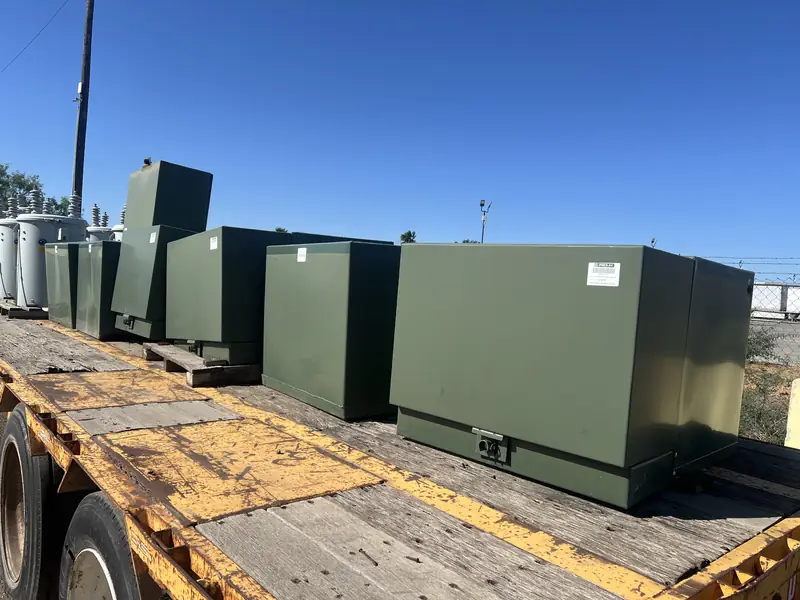
03How to Read the 225 kVA Full-Load Amps Chart
The full-load amps chart displayed on this page lists calculated three-phase current for a 225 kVA transformer at several voltage levels. Find the row for the voltage you are evaluating and read the corresponding full-load current. Do not copy a value from a different voltage row: for the same kVA rating, current is higher on the low-voltage side and lower on the high-voltage side.
Full-load amps describe the current at rated kVA and the stated voltage under the chart’s assumptions. They are not a measurement of the transformer’s present load, and they do not alone determine whether it is suitable for a particular installation. For additional explanation of voltage, current and kVA relationships, see how to read transformer kVA and amps.
For an offer review, the nameplate is more useful than an amps value on its own. It identifies the actual voltage ratings, phase, taps and connection that distinguish one 225 kVA transformer from another.
04What Affects the Value of a Used 225 kVA Transformer
A used 225 kVA transformer’s value depends on what it is, how complete it is and whether its condition and documentation support reuse. New-surplus equipment that has never been energized and remains crated or on skids may be evaluated differently from a previously energized unit. Neither condition guarantees a purchase or a particular offer.
Important details include the manufacturer and year, primary and secondary voltages, taps, impedance, connection, cooling or insulation type, winding material if stated, and the unit’s overall condition. Missing accessories, bushing or enclosure damage, corrosion, leaks, and incomplete records can also affect a review.
Test reports and environmental records can help establish condition and handling requirements. For liquid-filled equipment, share available fluid type, PCB documentation and oil or electrical test reports. Rely on existing records, testing and qualified environmental professionals to determine environmental status; this information is not legal advice. More detail is available in our guide to factors that affect a used transformer’s value.
05What to Send a 225 kVA Transformer Buyer
To request an offer from California Transformer Buyer, call or text Rocky at (951) 403-5738, or use the website contact form. Reviewing the information costs nothing and carries no obligation. Send photos only from a safe position and only of equipment you are authorized to access.
A clear nameplate photo and overall views help identify the transformer and its condition. Add the quantity, California location and whether the unit is used, spare, pulled, surplus or new-surplus. Do not open compartments or handle the transformer to obtain photos or records; have qualified electrical personnel manage any work requiring access.
- Nameplate photo showing rating and voltages
- Overall photos of the unit and visible condition
- Quantity and site location
- Available test reports and PCB records
- Known loading, access or removal constraints
06Offer Terms, Ownership and Pickup Planning
After reviewing the information, Rocky may ask about test reports, fluid or PCB records, ownership and site access. If an offer is made, it is provided in writing and states the price, what is included, who handles loading or rigging and freight, and payment terms and timing. Confirm those terms in writing before pickup.
The seller must own the transformer or have authority to sell it. Utility-owned equipment located on private property cannot be sold by the property owner. Do not attempt to de-energize, disconnect or move a transformer; the owner’s qualified electrical contractor or serving utility handles electrical isolation and removal work.
For other sizes near this rating, compare the details on our pages for 150 kVA transformers, 167 kVA transformers and 250 kVA transformers. To begin a review, use the contact form to request an offer or call or text (951) 403-5738.
kVANearby Transformer Sizes We Buy
FAQ225 kVA Transformer FAQ
Is a 225 kVA transformer usually three-phase?
Yes. Three-phase is the common configuration for a 225 kVA unit, and the standard three-phase rating series includes 225 kVA. Confirm phase on the nameplate before comparing it with another transformer or evaluating a site application. Phase, voltage and winding connection all matter when identifying the equipment.
Can I sell a 225 kVA transformer that is still installed?
You can ask California Transformer Buyer to review it, but do not disconnect or move an installed transformer yourself. The seller must own the equipment or have authority to sell it, and qualified electrical personnel or the serving utility must handle isolation and disconnection. Share photos taken from a safe position, along with site access details, so removal requirements can be discussed.
Do you consider a 225 kVA unit-substation transformer?
Yes, secondary-unit-substation transformers are among the configurations reviewed at this rating. Include photos of the transformer and associated assembly, plus any nameplate information available for the primary and secondary sections. The size and scope of the equipment, accessories and site removal requirements can affect the review and the written offer terms.
What if the nameplate is damaged or hard to read?
Send the clearest photos you can safely take, including close views of any remaining lettering and wider views of the complete unit. Do not open an enclosure or remove a cover to find a label. If available, provide manufacturer records, test reports, purchase documents or prior maintenance information that may help confirm the rating and configuration.
Does an old or untested 225 kVA transformer have no resale value?
Not necessarily, but age, condition and the available records affect whether a unit is suitable for reuse and how it can be handled. Share the known history and any test or environmental documents rather than assuming its status. A review is unit-specific, and neither age nor the kVA rating alone establishes an offer or guarantees a purchase.
Can I sell a 225 kVA transformer if I do not know whether it contains PCBs?
You may request a review, but clearly disclose that PCB status is unknown and provide any existing labels, records or test results. Do not drain, sample or open the transformer yourself. PCB status and appropriate handling should be established through documentation, testing and qualified environmental professionals; the correct pathway depends on the unit and its records.