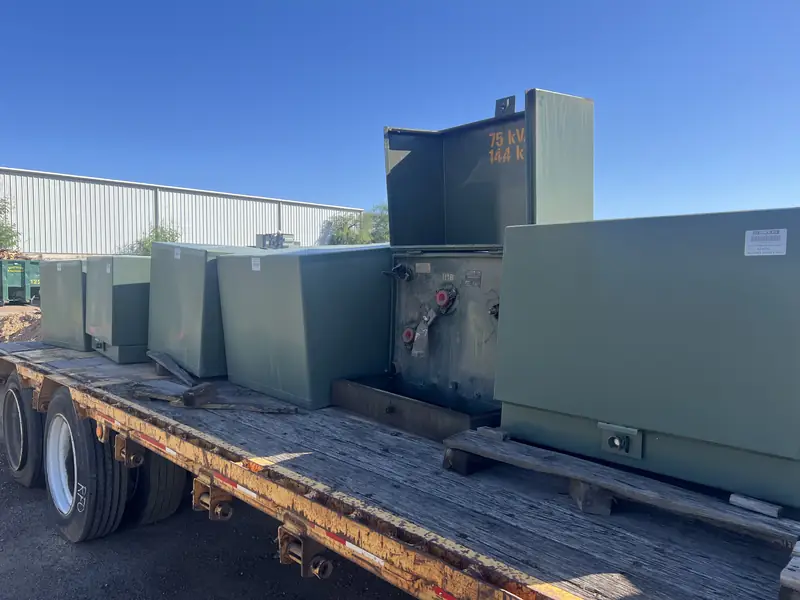
01What a 100 kVA Transformer Is Commonly Used For
A 100 kVA transformer is a standard single-phase rating used for larger single-phase service and as one transformer in a three-phase bank. The rating describes the capacity of that individual unit. A 100 kVA single-phase transformer used in a bank does not by itself make the bank a 100 kVA three-phase transformer; identify the full bank configuration before describing or selling it.
At this size, common equipment includes single-phase pad-mount transformers, overhead pole-mount transformers and low-voltage dry-type units. Browse our descriptions of single-phase pad-mount transformers, pole-mount transformers and dry-type transformers to compare their layouts and typical installations.
- Pad-mount: enclosed equipment on a ground-level pad
- Pole-mount: overhead distribution equipment
- Dry-type: commonly installed indoors or in protected spaces
FLAFull-Load Amps for a 100 kVA Transformer
Rated full-load current at common California voltages. Single-phase: amps = kVA × 1000 ÷ volts. Three-phase: amps = kVA × 1000 ÷ (1.732 × volts). Use the nameplate voltage of your unit.
| Phase | Voltage | Full-load amps |
|---|---|---|
| Single-phase | 240 V | 417 A |
| Single-phase | 277 V | 361 A |
| Single-phase | 480 V | 208 A |
| Single-phase | 2.4 kV | 41.7 A |
| Single-phase | 7.2 kV | 13.9 A |
| Single-phase | 12 kV | 8.33 A |
| Single-phase | 19.92 kV | 5.02 A |
02Voltage Combinations and Nameplate Details to Check
Voltage is not determined by the kVA rating. A 100 kVA unit may have a medium-voltage primary and a low-voltage secondary, but the exact combination depends on its design and service. For example, a single-phase distribution unit may serve 120/240 V loads; other units have different secondary voltages or are designed for a particular application.
In California, pad-mount primary systems include 12 kV-class configurations, and some service territories use 16 kV- or 21 kV-class equipment. Those are system examples, not a substitute for the transformer nameplate. Confirm the listed primary and secondary voltages, taps and connection before deciding whether a unit suits a project. The actual nameplate controls.
- Record phase, frequency and kVA
- Photograph primary and secondary voltage fields
- Include tap positions and connection diagram
- Note impedance, BIL and temperature rise if shown
- For liquid-filled units, record fluid type and gallons
03How to Read the 100 kVA Full-Load Amps Chart
The full-load amps chart rendered on this page shows the calculated current for a 100 kVA single-phase transformer at each listed voltage. Find the voltage that matches the side you are evaluating, then read across to its current value. Do not use a current figure for a different voltage or assume it applies to a three-phase transformer.
These figures describe full-load current at the stated rating; they do not establish that a particular installation can carry a load safely. Wiring, protection, operating conditions and the actual equipment nameplate matter. For the calculation and the distinction between single-phase and three-phase ratings, see how transformer kVA and amps relate.
- Match the chart’s phase to the unit
- Use the voltage for the side in question
- Verify the nameplate before applying the figure
04Physical Size and Weight Depend on the Design
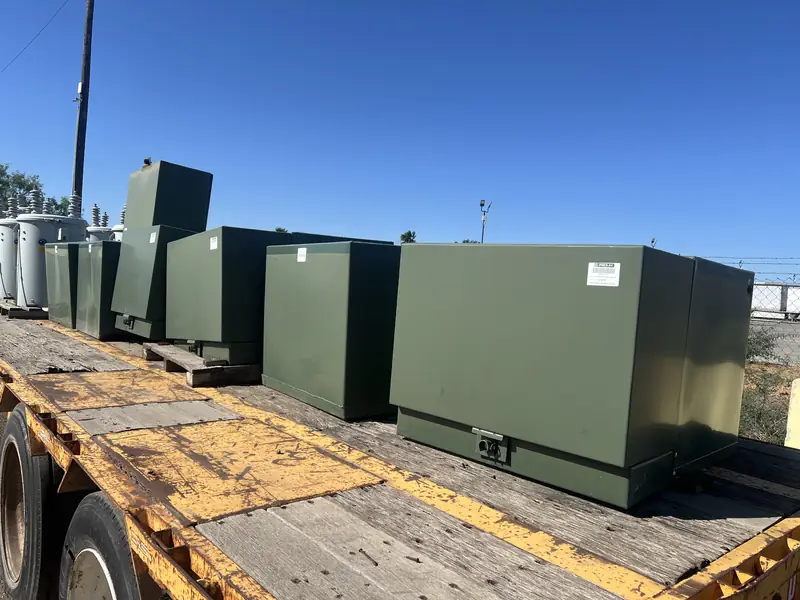
A 100 kVA unit is generally much smaller than station-class equipment, but the outline and weight vary by manufacturer, insulation system, enclosure and accessories. A liquid-filled pad-mount has a cabinet-style tank; a pole-mount unit has a different shape and mounting arrangement, while a dry-type transformer may sit inside a ventilated enclosure.
As a broad planning expectation, these units can occupy a substantial cabinet footprint and weigh hundreds of pounds or more; some configurations weigh over a thousand pounds. Do not use a generic estimate for rigging or transport. The nameplate may list total weight, and dimensions and access conditions should be confirmed by qualified personnel before any handling plan.
05What Affects the Value of a Used 100 kVA Transformer
The rating is only one part of a buyer’s review. Voltage and phase, condition, age, configuration and demand for that specific design all influence whether a used or surplus unit is a fit for resale. Common California voltages and a clear, complete nameplate can make the specifications easier to verify, but no single detail determines an offer.
New-surplus equipment that has never been energized, especially when stored with its original documentation, is different from used equipment with an operating history. Test reports, ownership records and accessories can also help. For liquid-filled units, fluid information and available PCB documentation are relevant; rely on testing, records and qualified environmental professionals to establish status. This is not legal advice.
- Nameplate completeness and legibility
- Used, pulled or never-energized status
- Leaks, corrosion, bushing damage or missing parts
- Factory or field test reports, if available
- Accessories, quantity and site access
Used and Surplus Units Are Reviewed Differently
A used transformer may have been energized or removed from service; a new-surplus unit has not been energized and may be crated or on skids. State the equipment’s actual history and share its records so the buyer can evaluate it accurately. See the factors that affect a used transformer’s value.
06What to Send for an Offer on a 100 kVA Transformer
For an initial review, send a clear nameplate photo, overall photos taken from a safe position, the number of units, the California location and a short description of condition. Only photograph equipment you are authorized to access. Do not open compartments or attempt to disconnect, drain, move or otherwise handle a transformer; those tasks belong to qualified electrical contractors or the serving utility.
California Transformer Buyer reviews the details and may ask about test reports, fluid or PCB records, ownership, accessories and site access. If an offer is made, it is provided in writing, including what is included, who handles loading or rigging and freight, and payment terms. Reviewing a transformer costs nothing and creates no obligation. Call or text (951) 403-5738, or use the contact form to request an offer. You can also review the steps for selling a transformer in California.
- Nameplate photo and overall photos
- Quantity and California location
- Condition and equipment history
- Test reports and fluid records, if available
- Confirmation that you own it or can sell it
07Confirm the Rating Before Comparing Nearby Sizes
A 100 kVA rating is a standard single-phase size, but nearby ratings may better match a particular service or replacement need. Compare the nameplate and phase rather than relying on cabinet appearance. The 75 kVA transformer and 112.5 kVA transformer pages can help distinguish neighboring single-phase ratings.
For a broader evaluation of an existing unit, California sellers can also consult our used transformer buyer information. California Transformer Buyer purchases used, surplus and new-surplus equipment from sellers in California only; ownership or authority to sell is required.
kVANearby Transformer Sizes We Buy
FAQ100 kVA Transformer FAQ
Is a 100 kVA transformer single-phase or three-phase?
The 100 kVA rating on this page refers to a commonly available single-phase unit. A 100 kVA transformer can also be part of a three-phase bank, but the rating of each individual can is not the same as the capacity of the complete bank. Check the nameplates and configuration of every unit before identifying the bank’s total rating.
Can I sell a 100 kVA transformer that has been removed from service?
Yes, California Transformer Buyer reviews used and pulled transformers from California sellers. Whether a particular unit is suitable for an offer depends on its rating, configuration, condition, documentation and other details. Share its history honestly, and do not attempt to reconnect or move it to demonstrate its condition.
Do you buy a 100 kVA transformer that is new surplus?
New-surplus units are considered. Tell us whether the transformer has never been energized, whether it is still crated or on skids, and what factory paperwork is available. Include photos of its packaging and nameplate if they can be taken safely. A new-surplus description does not guarantee an offer; the unit and its specifications still need review.
What if the nameplate is missing or unreadable?
Send clear overall photos and any other documentation you have, such as purchase records, test reports or drawings. Do not guess at voltage, phase or rating. A buyer may need follow-up information to identify the equipment, and an unreadable or missing nameplate can limit how confidently its specifications and resale use can be evaluated.
Can I sell a transformer owned by the utility on my property?
A property owner cannot sell utility-owned equipment merely because it is installed on the property. You must own the transformer or have authority to sell it. If ownership is unclear, resolve that with the utility or the appropriate project owner before requesting an offer. California Transformer Buyer is not affiliated with or approved by utilities.
Should I disconnect or drain the transformer before sending photos?
No. Do not disconnect, open, drain, sample or move the equipment yourself. De-energizing and disconnecting must be handled by the owner’s qualified electrical contractor or serving utility. You may send photos from a safe position only if you are authorized to access the equipment; provide existing records instead of taking samples.