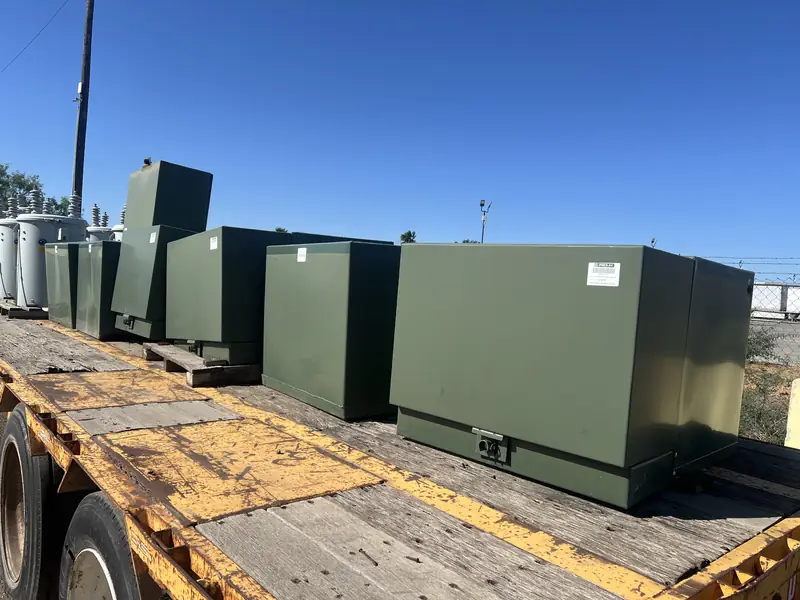
01What a 50 kVA Transformer Usually Serves
A 50 kVA transformer is a standard single-phase rating used for residential group or small-business service and some single-phase industrial loads. The rating describes apparent power capacity; the load it can support depends on the secondary voltage, operating conditions and how the connected equipment draws power.
If you are looking to sell a 50 kVA transformer, the first details to confirm are its phase and nameplate voltages. A 50 kVA nameplate alone does not identify whether the unit suits a particular service or replacement project. Nearby standard single-phase sizes include 37.5 kVA transformers and 75 kVA transformers, but the actual nameplate governs.
FLAFull-Load Amps for a 50 kVA Transformer
Rated full-load current at common California voltages. Single-phase: amps = kVA × 1000 ÷ volts. Three-phase: amps = kVA × 1000 ÷ (1.732 × volts). Use the nameplate voltage of your unit.
| Phase | Voltage | Full-load amps |
|---|---|---|
| Single-phase | 240 V | 208 A |
| Single-phase | 277 V | 181 A |
| Single-phase | 480 V | 104 A |
| Single-phase | 2.4 kV | 20.8 A |
| Single-phase | 7.2 kV | 6.94 A |
| Single-phase | 12 kV | 4.17 A |
| Single-phase | 19.92 kV | 2.51 A |
02Common 50 kVA Transformer Types
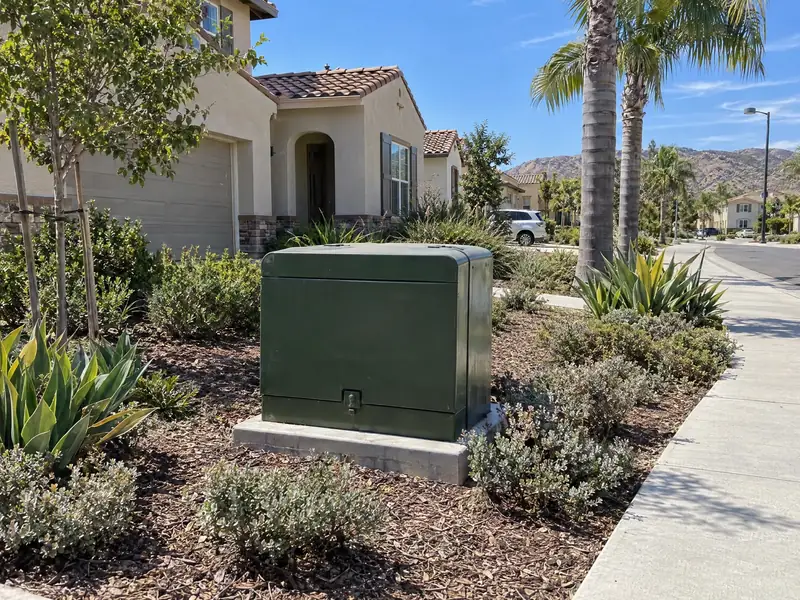
At this rating, common configurations include single-phase pad-mount units for ground-level distribution, pole-mount overhead units, and low-voltage dry-type transformers used indoors or as part of building electrical systems. The physical arrangement and accessories vary with the installation and application.
A 50 kVA unit is generally a distribution transformer, not a typical substation or station-class transformer. Identify the enclosure and configuration from a safe position; do not open compartments or move equipment to get a better view.
- Ground-level, enclosed pad-mount: single-phase pad-mount transformers
- Overhead utility distribution: pole-mount transformers
- Indoor low-voltage applications: dry-type transformers
03Typical Voltage Combinations and Nameplate Checks
A single-phase 50 kVA unit may have a low-voltage secondary such as 120/240 V and a medium-voltage primary suited to its distribution system. Common California primary classes include 12 kV, 16 kV and 21 kV, but not every class applies at every site. Some equipment may have other primary or secondary voltages, so use the actual nameplate rather than assuming a standard combination.
For a buyer review, photograph the full nameplate when safely accessible. Useful fields include manufacturer, serial number, year, phase, kVA, primary and secondary voltage, tap positions, impedance, BIL, temperature rise, cooling or insulation information, and winding material if stated. Include any available PCB documentation and test reports; do not infer environmental status from age or appearance.
- Confirm single-phase configuration and frequency.
- Capture the full primary and secondary voltage notation.
- Include visible condition and accessories in overall photos.
04How to Read the 50 kVA Full-Load Amps Chart
The full-load amps chart rendered on this page shows calculated current for a 50 kVA single-phase transformer at each listed voltage. Find the voltage that matches the winding you are checking, then read across to the corresponding full-load current. The chart is a reference for the rated load at that voltage, not a substitute for the nameplate or an engineering load study.
For a single-phase transformer, current changes as voltage changes while the kVA rating stays fixed. Compare the chart with the primary or secondary label carefully: values for one side do not describe the other side unless its voltage matches. For more on the relationship, see how transformer kVA and amps relate to ratings.
05Physical Size, Weight and Installation Context
A 50 kVA unit is much smaller than a large power or substation transformer, but there is no single dimension or weight that applies to every 50 kVA model. Size and weight vary by manufacturer, construction, enclosure, winding design, voltage class and included fittings. A pole-mount unit, pad-mount cabinet and dry-type assembly can have noticeably different shapes and handling requirements.
If you have the nameplate or shipping record, send the total weight and any listed tank, fittings or core-and-coil weights. Do not attempt to move the transformer to measure it. Any isolation, disconnection, lifting or removal must be handled by the owner’s qualified electrical contractor or serving utility, as appropriate.
06What Affects the Value of a Used 50 kVA Transformer
A buyer evaluates the complete unit, not just its kVA rating. Voltage combination, phase, taps, winding material, year, condition, accessories and demand for that configuration can all matter. A 50 kVA transformer with clear documentation and common California voltages may be easier to evaluate than one with missing or unreadable records, but no rating or condition guarantees an offer.
New-surplus equipment that has never been energized is different from a used or pulled unit. Test reports, fluid or PCB records, visible leaks, rust, bushing damage and missing parts can affect review. Site access, quantity and the complexity of loading and freight also matter. See factors that affect a used transformer’s value for more detail.
07What to Send a 50 kVA Transformer Buyer
California Transformer Buyer reviews equipment offered by California sellers, including single units, spare transformers, project leftovers and mixed lots. You must own the transformer or have authority to sell it; utility-owned equipment on private property cannot be sold by the property owner.
Text nameplate and overall photos to Rocky at (951) 403-5738, or submit the details through the contact form to request an offer. Take photos only from a safe position and only where you are authorized to access the equipment. Include the quantity, city or site location, known condition, whether it is used or new-surplus, and any available test or environmental documents.
Rocky may ask follow-up questions about ownership, access, reports or records. The written offer states what is included, who handles loading or rigging and freight, and payment terms. Those terms are agreed in writing before pickup; reviewing the transformer costs nothing and creates no obligation.
kVANearby Transformer Sizes We Buy
FAQ50 kVA Transformer FAQ
Can you make an offer on one 50 kVA transformer, or only on lots?
California Transformer Buyer reviews single transformers as well as multiple units and mixed lots from sellers in California. Send the quantity, location, condition and nameplate photos so Rocky can evaluate the specific equipment. An offer is not guaranteed; the review depends on the unit’s details, documentation, condition and removal circumstances.
What if I cannot read the nameplate or it is missing?
Send clear overall photos and any partial nameplate images you can safely take, and describe what is known about the transformer. Do not open compartments or approach energized equipment to retrieve information. Available records, test reports or prior purchase documents may help identify the configuration, but the unit will be reviewed based on what can be verified.
Will you consider a 50 kVA transformer that is damaged or not working?
You can send details about a failed, damaged or leaking unit for review, but purchase is not guaranteed. Describe known issues and include safe-distance photos; do not drain fluid or attempt repairs to prepare it for sale. Any environmental or waste determination should rely on testing, records and qualified environmental professionals, not appearance alone.
Can I sell a transformer that belongs to the utility on my property?
No. The seller must own the transformer or have authority to sell it. Equipment owned by a serving utility does not become the property owner’s equipment just because it is located on the property. If ownership is unclear, check the relevant project, property or utility records before requesting an offer.
Who handles removal, rigging and freight if my unit is accepted?
The written offer states what is included and who is responsible for loading or rigging and freight, along with payment terms and timing. Review those terms before pickup is scheduled. Do not disconnect or move the transformer yourself; the owner’s qualified electrical contractor or serving utility handles electrical isolation and disconnection as applicable.