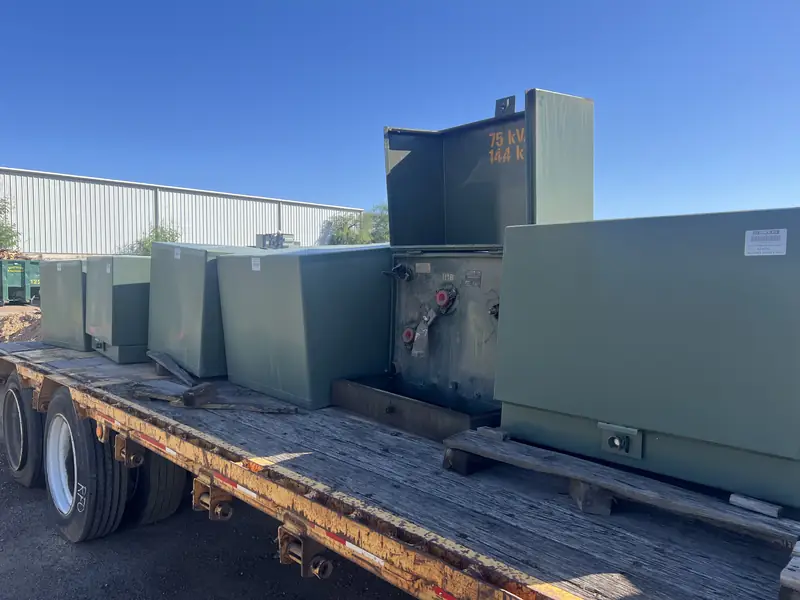
01What a 167 kVA Transformer Rating Means
A 167 kVA transformer is rated to handle 167 kilovolt-amperes of apparent power under its specified operating conditions. At this size, single-phase equipment is the common configuration. Check the actual nameplate: list the unit as 167 kVA when that is its plate rating rather than rounding it or relabeling it as 166.7 kVA.
This size is a recognized single-phase distribution rating. It can also appear as one can in a matched bank of three transformers, with the combined bank rated at approximately 500 kVA. For comparison, see nearby sizes such as 150 kVA transformers and 225 kVA transformers.
FLAFull-Load Amps for a 167 kVA Transformer
Rated full-load current at common California voltages. Single-phase: amps = kVA × 1000 ÷ volts. Three-phase: amps = kVA × 1000 ÷ (1.732 × volts). Use the nameplate voltage of your unit.
| Phase | Voltage | Full-load amps |
|---|---|---|
| Single-phase | 240 V | 696 A |
| Single-phase | 277 V | 603 A |
| Single-phase | 480 V | 348 A |
| Single-phase | 2.4 kV | 69.6 A |
| Single-phase | 7.2 kV | 23.2 A |
| Single-phase | 12 kV | 13.9 A |
| Single-phase | 19.92 kV | 8.38 A |
02Common 167 kVA Transformer Types and Voltages
The common equipment types at this rating include single-phase pad-mount and overhead pole-mount transformers, along with some low-voltage dry-type units. A 167 kVA unit is not usually described as a station-class substation transformer; however, three matched single-phase cans may serve together as a bank. Type and configuration affect where the unit can be used and how readily a buyer can place it.
Pad-mount and pole-mount units commonly serve distribution systems, while dry-type equipment is used indoors or in other locations where liquid-filled equipment is not suitable. Learn more about single-phase pad-mount transformers, pole-mount transformers, and low-voltage dry-type transformers.
Use the Nameplate, Not a Voltage Assumption
Primary voltage depends on the utility or facility system. California distribution systems include different voltage classes by service territory; examples include 12 kV, 16 kV, and 21 kV classes. A common single-phase secondary is 120/240 V, but actual primary and secondary combinations vary. The nameplate is the authority for the specific unit.
Record the high- and low-voltage ratings, tap positions, and connection information as shown. If you are unsure how to interpret them, the guide to transformer kVA, voltage, and amps explains the relationship.
03Where a 167 kVA Unit May Be Used in California
A single 167 kVA transformer can serve a substantial single-phase distribution load. Potential applications include larger service loads at commercial or industrial properties, agricultural facilities, and other sites where the electrical design calls for this rating. The actual load depends on the connected equipment, operating conditions, and system design, not kVA alone.
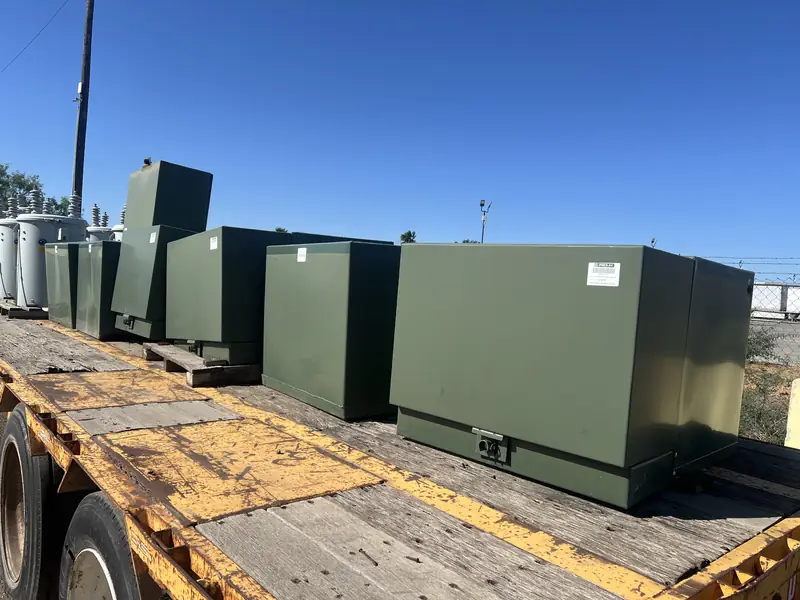
Three single-phase units of approximately 167 kVA each may be installed as a matched bank for a three-phase application. A bank is only useful as a set when its ratings and electrical characteristics suit the intended system, so identify whether you have one transformer or all three and note any matching nameplate details.
04How to Read the 167 kVA Full-Load Amps Chart
The full-load amps chart shown on this page lists the calculated single-phase current for 167 kVA at several voltages. To use it, find the voltage that matches the relevant winding and read across to the corresponding amps entry. The figures are reference calculations, not a replacement for the transformer nameplate or an engineering review.
For single-phase equipment, the basic relationship is kVA multiplied by 1,000, divided by volts. Current changes with voltage, so the same kVA rating has different full-load amp values at different voltages. Actual operating current and usable capacity depend on the connected load, power factor, taps, and equipment condition.
- Confirm whether you are checking the primary or secondary winding.
- Match the chart voltage to the nameplate voltage.
- Do not treat chart current as a measured operating load.
05Physical Size and Weight Depend on the Build
There is no single outside dimension or weight for every 167 kVA transformer. A liquid-filled pad-mount, an overhead pole-mount, and a dry-type unit have different enclosures and construction. Physical size and weight vary by manufacturer, voltage design, insulation system, accessories, and whether the unit is supplied alone or as part of a bank.
For an offer review, a clear overall photo and the nameplate weight fields are more useful than a rough estimate. If the weight is not visible or legible, say so rather than guessing. Do not attempt to move or access energized equipment to obtain a photo; use only a safe position and equipment you are authorized to photograph.
06What Affects the Value of a Used 167 kVA Transformer
The rating matters, but it is only one part of a buyer’s evaluation. Voltage combination, phase, type, taps, impedance, winding material, year, and condition help determine whether the unit fits a current need. A common and clearly documented configuration may be easier to place than unusual or incomplete equipment.
Buyers also consider whether the transformer is used or new-surplus, whether test reports are available, and whether accessories are present. For liquid-filled units, fluid type, fluid quantity, and PCB documentation can matter. Leaks, corrosion, damaged bushings, missing parts, or uncertain ownership can affect the review. See more factors in this guide to what affects a used transformer’s value.
- Nameplate details and legibility
- Condition and completeness
- Test reports and fluid records, if available
- Quantity and site access
- Loading, rigging, and freight requirements
07What to Send for an Offer on a 167 kVA Transformer
California Transformer Buyer reviews transformers from sellers located in California. To start, call or text Rocky at (951) 403-5738, or submit the website form. Send photos of the nameplate and the transformer as a whole, along with the quantity, city or site location, and a brief description of its condition. You can also review the steps to sell your transformer in California.
Include any available test reports, PCB or fluid records, and information about ownership or authority to sell. Rocky may ask follow-up questions about equipment details and site access. The written offer states the price, what is included, who handles loading or rigging and freight, and payment terms and timing. Reviewing the transformer costs nothing and creates no obligation; terms are provided in writing before pickup.
- Nameplate photos showing rating and voltages
- Overall photos from a safe position
- Quantity, location, and condition
- Available test and environmental records
kVANearby Transformer Sizes We Buy
FAQ167 kVA Transformer FAQ
Is a 167 kVA transformer single-phase or three-phase?
At this rating, single-phase equipment is the common configuration. A three-phase installation may use a matched bank of three single-phase transformers rated approximately 167 kVA each. Verify the phase and rating from each nameplate, since the quantity and matching specifications determine whether the equipment is a complete bank or a single spare can.
Can I sell one transformer from a three-can bank?
You can request an offer for a single can, but tell the buyer whether it came from a three-transformer bank and whether the other units are available. Matching information, including voltage, connection, impedance, and condition, helps establish whether the can may be useful on its own or as part of a set.
Does a 167 kVA transformer work on any California utility system?
No. The transformer’s primary voltage, secondary voltage, connection, taps, and other ratings must suit the specific system and application. California utilities and facilities use different distribution voltages. Check the nameplate and confirm compatibility with the serving utility or a qualified electrical professional rather than relying on the kVA rating alone.
Do I need test reports to request an offer?
You can begin with clear nameplate and overall photos, the quantity, location, and known condition. Test reports are useful when available, including factory test reports or suitable field test documentation. Do not delay your inquiry solely because records are missing; state what you have and what is unknown so the buyer can ask relevant follow-up questions.
What if the PCB status or fluid history is unknown?
Disclose that the status or records are unknown and provide any labels, test results, or documentation you have. PCB status and oil management require careful review; sellers should rely on testing, records, and qualified environmental professionals. Requirements can depend on the equipment and its history, so this information is not legal advice.
Who is allowed to sell a transformer at a property?
The seller must own the transformer or have authority to sell it. Equipment located on private property may still belong to a utility or another party, and the property owner cannot sell utility-owned equipment. Confirm ownership or authorization before proceeding, and identify any restrictions or access requirements when requesting an offer.