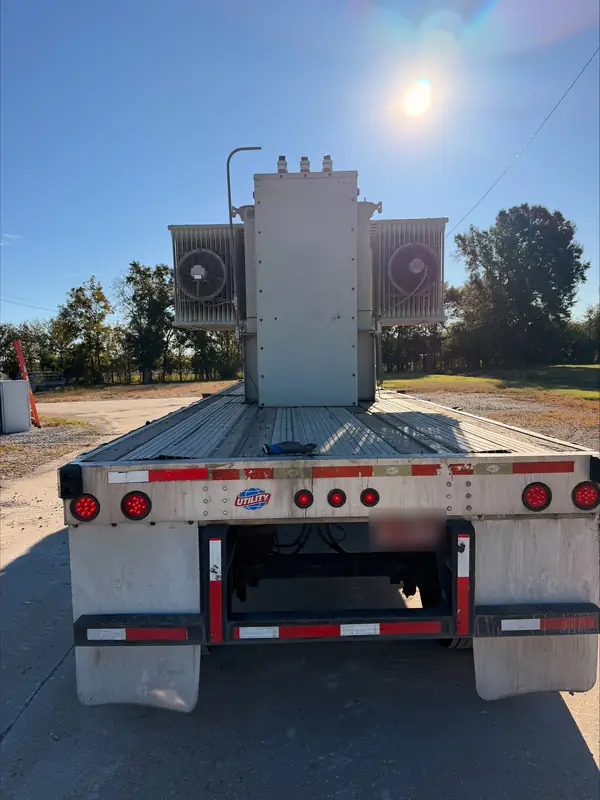
01What a 667 kVA Transformer Rating Tells a Buyer
A 667 kVA transformer is a single-phase unit intended for a special distribution or power-service application. It is an unusual rating compared with familiar standard sizes. The verified IEEE C57.12.00-2015 preferred-rating series lists 500 kVA and 833 kVA for single-phase units, but not 667 kVA; that does not prohibit custom or other catalog ratings.
The 667 kVA size appears in DOE liquid-filled transformer efficiency tables. That fact alone does not establish the unit’s design, efficiency compliance, age or suitability for a particular project. A buyer needs the actual nameplate and supporting records, not just the kVA figure.
- Confirm that 667 kVA is the nameplate rating, not a calculated or rounded value.
- Check whether the rating is continuous and note any other listed stages or operating conditions.
- Record the phase, frequency, voltages and connection details.
FLAFull-Load Amps for a 667 kVA Transformer
Rated full-load current at common California voltages. Single-phase: amps = kVA × 1000 ÷ volts. Three-phase: amps = kVA × 1000 ÷ (1.732 × volts). Use the nameplate voltage of your unit.
| Phase | Voltage | Full-load amps |
|---|---|---|
| Single-phase | 480 V | 1,390 A |
| Single-phase | 2.4 kV | 278 A |
| Single-phase | 7.2 kV | 92.6 A |
| Single-phase | 12 kV | 55.6 A |
| Single-phase | 19.92 kV | 33.5 A |
| Single-phase | 38.11 kV | 17.5 A |
| Single-phase | 66.4 kV | 10.0 A |
02Configurations That May Be Found at 667 kVA
The catalog information for this size identifies substation-power and submersible-vault transformers as common types. A 667 kVA unit may be part of a special single-phase service where its enclosure, installation environment and connections are designed for the project. See our pages on substation and power transformers and submersible and vault transformers for more on those configurations.
Do not assume every 667 kVA unit is a pad-mounted transformer. Standard single-phase pad-mount scope generally reaches 250 kVA, so a 667 kVA pad mount would need confirmation as a specific, potentially custom design. Pole-mounted and dry-type equipment are also not the typical configurations identified for this rating; use the nameplate and physical design to classify the unit.
- Substation-power: verify enclosure, cooling and accessories.
- Submersible-vault: identify vault-compatible construction and connections.
- Pad mount, pole mount or dry type: confirm the exact design rather than infer it from the rating.
03Voltage Combinations and the Full-Load Amps Chart
The full-load amps chart rendered on this page gives single-phase current at the listed voltage points. Read the row that matches the transformer’s rated voltage on the side being evaluated. For a single-phase transformer, the basic relationship is kVA multiplied by 1,000, divided by volts; at the same kVA, lower voltage corresponds to higher current.
The chart is a reference, not a substitute for the nameplate, tap setting or equipment design. It lists voltages from low-voltage service through higher distribution and system voltages, but those entries should not be treated as primary/secondary pairs. California distribution voltages vary by serving utility and location, so verify both windings and connections before assessing compatibility. Our guide to transformer kVA ratings and amps explains how to compare the nameplate with a load or service requirement.
- Match phase and voltage before using an amp figure.
- Check the winding connection and tap position shown on the nameplate.
- Do not use full-load amps as a stand-alone load study or protection setting.
04Applications and Physical Planning for a 667 kVA Unit
This rating is associated with special single-phase distribution or power service rather than a routine small building transformer. The actual application depends on the owner’s system, voltage, connection, duty and installation. A 667 kVA unit may be found in utility, infrastructure or industrial settings, but its nameplate and project records are needed to establish what it served.
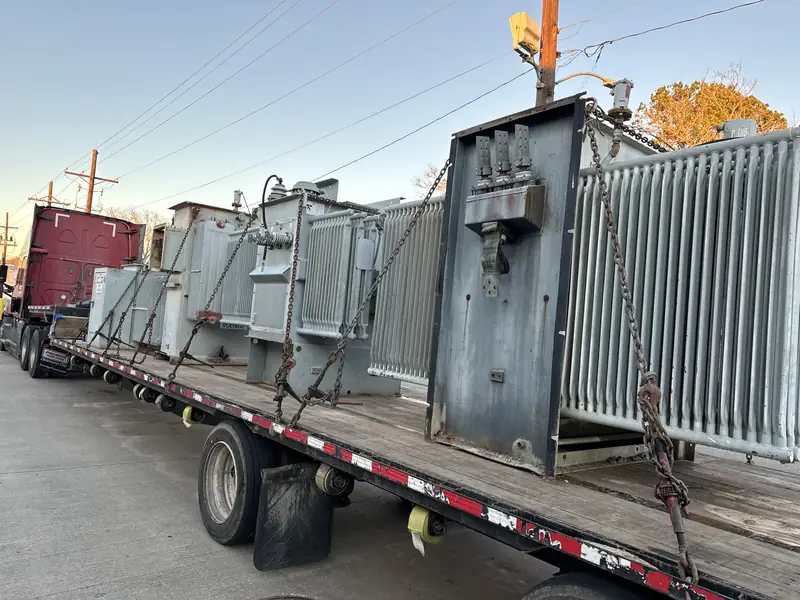
Physical size and shipping weight vary by manufacturer, enclosure, cooling design, fluid, accessories and whether the unit is substation or vault construction. Plan for a substantial piece of electrical equipment, not a small wall-mounted dry-type unit. Use the nameplate’s total weight and any manufacturer drawings or shipping records for actual dimensions and handling requirements; do not estimate transport or rigging from kVA alone.
- Look for total weight and, if provided, tank-and-fittings and core-and-coil weights.
- Note external dimensions, bushings, radiators, lifting points and access constraints from available records.
- Have qualified personnel and the responsible utility manage any electrical isolation or equipment movement.
05What Affects the Value of a Used or Surplus 667 kVA Transformer
The kVA rating is only one part of an evaluation. Buyers consider phase, primary and secondary voltages, taps, connection, impedance, BIL, cooling class, temperature rise and whether the configuration has a likely reuse application. Commonly useful California voltages may help identify potential demand, but compatibility must be established from the actual nameplate.
Condition and documentation also matter. Leaks, corrosion, damaged bushings, missing parts, winding material, age, fluid type and quantity, PCB records and available test reports all affect how a unit can be evaluated. A new-surplus transformer with factory records is different from a used unit with incomplete history. For a broader explanation, see factors that affect a used transformer’s value.
- Factory test report and available field tests, such as turns-ratio or insulation-resistance results.
- Fluid and PCB documentation; rely on records, testing and qualified environmental professionals.
- Accessories, quantity, ownership authority, site access and removal complexity.
06Information to Send for an Offer in California
California Transformer Buyer considers transformers located in California, including used, pulled, surplus and new-surplus units. Send clear photos taken from a safe position and only where you are authorized to access the equipment. Do not open compartments or attempt to disconnect or move the transformer to obtain information.
Text photos to Rocky at (951) 403-5738 or submit details through the contact and offer request page. Include the site city, number of units, known condition and whether equipment is still installed, stored or crated. A transformer sale information checklist can help you gather the basics.
- Nameplate photo showing manufacturer, serial number, year, kVA, phase and voltages.
- Overall photos of the exterior, connections and visible condition.
- Available test reports, fluid or PCB records, ownership information and access details.
- For new-surplus equipment, photos of packaging and any records showing it has never been energized.
07Written Offer, Removal Scope and Payment Terms
After reviewing the information, Rocky may ask follow-up questions about test reports, environmental records, ownership or site access. Reviewing a transformer costs nothing and creates no obligation. If an offer is made, it states the price, what is included, who handles loading or rigging and freight, and the payment terms and timing.
Removal is scheduled according to the written terms. Before pickup, confirm the agreed scope and responsibilities in writing. Electrical isolation and disconnection must be handled by the owner’s qualified electrical contractor or serving utility, not by the seller as part of taking photos or preparing information.
- Call or text (951) 403-5738.
- Send the nameplate, overall photos, quantity, location and known condition.
- Review the written offer and responsibilities before pickup.
kVANearby Transformer Sizes We Buy
FAQ667 kVA Transformer FAQ
Is 667 kVA a standard single-phase transformer size?
It is a recognized rating, but it is not included in the verified single-phase preferred series in IEEE C57.12.00-2015 Table 2. That series includes nearby ratings such as 500 kVA and 833 kVA. The absence from that preferred series does not mean a 667 kVA transformer cannot be manufactured or used; confirm the nameplate and design documents for the specific unit.
Can I sell a 667 kVA pad-mount transformer?
You can ask us to review it, but do not assume the enclosure type based only on the rating. Standard single-phase pad-mount scope generally reaches 250 kVA, while 667 kVA is more often associated with special single-phase distribution or power-service equipment. Send photos and nameplate details so the actual configuration can be identified and evaluated.
Which nameplate details matter most for a 667 kVA transformer buyer?
Start with manufacturer, serial number, year, kVA, phase, frequency, primary and secondary voltages, connection and tap positions. Impedance, BIL, cooling class, temperature rise, fluid type, gallons and total weight are also useful. Include a connection diagram and any PCB label or test documentation if available; a readable photo is often the easiest way to share these details.
What if the transformer has no recent test report?
Send the records you do have and state plainly that no recent report is available. Existing factory test documents, prior field tests and oil or PCB records may still help an evaluation. Do not open, sample or otherwise handle the equipment to create new information; testing and any required electrical work should be arranged through qualified professionals.
Can California Transformer Buyer review a transformer that is still installed?
Yes, you can submit information about an installed unit if you own it or have authority to sell it. Photograph it only from a safe position and do not enter restricted areas or attempt to disconnect it. The owner’s qualified electrical contractor or serving utility is responsible for isolation and disconnection, and the written offer will state who handles loading, rigging and freight.
Does a non-PCB label mean the transformer contains zero PCBs?
No. A non-PCB designation does not mean zero PCBs, and an unknown status should not be treated as proof of a particular concentration. Share existing labels, test results and environmental records, and rely on testing, documentation and qualified environmental professionals to determine the appropriate handling pathway. This information is general and is not legal or environmental advice.