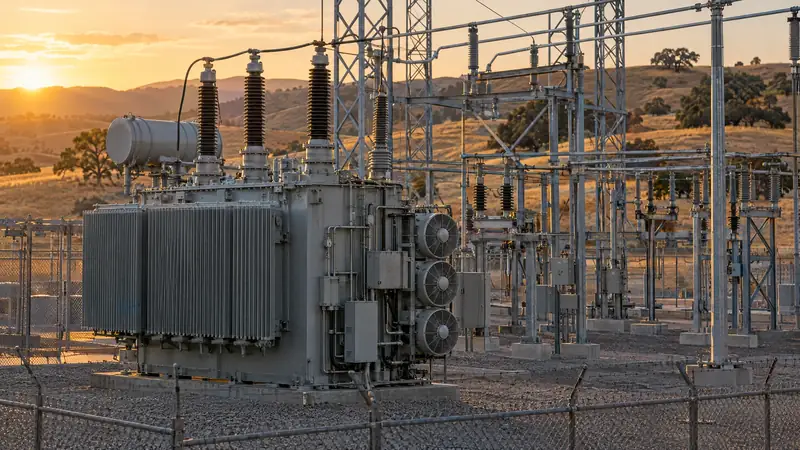
01What a 25 MVA Transformer Usually Is
A 25 MVA transformer is rated for 25,000 kVA. At this capacity, the most common configuration is a three-phase power transformer assembled for utility or industrial service. The verified IEEE preferred three-phase rating series includes 25,000 kVA, though custom ratings and other designs also exist.
Common types include substation power transformers, generator step-up (GSU) transformers, autotransformers and mobile-substation transformers. A 25 MVA pad-mount transformer is not typical: standard three-phase pad-mount scope reaches 10 MVA, so equipment advertised at 25 MVA may instead be a station-class unit or a different configuration. See the range of substation and power transformers and generator step-up transformers.
FLAFull-Load Amps for a 25 MVA Transformer
Rated full-load current at common California voltages. Single-phase: amps = kVA × 1000 ÷ volts. Three-phase: amps = kVA × 1000 ÷ (1.732 × volts). Use the nameplate voltage of your unit.
| Phase | Voltage | Full-load amps |
|---|---|---|
| Three-phase | 4.16 kV | 3,470 A |
| Three-phase | 12.47 kV | 1,157 A |
| Three-phase | 20.78 kV | 695 A |
| Three-phase | 34.5 kV | 418 A |
| Three-phase | 66 kV | 219 A |
| Three-phase | 69 kV | 209 A |
| Three-phase | 115 kV | 126 A |
02Voltage Combinations and California Applications
At 25 MVA, voltage arrangements depend on the system and the job. Nameplates may show combinations involving medium-voltage windings such as 4.16 kV, 12.47 kV, 20.78 kV or 34.5 kV, and higher-voltage windings such as 66 kV, 69 kV or 115 kV. These are examples, not a standard pairing list; record the actual high- and low-voltage ratings, connections and tap range.
California uses power transformers in utility and industrial substations and for generation step-up or interconnection. A unit may serve a generator, renewable-energy project, industrial facility or utility network. Autotransformers and mobile units have specialized arrangements; review autotransformer configurations or mobile substation transformers for those equipment types.
Do not identify a transformer by voltage alone. For example, the actual winding configuration, grounded-wye or delta connection, impedance and BIL affect whether it suits a system. The serving utility or project engineer should confirm compatibility against the equipment nameplate and project requirements.
03Physical Scale, Weight and Transport Considerations
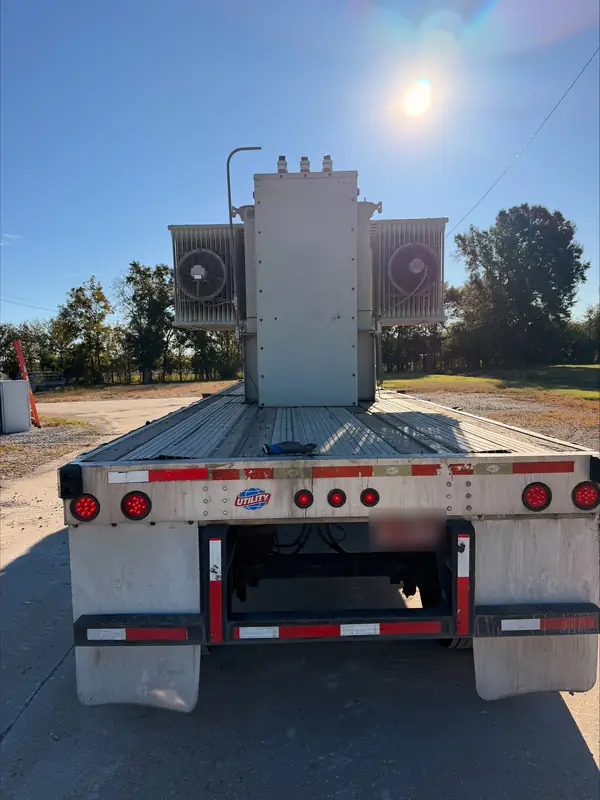
A 25 MVA station-class transformer is large, heavy equipment. The tank, radiators, fans, bushings, conservator and other accessories affect its overall footprint and shipping condition. Physical dimensions and weight vary by manufacturer, design, cooling arrangement and whether accessories are installed or removed for transport.
Check the nameplate or supporting records for total weight and, when provided, tank-and-fittings and core-and-coil weights. Overall photos can show the general arrangement, but they do not replace measured dimensions or shipping documentation. Do not open compartments or attempt to move the unit to obtain details.
Large transformer transport may require specialized planning. In California, oversized or overweight loads on state highways can require Caltrans permits, and local roads may require separate approvals. In a written offer, confirm who is responsible for loading, rigging and freight before pickup.
04How to Read the 25 MVA Full-Load Amps Chart
The full-load amps chart is rendered separately on this page. To use it, find the row for the transformer’s phase and the voltage winding being evaluated. The chart shows the current associated with the 25 MVA rating at that voltage; it is a reference for rated full-load current, not a substitute for the unit’s nameplate or operating limits.
For a transformer with more than one voltage or cooling-stage rating, check which winding and rating apply. The nameplate may list multiple capacities, such as ONAN/ONAF stages, along with connection and tap information. Do not assume a chart row describes every winding or operating condition. For the relationship between capacity, voltage and current, see how transformer kVA and amps relate.
If the chart voltage does not match the nameplate exactly, do not select a nearby value as a substitute. Send a clear nameplate photo so the winding voltage and rating can be reviewed accurately.
05What Affects the Value of a Used 25 MVA Transformer
A used 25 MVA transformer’s potential resale value depends on its specifications, condition and demand for that configuration. Voltage combination, phase, taps, connection, impedance, BIL, cooling class and temperature rise help establish where it may be usable. Copper or aluminum windings, fluid type and quantity, age, and included accessories also matter.
Condition and records can make a substantial difference. Buyers may review test reports, oil or dissolved-gas analysis, insulation-resistance and turns-ratio results, PCB documentation, and factory test records. Leaks, corrosion, damaged bushings, missing parts or an unknown history can affect the assessment. New-surplus status, quantity and site access are also relevant.
Value is specific to the individual unit, and a rating alone does not establish an offer. Compare a 25 MVA unit with nearby sizes such as 20 MVA transformers or 30 MVA transformers only as a broad capacity reference. More detail on assessment factors is available in how used transformer value is assessed.
06What to Send for a 25 MVA Transformer Offer
For an initial review, send the information you have rather than trying to inspect or operate the equipment. A clear photo of the nameplate and several overall photos taken from a safe position are useful. Only photograph equipment you are authorized to access, and leave electrical work and any access to compartments to qualified personnel.
Include the unit’s California location, quantity, condition and whether it is used or new-surplus. If available, attach test reports, fluid and PCB records, ownership documentation, and information about site access. A complete set of details helps Rocky ask focused follow-up questions and prepare terms that clearly identify what is included.
- Nameplate photos showing ratings and voltage
- Overall photos and visible condition
- Quantity and California location
- Available test and environmental records
- Site access and ownership or sale authority
07Request an Offer from a California 25 MVA Transformer Buyer
California Transformer Buyer purchases used, pulled, surplus and new-surplus transformers from sellers located in California. To start a review, call or text Rocky at (951) 403-5738, or submit the website contact form. You can also text equipment photos to that number.
After reviewing the details, Rocky may ask about test results, fluid or PCB records, ownership and site access. If an offer is made, it is provided in writing with the price, what is included, who handles rigging and freight, and payment terms and timing. Reviewing the transformer costs nothing and creates no obligation. For the process and information to provide, see how to sell your transformer.
kVANearby Transformer Sizes We Buy
FAQ25 MVA Transformer FAQ
Are 25 MVA transformers usually three-phase?
Yes. The common 25 MVA arrangement is a three-phase assembled power transformer, and 25,000 kVA is included in the verified IEEE preferred three-phase rating series. Single-phase power units or banks can also occur. Confirm phase and total bank capacity from the nameplate, particularly if the equipment is part of a multi-unit installation.
Could a 25 MVA transformer be a pad-mount unit?
It would be unusual at this rating. Standard three-phase pad-mount transformer scope reaches 10 MVA, while 25 MVA units are more commonly substation, generator step-up, autotransformer or mobile-substation equipment. If a unit is described as pad-mounted, provide its nameplate and photos so its actual configuration and rating can be checked.
Does a 25 MVA rating mean the transformer can supply 25 MW?
Not by itself. MVA is apparent power, while MW is real power; the relationship depends on the load’s power factor. The transformer’s nameplate rating, cooling stage, voltage, operating conditions and project requirements also matter. Have a qualified electrical professional determine the usable capacity for a specific installation.
What if the transformer is missing its nameplate?
Send overall photos and any available records, such as factory documents, drawings, test reports or asset records. Do not open the transformer or remove parts to look for information. Without a legible nameplate, a buyer may need to verify the manufacturer, serial number, rating and winding details through other documentation before evaluating the unit.
Can you review a transformer that has not been tested recently?
You can submit it for review, but available test information helps establish condition and suitability. Include any existing factory test report, maintenance history, oil analysis or electrical test results. Do not arrange testing or take fluid samples yourself; coordinate any inspection or testing through qualified electrical and environmental professionals.
Can I sell a utility-owned transformer installed on my property?
Only the owner or someone authorized to sell the equipment can transfer it. A property owner cannot sell a transformer that belongs to the serving utility merely because it is located on the property. Confirm ownership before requesting an offer, and include relevant asset or project documentation if ownership is unclear.