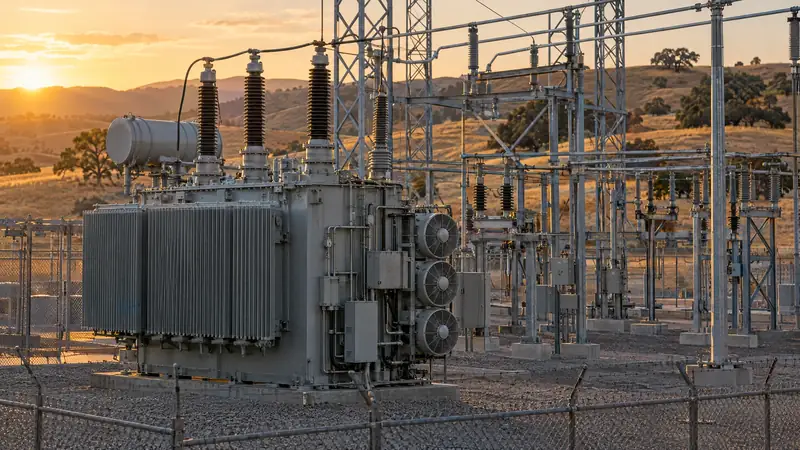
01What a 100 MVA Transformer Is Commonly Used For
A 100 MVA transformer is a large power transformer rating, equal to 100,000 kVA. At this capacity, three-phase assembled units are the usual configuration. The rating is associated with utility and industrial power substations, or with generation step-up and interconnection duties—not ordinary building distribution.
A unit may serve as a station transformer between transmission or subtransmission voltage and a lower grid voltage. A generator step-up transformer raises generator output for delivery to the grid. Large renewable-energy, storage, utility and industrial projects may use power transformers as part of their interconnection, but the specific design depends on the project and system requirements. See our information about [substation and power transformers](substation and power transformers) and [generator step-up transformers](generator step-up transformers).
A 100 MVA unit can also be an [autotransformer](autotransformer) or part of a [mobile substation](mobile substation transformer arrangement. Single-phase power units and banks can occur at this capacity, although a three-phase assembled transformer is more typical.
FLAFull-Load Amps for a 100 MVA Transformer
Rated full-load current at common California voltages. Single-phase: amps = kVA × 1000 ÷ volts. Three-phase: amps = kVA × 1000 ÷ (1.732 × volts). Use the nameplate voltage of your unit.
| Phase | Voltage | Full-load amps |
|---|---|---|
| Three-phase | 4.16 kV | 13,879 A |
| Three-phase | 12.47 kV | 4,630 A |
| Three-phase | 20.78 kV | 2,778 A |
| Three-phase | 34.5 kV | 1,673 A |
| Three-phase | 66 kV | 875 A |
| Three-phase | 69 kV | 837 A |
| Three-phase | 115 kV | 502 A |
02Are 100 MVA Pad-Mount, Pole-Mount or Dry-Type Units Typical?
A 100 MVA pad mount transformer is not a typical distribution pad-mount product. Standard pad-mounted equipment serves distribution loads at much smaller capacities; 100 MVA is power-transformer scale. Pole-mount transformers and common low-voltage dry-type units are also not usual forms at this rating.
At 100 MVA, expect a large oil-filled station-class design more often than a compact enclosure. A dry-type transformer at this capacity would be unusual and highly application-specific. Identify the actual construction from the nameplate and photos rather than relying on a sales description or a project label.
03Voltage Combinations Depend on the Grid and Project
There is no single voltage combination that defines a 100 MVA transformer. Depending on its role, the nameplate may show a high-voltage winding paired with a medium-voltage winding. Examples of voltage levels that appear in California power systems include 115 kV, 69 kV, 66 kV, 34.5 kV, 20.78 kV, 12.47 kV and 4.16 kV. Those examples do not mean every pairing is interchangeable or suitable for a particular site.
Check the actual high- and low-voltage ratings, winding connection, taps, impedance and BIL. For a GSU or other specialized unit, include all winding voltages and any multiple capacity ratings shown on the nameplate. The serving utility or project engineer determines whether a transformer fits a system; a matching MVA rating alone is not enough.
04How to Read the 100 MVA Full-Load Amps Chart
The full-load amps chart rendered on this page shows the calculated line current for a 100 MVA three-phase transformer at selected voltages. Find the row for the voltage of interest and read across to its listed amps. For a three-phase rating, the voltage is line-to-line and the amperage is the current in each line at rated capacity.
The chart is a reference for understanding rated current, not a substitute for the transformer nameplate, protection study or operating limits. Different winding ratings, tap positions and cooling stages may affect the unit’s applicable rating. Do not use a chart value alone to select, connect or operate equipment. For more on the relationship between capacity and current, see [how to read transformer kVA and amps](transformer kVA and amps guidance).
05Physical Scale and Transport Details Matter
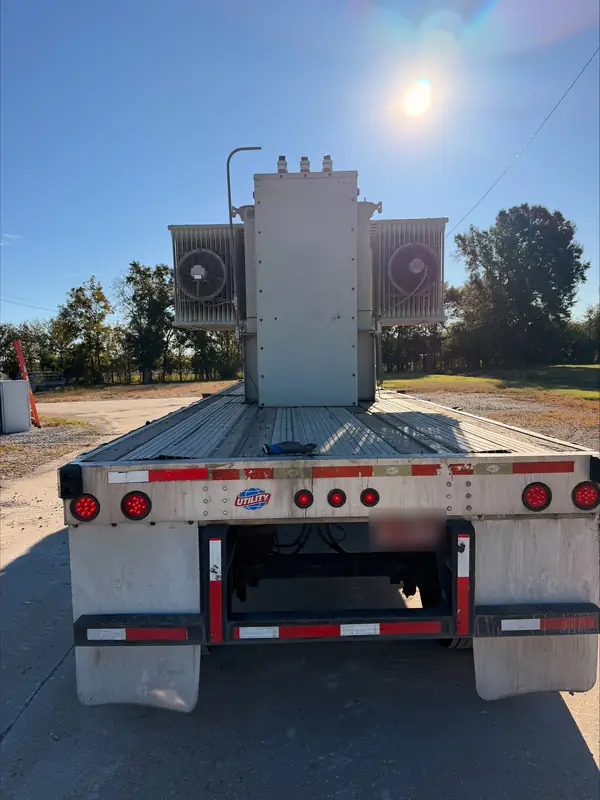
A 100 MVA transformer is a major piece of industrial equipment, and its dimensions and weight vary by manufacturer, design, cooling arrangement and accessories. It may have a substantial tank, radiators and other external components. Some large units are prepared for shipment with components removed and may require specialized heavy-haul planning.
Use the nameplate or shipping records to provide total weight and, if listed, tank-and-fittings and core-and-coil weights. Overall dimensions, clearances, access roads, loading arrangements and any local or highway requirements can affect the practical removal plan. Do not attempt to disconnect, open or move the equipment; those tasks belong to qualified electrical and rigging professionals.
06What Affects the Value of a Used 100 MVA Transformer?
A 100 MVA transformer buyer needs more than the capacity to assess a unit. Voltage configuration, phase, cooling class, impedance, tap changer, winding material, fluid type and manufacturing year all help establish what the equipment is and whether it may suit another application.
Condition and documentation matter. Buyers may review leaks, corrosion, bushing condition, missing parts, factory test reports, oil or dissolved-gas analysis, insulation-resistance or turns-ratio results, and PCB records. A new-surplus unit with clear documentation is different from a previously energized unit with unknown condition. Quantity, ownership, site access and removal complexity also factor into an assessment.
Market demand can vary with a unit’s specific configuration and timing. A functioning transformer that can be evaluated and matched to a project may be more useful than equipment with incomplete records or an uncommon specification, but no rating or condition guarantees a purchase or a particular offer. Read more about [factors that affect used transformer value](used transformer value factors).
07What to Send California Transformer Buyer for an Offer
California Transformer Buyer considers equipment located in California, including used, pulled, surplus and new-surplus transformers. To start a review, call or text Rocky at (951) 403-5738, or use the [transformer offer form](sell your transformer). Reviewing the information costs nothing and carries no obligation.
Send clear nameplate photos taken from a safe position and overall photos of the transformer and visible accessories. Include the quantity, California location, condition and whether the unit is new-surplus, previously energized or removed. Do not access equipment unless authorized, and do not open compartments to take pictures.
If available, include test reports, fluid and PCB documentation, ownership or sale authority, and details about site access. Rocky may ask follow-up questions to confirm specifications and removal considerations. Before pickup is scheduled, the written offer states the price, what is included, who handles loading or rigging and freight, and the payment terms and timing.
kVANearby Transformer Sizes We Buy
FAQ100 MVA Transformer FAQ
Can I sell a single-phase 100 MVA transformer?
Possibly. Three-phase assembled units are more typical at this rating, but single-phase power units or banks can also occur. Send the nameplate and describe whether you have one transformer or a bank, including the number of units and any available connection information. The actual configuration and condition matter more than assuming the equipment follows the most common arrangement.
What if the nameplate shows several MVA ratings?
Send a clear photo showing every rating and the cooling designations, such as ONAN or ONAF if present. Large power transformers may have more than one capacity depending on cooling stage or operating configuration. Include the voltage and tap information as well; a single headline rating may not tell the whole story about the unit’s capabilities.
Do I need test reports before requesting an offer?
No. You can begin with the nameplate, overall photos, quantity, location and a brief condition description. If test reports are available, include them because they can help document the transformer’s condition and specifications. Records such as factory tests, oil analyses and electrical test results should be shared as provided; do not perform sampling or testing yourself.
Can I sell a transformer if its PCB status is unknown?
You can disclose that the status is unknown and provide any existing labels, test results or records. PCB classification and management depend on testing, documentation and the applicable rules; unknown status should not be represented as non-PCB. Rely on qualified environmental professionals for determinations and handling advice. This information is general and is not legal advice.
Will California Transformer Buyer arrange removal and freight?
The written offer will state what is included and who handles loading or rigging and freight before pickup is scheduled. Large transformers can require project-specific access and transport planning, so provide the site location and any known access limitations early. Do not disconnect or move the equipment yourself; qualified electrical and rigging personnel should handle those activities.
Can I sell equipment that belongs to the serving utility?
You must own the transformer or have authority to sell it. A property owner cannot sell utility-owned equipment merely because it is installed on the property. If ownership is unclear, share the available records and confirm authority with the appropriate owner before arranging a sale or removal.