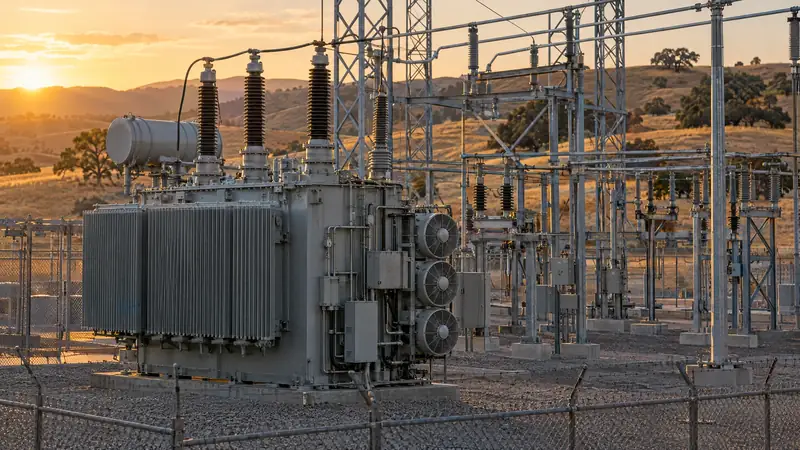
0137500 kVA Transformer Types and Configurations
A 37500 kVA transformer is a large power transformer, not a typical distribution unit. Three-phase assembled units are most common at this rating. The 37,500 kVA three-phase rating is included in the preferred rating series in IEEE C57.12.00-2015; custom ratings also exist.
Common equipment at this size includes utility and industrial substation power transformers, generator step-up units, autotransformers and mobile-substation transformers. See our pages on substation and power transformers, generator step-up transformers, autotransformers and mobile substations for configuration differences.
FLAFull-Load Amps for a 37500 kVA Transformer
Rated full-load current at common California voltages. Single-phase: amps = kVA × 1000 ÷ volts. Three-phase: amps = kVA × 1000 ÷ (1.732 × volts). Use the nameplate voltage of your unit.
| Phase | Voltage | Full-load amps |
|---|---|---|
| Three-phase | 4.16 kV | 5,204 A |
| Three-phase | 12.47 kV | 1,736 A |
| Three-phase | 20.78 kV | 1,042 A |
| Three-phase | 34.5 kV | 628 A |
| Three-phase | 66 kV | 328 A |
| Three-phase | 69 kV | 314 A |
| Three-phase | 115 kV | 188 A |
02Voltage Levels and California Power Applications
These units serve utility or industrial substations and generation interconnections. A transformer may connect different transmission, subtransmission or plant voltages; the actual high- and low-voltage combination, winding connection and tap range must come from its nameplate and drawings.
The full-load amps chart on this page includes three-phase entries at 4.16, 12.47, 20.78, 34.5, 66, 69 and 115 kV. Those are chart voltage entries, not a claim that every unit has the same winding combination. For California equipment, check the specified utility or project voltage rather than assuming a voltage from the location alone.
- Utility and industrial power substations
- Generation step-up or interconnection
- Single-phase power units or banks also occur
03How to Read the 37500 kVA Full-Load Amps Chart
Use the chart row that matches the transformer phase and voltage. For a three-phase unit, the listed voltage is line-to-line voltage and the amperage is full-load line current at the stated kVA. The relationship is I = kVA × 1,000 ÷ (√3 × line-to-line volts).
The chart is a reference for a rated, balanced three-phase load—not a substitute for the transformer’s nameplate or an operating study. A multi-stage cooling rating, tap position or different winding connection may affect the applicable rating or current. For the calculation and rating basics, see how transformer kVA and amps relate.
04Physical Size, Weight and Transport Considerations
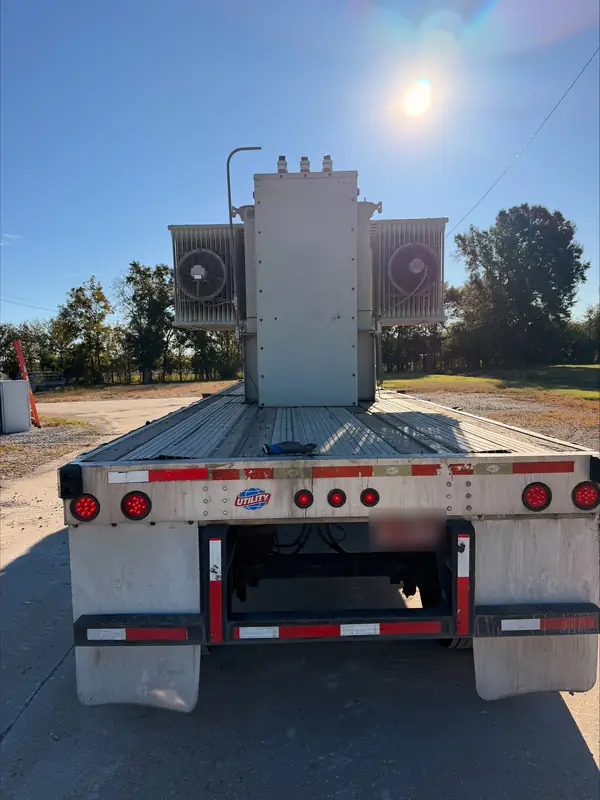
A 37.5 MVA power transformer is substantial equipment. Its dimensions and weight vary by manufacturer, voltage design, cooling equipment, accessories and whether the unit is shipped assembled or prepared for transport. Nameplate or outline drawings may list total weight and separate tank, fittings or core-and-coil weights.
Transport planning depends on actual dimensions, weight, route and site access. Oversize or overweight loads may require permits on California state highways, and local roads can have separate requirements. Do not attempt to move or prepare the transformer; qualified contractors and transport professionals coordinate the work.
05What Affects a Used 37500 kVA Transformer's Value
A buyer evaluates the exact configuration and its condition, not capacity alone. Voltage combination, phase, taps, impedance, BIL, cooling class, temperature rise and winding material help establish what the unit is and where it may fit. Commonly useful records include factory test reports, oil test or DGA results, insulation-resistance results and turns-ratio tests.
Age, leaks, corrosion, damaged bushings, missing parts, accessories and PCB documentation also matter. New-surplus equipment with complete records differs from a used unit with unknown history. Quantity, access and removal complexity affect the transaction as well. For more detail, see factors that influence a used transformer's value.
06Nameplate and Records to Gather Before You Call
Start with clear photos of the full nameplate and the complete transformer from a safe position, only where you are authorized to access it. For a large unit, one close-up may not capture all stages or ratings, so take additional nameplate images if needed without opening compartments or approaching unsafe areas.
Useful fields include manufacturer, serial number, year, kVA by stage, phase, frequency, high- and low-side voltage, connection, tap positions, impedance, BIL, temperature rise, cooling class, fluid type and gallons, and total weight. Include available drawings, test reports, fluid or PCB records and a list of accessories.
07What to Send California Transformer Buyer for an Offer
California Transformer Buyer buys eligible used, pulled, surplus and new-surplus transformers from sellers located in California. To begin a review, send the transformer’s location, quantity and condition along with nameplate and overall photos. You can call or text Rocky at (951) 403-5738, or use the transformer sale information page to submit details.
The review may require follow-up about ownership, test reports, fluid or PCB records, accessories and site access. If an offer is made, it is provided in writing with the price, included items, loading or rigging responsibility, freight and payment terms. Reviewing a transformer costs nothing and does not obligate you to proceed.
08Safe Sale and Removal Coordination in California
Only the owner or someone authorized to sell the equipment can transfer it. Utility-owned equipment located on private property is not automatically the property owner's to sell. Confirm ownership before arranging a transaction.
Do not de-energize, disconnect, open, drain, sample or move the transformer yourself. The owner’s qualified electrical contractor or serving utility handles electrical isolation and disconnection; qualified environmental professionals should guide decisions about fluid and PCB status. Equipment with unknown environmental records should be assessed using its documentation, testing and appropriate professional advice—not assumptions.
09Compare Nearby Power Transformer Ratings
If the nameplate shows a different base rating or multiple cooling stages, compare the complete rating rather than rounding to the nearest MVA size. A 37.5 MVA base rating is distinct from adjacent ratings such as 30 MVA transformers and 50 MVA transformers. Provide all listed stages and cooling designations so the unit can be reviewed accurately.
kVANearby Transformer Sizes We Buy
FAQ37500 kVA Transformer FAQ
Does 37500 kVA mean the same thing as 37.5 MVA?
Yes. One MVA equals 1,000 kVA, so 37,500 kVA equals 37.5 MVA. A nameplate may show one format, the other, or multiple capacity stages tied to different cooling conditions. When requesting an offer, send a photo that captures the full rating rather than converting or summarizing only one stage.
Can I sell a 37500 kVA pad-mount transformer?
A conventional pad-mount is a distribution transformer format and is not a typical configuration at 37.5 MVA. This rating is commonly associated with substation, generator step-up, autotransformer or mobile-substation equipment. If the unit is described as pad-mounted or has an unusual enclosure, send the nameplate and photos so the exact equipment can be identified.
Are 37500 kVA transformers always three-phase?
No. Three-phase assembled units are the common form at this rating, but single-phase power transformers or banks can also occur. Phase affects how the rating and full-load current are interpreted, so include the phase information shown on the nameplate. If the nameplate is missing or unreadable, share other identifying records and photographs.
Can you review a transformer without test reports?
You can request a review with the information available. Nameplate and overall photos, location, quantity and a clear description of condition are useful starting points. Test reports can help establish condition and technical details; if records are unavailable, say so rather than estimating results. Follow-up questions may cover testing, fluid history, PCB records and accessories.
What if the PCB status or fluid history is unknown?
Provide any labels, prior test results, maintenance records and fluid documentation you have, and identify gaps in the records. Do not drain, sample or handle oil to answer a buyer’s question. PCB status and management decisions should rely on appropriate testing, documentation and qualified environmental professionals. This information is general and is not legal advice.