01What a 75 MVA Transformer Rating Means
A 75 MVA transformer has a rated apparent-power capacity of 75,000 kVA. That rating places it in the power-transformer category, not the usual range of building distribution equipment. Three-phase assembled units are most common at this size, although single-phase power units or banks may also be encountered.
The rating alone does not establish how much load a transformer can serve in every operating condition. Cooling stages, voltage, winding arrangement, temperature rise, and other nameplate details affect its rated capability. If you are comparing nearby sizes, see the 60 MVA transformer rating and 100 MVA transformer rating pages.
FLAFull-Load Amps for a 75 MVA Transformer
Rated full-load current at common California voltages. Single-phase: amps = kVA × 1000 ÷ volts. Three-phase: amps = kVA × 1000 ÷ (1.732 × volts). Use the nameplate voltage of your unit.
| Phase | Voltage | Full-load amps |
|---|---|---|
| Three-phase | 4.16 kV | 10,409 A |
| Three-phase | 12.47 kV | 3,472 A |
| Three-phase | 20.78 kV | 2,084 A |
| Three-phase | 34.5 kV | 1,255 A |
| Three-phase | 66 kV | 656 A |
| Three-phase | 69 kV | 628 A |
| Three-phase | 115 kV | 377 A |
02Which 75 MVA Transformer Types Are Common?
At 75 MVA, equipment is commonly built as a substation power transformer, generator step-up (GSU) transformer, autotransformer, or mobile-substation transformer. These units serve utility and industrial substations or connect generation to a transmission or subtransmission system. Read more about substation and power transformers, generator step-up transformers, autotransformers, and mobile-substation transformers.
A 75 MVA pad mount transformer is not a typical distribution pad-mount unit. Standard three-phase pad-mount equipment generally reaches 10 MVA, so a listing described as “pad mount” at 75 MVA should be checked carefully against the nameplate and actual configuration. The physical enclosure or installation description does not replace the rated capacity and equipment type.
03Voltage Combinations and California System Fit
There is no single voltage combination for a 75 MVA transformer. Units may have different high- and low-voltage windings depending on the connected utility, generator, industrial system, and project design. The nameplate should identify each winding voltage, connection, tap positions, and the applicable rating for each cooling stage.
The full-load amps chart shown on this page includes three-phase voltage entries at 4.16, 12.47, 20.78, 34.5, 66, 69, and 115 kV. These are reference points for reading current at the listed voltage, not a claim that every 75 MVA unit has those windings or that any two entries form a particular transformer’s voltage combination. Use the actual nameplate when assessing a unit for a California project.
04How to Read the 75 MVA Full-Load Amps Chart
The chart is for three-phase full-load current. Find the voltage that matches the winding you are evaluating, then read across to the corresponding current value. A 75 MVA transformer carries different full-load current at different voltages, so the chart’s voltage column matters as much as the MVA rating.
The chart is a reference, not a substitute for equipment documentation or engineering review. Confirm phase, rated voltage, cooling stage, taps, and any special operating conditions on the nameplate and drawings. For the relationship between kVA, voltage, and current, see how to read transformer kVA and amps.
05Typical Applications and Loads in California
A 75 MVA unit may serve a utility or industrial power substation, or step generation up for interconnection. Depending on its winding arrangement and project, it may support a transmission or subtransmission connection, a large industrial load, or a generation facility. Solar, wind, and storage projects are among the types of developments where project-specific transformer requirements may arise; the equipment’s actual intended duty must be confirmed.
Voltage compatibility is especially important in California, where utility systems and municipal providers use different configurations. A 69 kV nameplate, for example, is not interchangeable with a 66 kV or 115 kV winding simply because all are power-system voltages. The receiving project’s engineering requirements determine whether a unit is suitable.
06Physical Size, Weight, and Transport Considerations
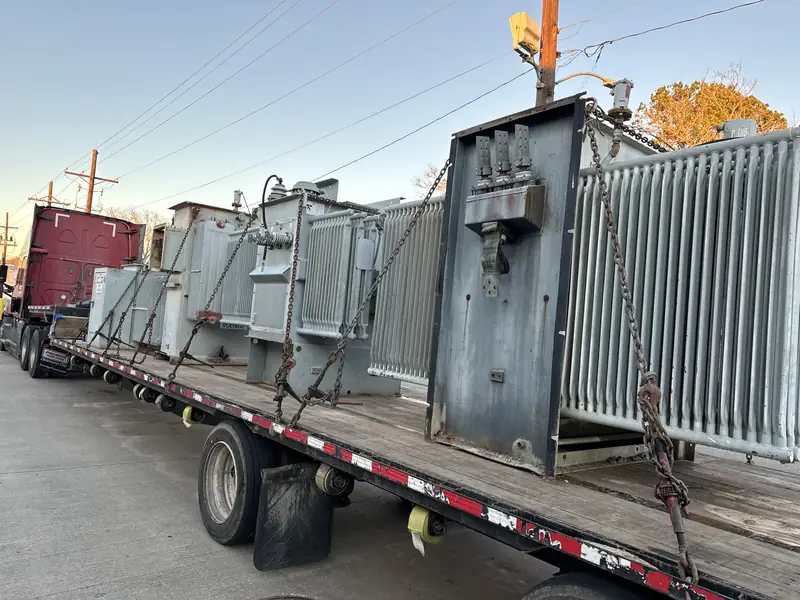
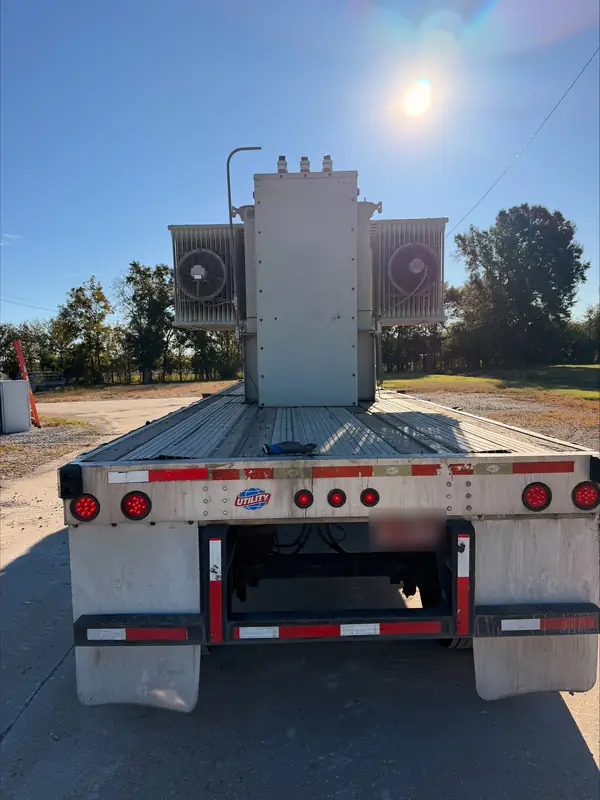
A 75 MVA transformer is large, heavy power equipment. Its overall dimensions and shipping weight vary by manufacturer, design, cooling equipment, bushings, radiators, and other accessories; there is no reliable physical-size estimate based on MVA alone. Nameplate or shipping records may separately state total weight, tank-and-fittings weight, and core-and-coil weight.
Large units can involve specialized rigging and heavy-haul planning. Oversize or overweight permits and local route approvals may be needed, depending on the load and route. Do not attempt to disconnect or move the equipment yourself; the owner’s qualified electrical contractor or serving utility handles electrical isolation, and any loading or freight responsibilities should be stated in the written offer before pickup.
07What Affects a Used 75 MVA Transformer’s Value?
A used or surplus unit is evaluated on its specific specifications, condition, documentation, and resale fit. Important details include voltage and connection, taps, impedance, BIL, cooling stages, temperature rise, winding material, year, and whether the transformer is used or new-surplus. Accessories such as fans, radiators, gauges, and a load tap changer can also affect the evaluation.
Test reports and a clear ownership path help establish what is being offered. Factory test reports, oil test or dissolved gas analysis records, insulation-resistance and turns-ratio results, fluid type and quantity, and PCB documentation can all matter. PCB status should be supported by testing and records; rely on qualified environmental professionals for interpretation and handling decisions. This information is not legal advice.
Condition matters too: leaks, corrosion, damaged bushings, missing parts, and site access or removal complexity can affect the offer. Brand may help verify specifications, but rating, condition, documentation, and demand for the actual configuration are central. For more detail, read what affects a used transformer’s value.
08What to Send for an Offer on a 75 MVA Unit
Start with clear photos of the nameplate and the transformer from a safe position, limited to equipment you are authorized to access. Include the quantity, California location, known condition, and whether the unit is used, removed, surplus, or new-surplus. Do not open compartments or disturb equipment to take photos.
Nameplate details that help include manufacturer, serial number, year, phase, all MVA ratings and cooling stages, high- and low-voltage data, connections, taps, impedance, BIL, fluid type, and weight. Add available test reports, drawings, PCB records, ownership information, and notes about site access. California Transformer Buyer reviews used, surplus, and new-surplus equipment from California sellers; request an offer through the transformer selling process or contact Rocky at (951) 403-5738. The review costs nothing and carries no obligation.
kVANearby Transformer Sizes We Buy
FAQ75 MVA Transformer FAQ
Does California Transformer Buyer buy every 75 MVA transformer?
No purchase is automatic. California Transformer Buyer reviews units based on their specifications, condition, documentation, ownership, location, and removal requirements. A complete nameplate photo and any available test records help Rocky determine whether the unit may fit current demand. The seller must own the transformer or have authority to sell it; utility-owned equipment on a property cannot be sold by the property owner.
Can I sell a 75 MVA transformer that has already been removed?
A removed unit may be considered if it is located in California and you have authority to sell it. Share its current condition, storage situation, location, and whether accessories or records are included. Do not try to reconnect, move, or alter the transformer to prepare it for review. Send photos and details from a safe position, and let qualified personnel handle any electrical or physical work.
What if the nameplate lists several MVA ratings?
Provide every rating and its associated cooling designation rather than selecting one figure. A transformer may have different capacities at different cooling stages, such as ONAN or ONAF ratings. The nameplate, test report, and drawings help clarify the operating ratings and configuration. The offer review should use the documented ratings, not an assumed single capacity based only on a listing or project description.
Can you evaluate a transformer with unknown PCB status?
Share all labels, historical records, fluid information, and test documentation you have, and clearly identify what is unknown. Do not infer PCB status from appearance or rely on an unsupported assumption. Testing, documentation, and qualified environmental professionals should guide environmental determinations and handling. PCB rules can depend on concentration and other facts, so this information is not legal advice.
Who handles loading, rigging, and freight if an offer is accepted?
The written offer states what is included and who is responsible for loading, rigging, and freight, along with payment terms and timing. Review those terms before pickup so responsibilities are clear. Large power transformers can require project-specific lifting and transport planning. Do not attempt to prepare or move the unit yourself; the appropriate qualified electrical and rigging professionals handle that work.
What happens after I send the transformer information?
Rocky reviews the photos and details and may ask for follow-up information such as test reports, PCB or fluid records, ownership confirmation, or site-access details. If the unit is a fit, you receive a written offer with the agreed scope and terms. There is no obligation to proceed after the review, and pickup is scheduled only under the terms agreed in writing.