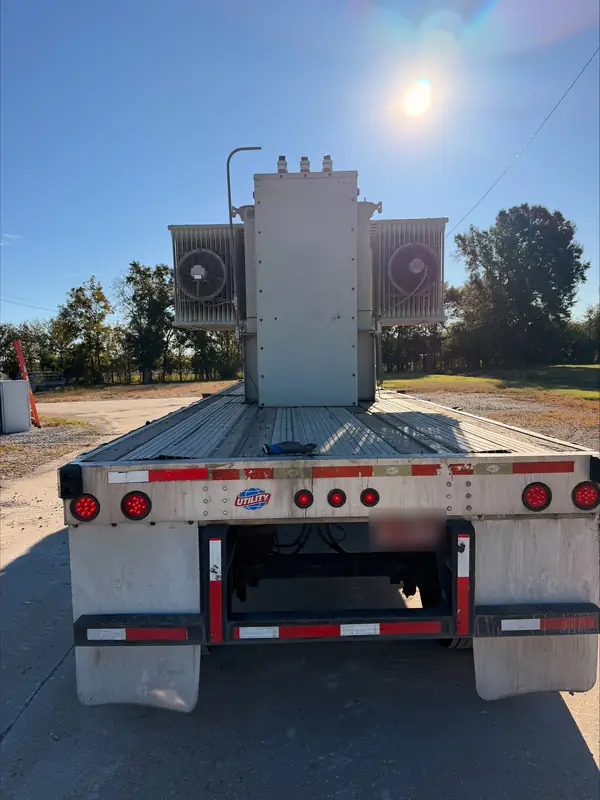
01Which Types of 60 MVA Transformer Are Common?
A 60 MVA transformer belongs primarily to the power-transformer market. Common configurations include substation power units, generator step-up transformers, autotransformers and mobile-substation equipment. Three-phase assembled units are usual, although single-phase power units and banks also occur.
Station-class equipment often has external radiators, cooling fans, substantial bushings and a load tap changer or de-energized tap changer. Our substation and power transformer page explains this family. Generation equipment should be identified separately as a generator step-up transformer, because its winding arrangement and duty matter.
A search for a “60 MVA pad mount transformer” generally points to the wrong equipment category. Standard three-phase pad-mounted distribution scope reaches 10 MVA; pole-mount units and ordinary dry-type distribution transformers are not typical at 60 MVA. A transformer installed on a concrete pad is not necessarily a pad-mount design.
FLAFull-Load Amps for a 60 MVA Transformer
Rated full-load current at common California voltages. Single-phase: amps = kVA × 1000 ÷ volts. Three-phase: amps = kVA × 1000 ÷ (1.732 × volts). Use the nameplate voltage of your unit.
| Phase | Voltage | Full-load amps |
|---|---|---|
| Three-phase | 4.16 kV | 8,327 A |
| Three-phase | 12.47 kV | 2,778 A |
| Three-phase | 20.78 kV | 1,667 A |
| Three-phase | 34.5 kV | 1,004 A |
| Three-phase | 66 kV | 525 A |
| Three-phase | 69 kV | 502 A |
| Three-phase | 115 kV | 301 A |
02Voltage Combinations and California Applications
Substation step-down arrangements can include 115 kV to a medium-voltage bus, or 66/69 kV to distribution voltage. Examples such as 115/12.47 kV or 69/12.47 kV illustrate possible configurations, not universal specifications. Use the actual nameplate voltages, connections and insulation levels.
California systems differ: PG&E documents 115 kV transmission/subtransmission, SCE uses 66 kV subtransmission, and SDG&E and SMUD have 69 kV systems supplying substations. Those system voltages provide context, but they do not establish that a particular transformer is suitable for a utility project.
At this capacity, applications include utility substations, large industrial power supplies and generation interconnection. Solar or battery projects may use a main transformer serving multiple collection circuits rather than one ordinary inverter padmount. Autotransformers need separate identification because their windings share an electrical connection rather than providing conventional isolation.
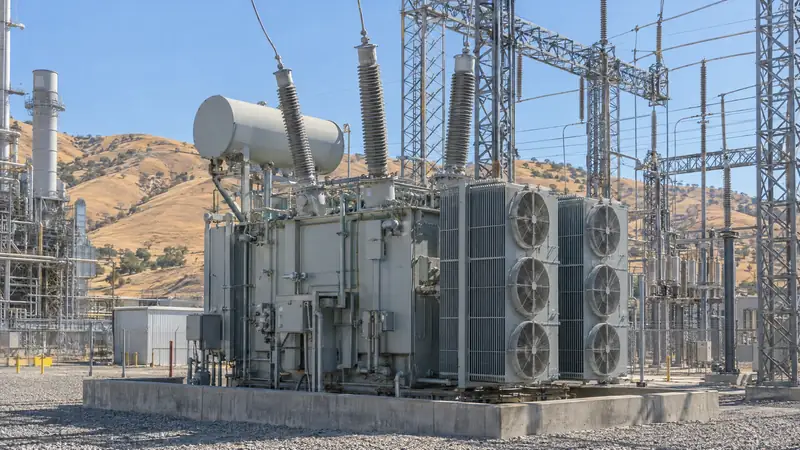
03Confirm Whether 60 MVA Is the Base or Final Cooling Rating
The verified IEEE C57.12.00-2015 preferred three-phase rating series includes 60,000 kVA at 65°C average winding rise. That does not mean every nameplate showing 60 MVA has the same continuous rating under every cooling condition.
Read all listed stages. A transformer may reach 60 MVA only with forced-air cooling, while its self-cooled rating is lower. Record ONAN/ONAF designations, temperature rise and required fan equipment together; missing cooling components can affect usable capacity and resale prospects.
- Photograph every rating line, not only the largest MVA figure.
- Identify whether the rating describes one unit or a complete bank.
- Include cooling-control and accessory records when available.
04How to Read the Full-Load Amps Chart
The full-load amps chart on this page uses 60 MVA and the listed three-phase line-to-line voltage. Select the row corresponding to the winding voltage you are checking. Primary and secondary current differ because their voltages differ, even though the apparent-power rating is the same.
For three-phase equipment, current equals VA divided by the square root of three times line-to-line volts. The chart is a rating reference, not a measured load, protective-device setting or conductor-sizing instruction. Our guide to transformer kVA and amps explains the relationship.
Do not apply the three-phase chart directly to an individual single-phase unit. Also, 60 MVA is apparent power, not automatically 60 MW: real power depends on power factor.
05What Affects the Value of a Used 60 MVA Transformer?
A used 60 MVA transformer is evaluated as a complete electrical configuration, not simply by capacity or weight. Voltage ratio, impedance, BIL, winding connection, taps and cooling stages determine how well it fits another installation. Age and brand help identify the equipment, but condition and specifications are central.
Factory reports, recent electrical tests and oil-analysis history can reduce uncertainty. Leaks, damaged bushings, missing radiators, incomplete controls or an undocumented fault can limit reuse. New-surplus equipment also needs storage history and evidence that accessories remain complete.
Available projects do not all need the same configuration. The guide to used transformer value explains why documentation, demand and removal costs must be considered together.
06Physical Size, Weight and Heavy-Haul Planning
Dimensions and weight vary by manufacturer, voltage class, insulation design and cooling arrangement. Expect large, heavy station equipment with substantial clearance and lifting requirements—not a standard pallet shipment. Nameplate weight and outline drawings are more useful than a generic size estimate.
Operating dimensions may differ from shipping dimensions. Large power transformers may travel with radiators or bushings removed, with shipping preparation handled by qualified specialists. Oversize or overweight loads can require Caltrans permits and separate local-road approvals.
Provide access information: gates, road restrictions, crane positioning, overhead obstructions and whether the unit remains installed. Our transformer removal and pickup page covers planning details. Loading, rigging and freight responsibilities must be stated in the written terms.
07Send Rocky the Records Needed for an Offer
To sell a 60 MVA transformer, text Rocky at (951) 403-5738 or use the transformer offer request form. Start with safe, authorized photos and existing records; reviewing your transformer costs nothing and there is no obligation.
California Transformer Buyer reviews the information and asks follow-up questions before issuing an offer. Confirm ownership or authority to sell: utility-owned equipment cannot be sold by a property owner.
- Manufacturer, serial number, year and all MVA ratings.
- HV/LV voltages, phase, frequency, connection diagram and taps.
- Impedance, BIL, cooling class and temperature rise.
- Fluid type, gallons, PCB records and available test reports.
- Overall photos, accessory inventory, condition and quantity.
- California location, outline drawings, weight and site access.
Electrical Isolation and Fluid Documentation
Only the owner's qualified electrical contractor or serving utility should isolate and disconnect equipment, including addressing possible backfeed. Do not open compartments or collect fluid samples yourself.
A non-PCB designation does not mean zero PCBs. California has stricter rules for PCB-containing oil; appropriate handling depends on testing, documentation and qualified environmental review. Leaking or failed units need a proper determination. This is not legal advice.
kVANearby Transformer Sizes We Buy
FAQ60 MVA Transformer FAQ
Can I offer a 60 MVA transformer that is still energized?
Yes, an initial review can use existing nameplate records, drawings and safely obtained photos while the unit remains in service. Explain its operating status and expected availability. Any outage, isolation and disconnection must be managed by your qualified electrical contractor or serving utility, with responsibilities and scheduling addressed before removal.
Does a single-phase transformer bank count as 60 MVA?
It can, but the rating must be clarified. Three 20 MVA single-phase units may form a 60 MVA three-phase bank; that is different from one single-phase unit rated 60 MVA. Send each unit's nameplate, bank configuration and accessory information so capacity, completeness and transport requirements can be reviewed correctly.
Will an unusual voltage ratio prevent a purchase?
Not necessarily. An uncommon ratio may narrow potential reuse applications, but voltage alone does not settle the evaluation. Taps, impedance, insulation level, winding connection and condition also matter. Send the complete specifications rather than describing the unit only as a 60 MVA transformer or assuming a nearby utility's voltage establishes compatibility.
What if I do not have recent test reports?
Start with the records you have and disclose the gaps. Useful information includes service history, last operating date, known faults, storage conditions and factory documentation. Missing reports increase uncertainty and may prompt follow-up questions. Any new testing or sampling should be performed by qualified professionals, not by the seller personally.
Can a failed or incomplete 60 MVA unit still be reviewed?
Yes, you can submit it for review, but purchase is not guaranteed. Identify the failure, missing components, leaks and any known contamination rather than describing it simply as used. Reuse potential, material recovery, environmental requirements and removal complexity all affect whether an offer is practical and what its written terms include.
What should the written offer specify before pickup?
The written offer should identify the equipment, price, included accessories, loading and rigging responsibilities, freight arrangements and payment terms and timing. At this scale, clarify which drawings and records transfer with the unit and what site access is available. Do not assume removal or specialized shipping preparation is included without written agreement.